


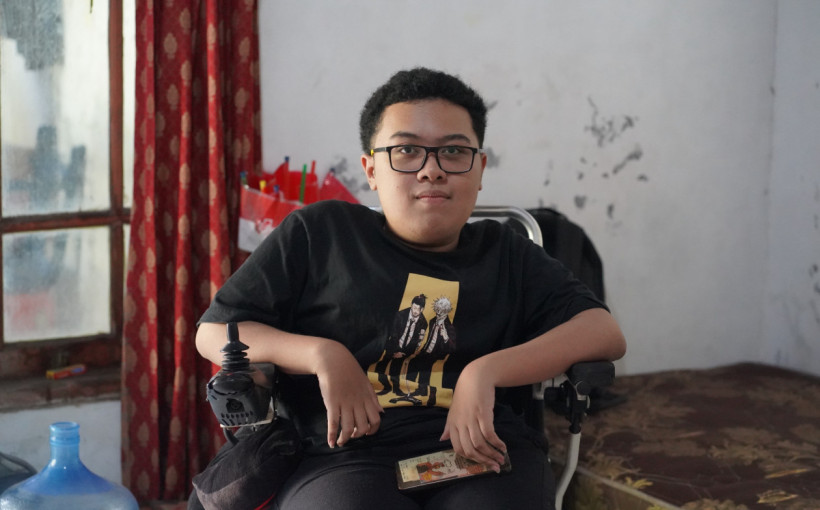
For Rasha Putra Permata (18), using a wheelchair has never been a barrier to pursuing higher education. Living with Type 2 spinal muscular atrophy (SMA), Rasha grew up in a family that believes education is the foundation for a better future. His father, Harsa Permata (47), is a part-time lecturer at a private university, while his mother, Triani Priliastuti (48), is a homemaker. Through perseverance, unwavering support, and their parents’ constant prayers, Rasha has fulfilled his dream of being admitted to the UGM Physics Engineering Undergraduate Program through the National Test-Based Selection (SNBT).
Rasha said his desire to study at UGM had developed long before he applied. He frequently visited the university campus and found its academic atmosphere inspiring, strengthening his determination to continue his studies in Bulaksumur. His dream became a reality after being accepted into the UGM Physics Engineering Undergraduate Program.
“I have wanted to study at UGM for a long time. I often visited the campus, and I really liked its atmosphere. Ever since then, I’ve dreamed of studying here,” he said on Friday (Jul. 10).
While in high school, Rasha learned the fundamentals of robotics and programming through various school activities. He also enjoys creating digital comics on the Webtoon platform and participating in game development and comic competitions during high school.
“I’m interested in robotics and want to study it more deeply in Physics Engineering. I also want to further develop my coding skills, which I’ve enjoyed since school,” he said.
This passion became one of the main reasons he chose the UGM Physics Engineering program. Before making his final decision, he visited several departments within the Faculty of Engineering (FT UGM), including Electrical Engineering and Industrial Engineering, and ultimately chose Physics Engineering for its strong opportunities in engineering design and computational sciences.
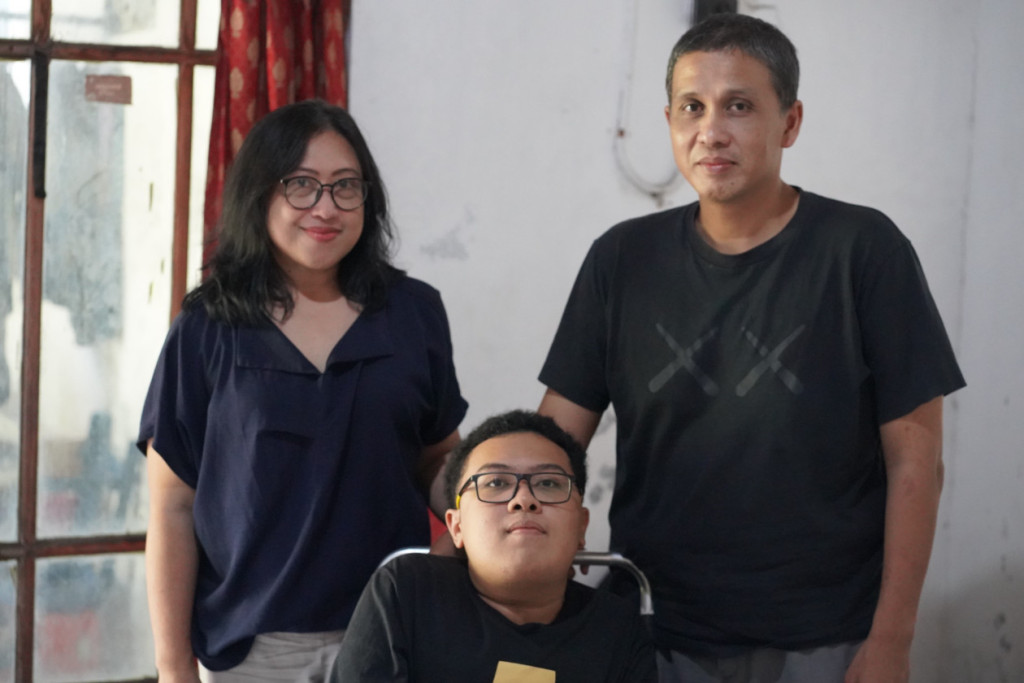
Rasha’s journey to UGM was far from easy. While preparing for the SNBT, he had to study independently because he could not attend private tutoring outside school. Many tutoring centers were not accessible to wheelchair users. As a result, he collected practice questions from friends and studied on his own until late at night.
“Rasha couldn’t join tutoring classes because many learning centers were not wheelchair accessible. He collected practice questions from his friends and studied independently until one or two o’clock in the morning,” said Triani.
Almost every night, Rasha spent hours working through practice questions. He admitted that Quantitative Reasoning and Mathematical Reasoning were the most challenging subjects during his exam preparation.
“The most difficult subjects for me were Quantitative Reasoning and Mathematical Reasoning. I had to practice a lot to understand the question patterns,” he explained.
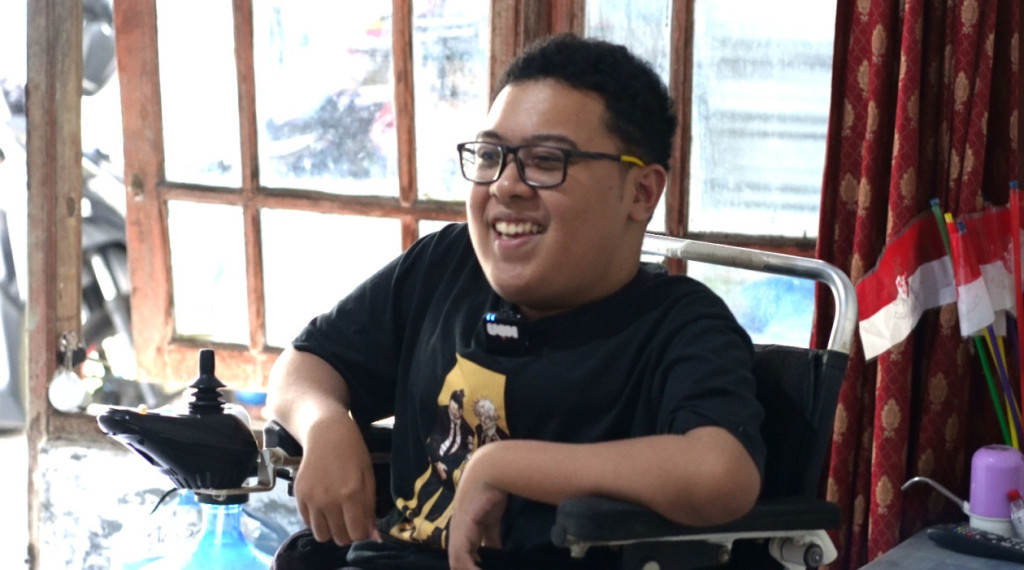
Rasha was also actively involved in student organizations. During his time at SMA Negeri 3 Yogyakarta, he served on the Student Council (OSIS) as a multimedia coordinator responsible for managing visual materials. He also coordinated several social service programs and school arts performances held over several days and served as an assistant coordinator for various other school events.
“During high school, I was active in the student council as part of the multimedia division. I also coordinated social service activities and arts performances and served as an assistant coordinator for several other school events,” he said.
Behind his achievements stands the unwavering support of his parents. For them, Rasha’s disability has never been viewed as a limitation. Instead, they have always believed that every child possesses unique potential to shine.
“I’ve always told my husband that we are raising a piece of gold. Wherever gold is, it will always shine. The same is true for Rasha. We believe he will always find his own path to grow and succeed,” said Triani.
Rasha’s parents hope UGM will continue strengthening its inclusive campus environment by providing increasingly accessible facilities for students with disabilities. They believe that greater accessibility will enable students with disabilities to fully develop their potential.
“We hope UGM will continue improving accessibility so students with disabilities can study comfortably and reach their full potential. We believe they have the same ability to excel and make meaningful contributions to society,” Harsa concluded.
Author: Cyntia Noviana
Editor: Gusti Grehenson
Post-editor: Jasmine Ferdian
Photo: Hanifah