


The Department of Mechanical and Industrial Engineering (DTMI), Faculty of Engineering, Universitas Gadjah Mada (FT UGM), collaborated with Nanyang Technological University (NTU) to organize the ASEAN Summer School from July 13–17, 2026.
Supported by the Tanoto Foundation, the DTMI × NTU ASEAN Summer School brought together students from ASEAN countries, including Singapore, Malaysia, Thailand, Myanmar, Vietnam, and Brunei Darussalam. The program also welcomed students from Universitas Gadjah Mada (UGM), the Bandung Institute of Technology (ITB), and the University of Indonesia (UI).
Dr. Muslim Mahardika, Head of DTMI UGM, said the ASEAN Summer School serves as a platform for strengthening connections among universities across ASEAN member states.
“Through this program, we hope to build strong partnerships in both research and education,” Dr. Muslim said in a statement released on Tuesday (Jul. 28).
Representing NTU, Dr. Tan Pei Yen said the program gave participants opportunities to engage in discussions, exchange ideas, and learn directly from local communities.
“This is an excellent opportunity for students to observe community dynamics firsthand and discuss ideas for potential solutions,” Dr. Tan said.
The program began with classroom sessions at the DTMI Meeting Room A1. Participants first explored electric transportation under the theme of Renewable Energy in a session delivered by Dr. Adhika Widyaparaga, a lecturer in Mechanical Engineering at UGM.
The session was followed by an introduction to photovoltaic (PV) technology and hands-on training in PV panel systems led by Irawan Eko Prabowo of UGM’s Center for Energy Studies (PSE). The knowledge and technical skills gained during the training prepared participants for the installation of solar PV panels in Kretek, Bantul Regency.
In addition to renewable energy, Smart City was another key theme of the program. Zulfikar Dinar Wahidayat Putra of UGM’s Department of Architecture and Planning (DTAP) introduced participants to Smart City concepts and their implementation in Indonesia, particularly in Yogyakarta.
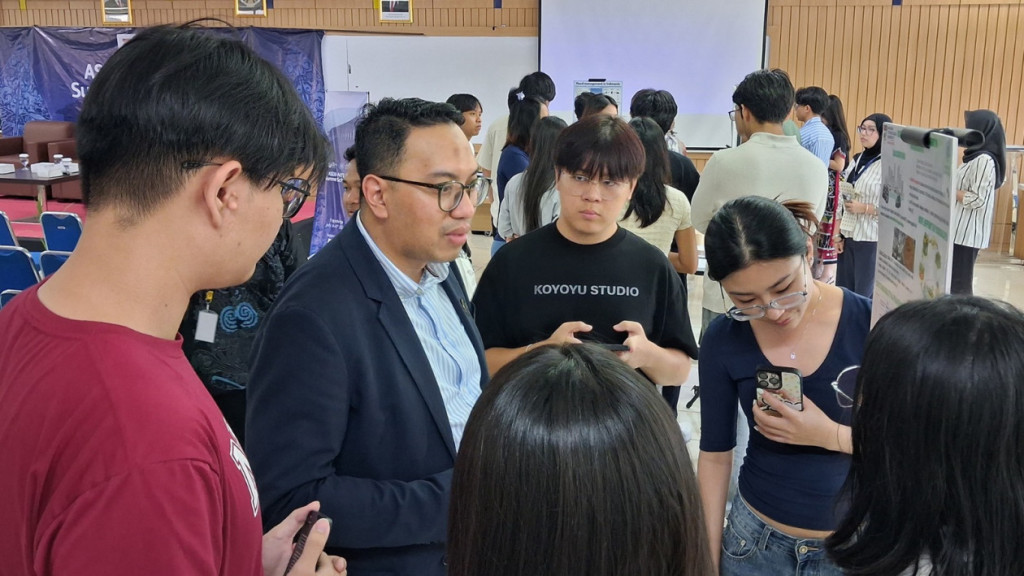
Participants further developed their understanding through a visit to the Yogyakarta Special Region Communication and Information Office (Kominfo DIY), where they learned about Smart City management practices implemented by the regional government.
Beyond campus activities, participants visited the Brama Muda Reduce, Reuse, Recycle Waste Processing Facility (TPS3R) in Ngaglik, Sleman, and Jogja Life Cycle in Umbulharjo, Yogyakarta City.
Under the theme of Circular Economy, these visits provided firsthand insight into how household waste can be processed and transformed into resources that contribute to local economic activities.
The program then moved from the classroom to hands-on renewable energy implementation in Kretek, Bantul. Participants installed solar PV panels at several sites, including an early childhood education (PAUD) facility, a community hall, a mosque, a vegetable irrigation system, and a neighborhood security post.
The newly installed panels were connected to an existing off-grid solar PV system to help meet local electricity needs.
“After completing the installation, participants were also required to test the system to ensure that the panels were functioning properly,” Dr. Muslim explained.
The final field activity was the Code River Trip, which introduced participants to communities living along the banks of the Code River.
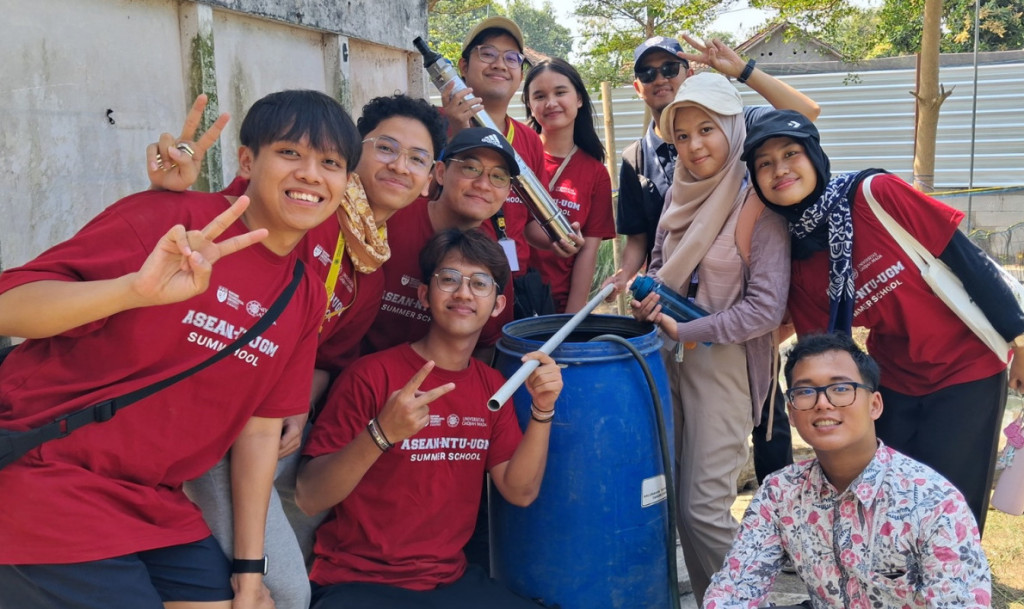
During the visit, local residents shared their experiences and community initiatives, including plastic waste recycling, catfish farming, local culinary traditions, disaster preparedness programs, and biodiversity conservation.
The field visit gave participants an opportunity to see how communities address environmental and social challenges through locally driven initiatives.
“The knowledge gained from both the classroom sessions and field activities will serve as the foundation for participants to develop posters presenting their ideas for addressing the challenges they observed firsthand,” Dr. Muslim said.
Dr. Akmal Irfan Majid, the program coordinator, expressed hope that participants would gain a broader and deeper understanding of Yogyakarta through the combination of classroom learning, field activities, and community engagement.
“We hope this program will continue in the future and grow even stronger, allowing us to accomplish even more together,” Dr. Akmal concluded.
The ASEAN Summer School brought together academic learning, hands-on experience, and community engagement across several locations in Yogyakarta. Through its focus on renewable energy, Smart City development, and the circular economy, the program provided ASEAN students with opportunities to explore practical approaches to sustainability while strengthening connections among universities and communities.
Reporter: Gusti Purbo Darpitojati/FT UGM Public Relations
Author: Leony
Editor: Gusti Grehenson
Post-Editor: Priyanandaningrat
Photo: Documentation of FT UGM