


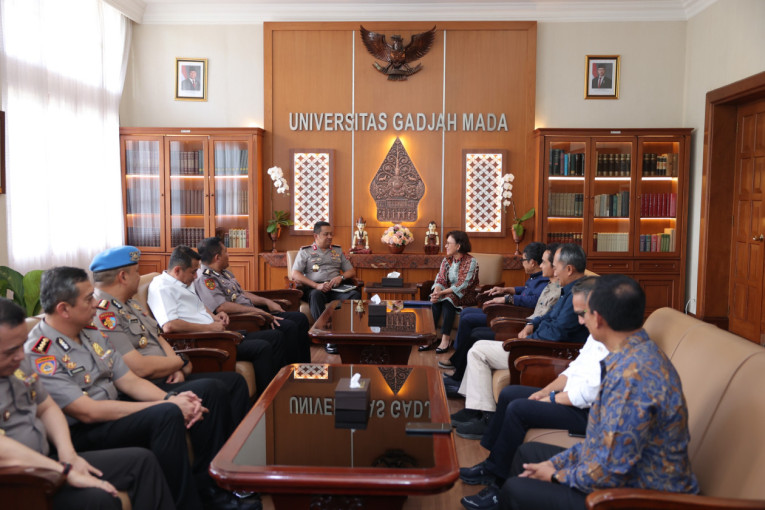
Universitas Gadjah Mada (UGM) welcomed the Chief of the Yogyakarta Regional Police, Inspector General of Police Langgeng Purnomo, and his delegation on Thursday (Oct. 22). The meeting strengthened institutional ties and explored ways to enhance cooperation between UGM and the Yogyakarta Regional Police. UGM Rector Professor Ova Emilia received the delegation, joined by members of the university’s leadership. The discussion covered campus security, traffic safety, and collaboration in public services.
In her remarks, the rector said the university and the police had established a relationship through various forms of communication and cooperation. This collaboration includes support in handling on-campus incidents, communicating with students, and coordinating on issues that require multiple institutions.
UGM views its positive relationship with the police as an important part of creating a safe educational environment that supports academic activities. With approximately 62,000 students, UGM has a large and diverse campus community that requires effective coordination with various stakeholders.
“We welcome communication and cooperation with the Yogyakarta Regional Police, as maintaining campus security and safety requires the support and coordination of various parties,” Ova said.
Traffic safety around campus was another issue discussed at the meeting. With thousands of students engaged in educational activities every day, traffic management and accident prevention are essential to maintaining a safe university environment. The rector also highlighted the police’s involvement in handling accidents and coordinating on traffic-related issues.
This cooperation could provide a platform to align preventive measures, raise awareness of safe driving practices, and strengthen emergency responses. The discussion also underscored the importance of sustained communication among UGM, the police, and relevant stakeholders.
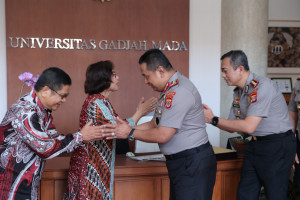
From the university’s perspective, cooperation with the police could also expand through academic activities, research, and the university community’s involvement in addressing societal issues. UGM’s multidisciplinary expertise can support studies on security, social order, safety, and community empowerment.
Knowledge exchange between academics and the police could enrich approaches to resolving field problems. Such cooperation needs to be built on open communication and a shared understanding of community needs.
“We hope to continue developing our existing relationship through collaboration that benefits society while supporting the implementation of the three pillars of higher education: education, research, and community service,” Ova said.
Meanwhile, Yogyakarta Regional Police Chief Inspector General of Police Langgeng Purnomo outlined his leadership approach, which emphasizes the police’s presence within the community. He stressed the need to strengthen the police force’s internal commitment so every officer can carry out their duties responsibly and provide quality service.
He also discussed the Jaga Warga community empowerment program as one way to build closer relationships between the police and local communities. In his view, security depends on communication, public participation, and the ability to identify problems at the neighborhood level.
This approach is expected to strengthen public trust while helping maintain security and public order across the Special Region of Yogyakarta.
Langgeng also emphasized prioritizing public service and prevention in police work. He shared experiences in handling social situations that require coordination among various parties, including local governments, communities, and community groups.
Regarding public demonstrations, he highlighted the need to distinguish between groups expressing their aspirations peacefully and those engaging in destructive acts. He explained that handling such situations requires effective coordination, professionalism, and efforts to avoid violence.
“We want to promote the spirit of ‘Police and Community Working Together,’ with a focus on public service, a humane approach, and collaboration to maintain security and public order,” he said.
The visit by the Yogyakarta Regional Police chief and his delegation was part of efforts to build an open and lasting institutional relationship. For UGM, cooperation with the police helps ensure a safe campus environment for students, lecturers, educational staff, and the wider community.
The Yogyakarta Regional Police, meanwhile, sees collaboration with various groups as part of its efforts to improve public services and maintain public order. Going forward, the two institutions can continue communicating through technical discussions on areas of cooperation identified as shared priorities.
“We are open to collaborating with higher education institutions, including UGM, so that the knowledge and experience each party possesses can contribute to better public services,” Langgeng concluded.
Author: Triya Andriyani
Post-Editor: Priyananda
Photo: Firsto