


The military operations conducted by the United States and Israel against Iran, which began in late February 2026, have the potential to significantly impact the global economic landscape. This situation has been further intensified by Iran’s decision to close the Strait of Hormuz and launch retaliatory attacks on several countries involved. These geopolitical developments have driven global oil prices upward amid escalating tensions in U.S.–Iran negotiations.
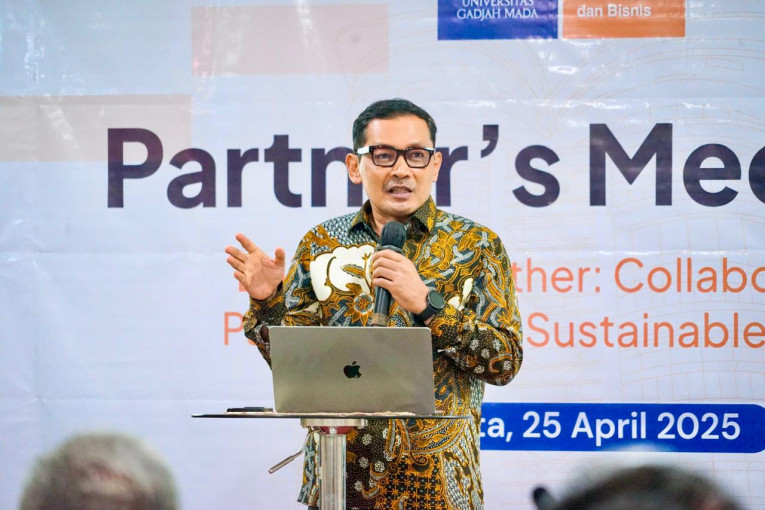
UGM economist and Head of International Affairs at the Indonesian Economists Association, Dr. Muhammad Edhie Purnawan, stated that the global economic uncertainty resulting from the conflict is evident in the surge of crude oil prices, which have reached USD 108 per barrel, posing a tangible threat of inflation for oil-importing countries.
Amid this turbulence, Indonesia has demonstrated an impressive anomaly. A stable Manufacturing Purchasing Managers Index (PMI) at 53.8 and economic growth reaching 5.39% in the fourth quarter of 2025 underscore the resilience of Indonesia’s domestic fundamentals.
“Foreign exchange reserves of USD 151.9 billion serve as a sufficiently strong buffer to absorb market turbulence,” he explained.
The closure of the Strait of Hormuz risks disrupting energy supply across the Asia-Pacific region. In response, the Indonesian government has utilized the State Budget (APBN) as a shock absorber through energy subsidies to maintain public purchasing power. Meanwhile, Bank Indonesia has injected liquidity through the Macroprudential Liquidity Incentive (KLM) policy, amounting to Rp 427.5 trillion, and reduced lending interest rates to 8.80% to ensure that MSMEs and businesses can continue operating despite rising global capital costs.
Edhie noted that the deaths of key figures in the Middle East could accelerate the risk of nuclear proliferation worldwide. As an independent middle power with a consistent trade surplus over the past 69 months, Indonesia holds the credibility to advocate that war must ultimately end through negotiation and mutual understanding, rather than through rhetoric that frames opposing sides as enemies or deceivers.
“Peace is achieved when each party understands its own interests while finding common ground for mutual benefit. Therefore, the urgent priority now is to stop calls for war and begin dialogue at the negotiating table,” he said.
For Edhie, maintaining price stability and ensuring smooth monetary circulation are essential prerequisites for economic sovereignty. The 131.47 percent surge in QRIS transactions demonstrates Indonesian society’s readiness to engage with the digital ecosystem. However, this transformation must extend more broadly into the energy sector as a long-term mitigation strategy.
“If the synergy between fiscal stimulus and pro-growth monetary policy is implemented consistently, Indonesia will not only withstand a global recession but also transform into a modern, independent, and resilient economic power amid an evolving global order,” he stated.
Edhie added that all geopolitical and economic considerations must ultimately rest on a firm conviction: Indonesia must not hesitate to take a stance during these challenging times. Having a clear position is far more honorable than remaining silent in the face of injustice, as Indonesia rejects any global order that places one power above the sovereignty of others. As mandated by the Constitution, which upholds peace and humanity, Indonesia does not seek enemies but remains steadfast in safeguarding global peace.
“Indonesia’s sovereignty is a principle that has been upheld for centuries, forged through colonial imprisonment, paid for by the suffering of its people, and sanctified by the blood of martyrs. Standing firmly on an active geopolitical stance of peace and humanity is a pledge made before the vast sweep of history, born from the wounds of colonialism, and must serve as a voice for those whose wounds have yet to heal,” he concluded.
Author: Jesi
Editor: Gusti Grehenson
Post-editor: Zabrina Kumara
Photo: FEB UGM Documentation