


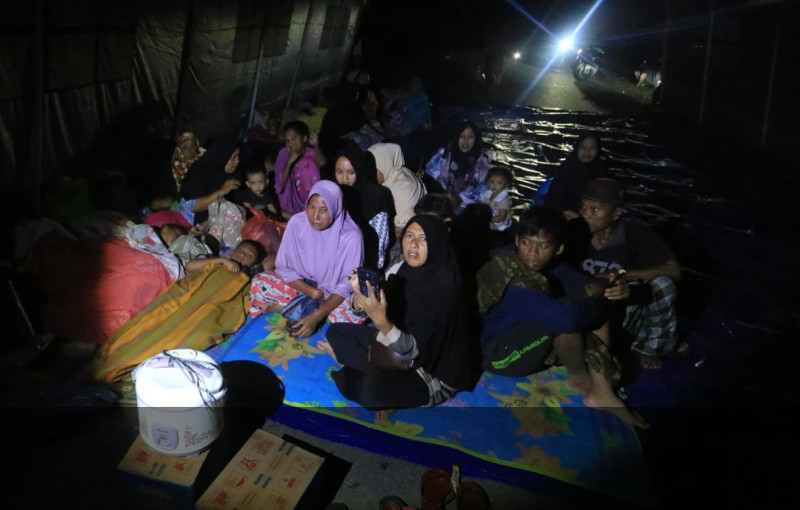
The major floods that struck several regions of Sumatra in late November 2025 had widespread impacts, not only on infrastructure but also on the physical and psychological well-being of affected communities.
A psychosocial expert from Universitas Gadjah Mada, Dr. Diana Setiyawati, assessed that the disaster has been particularly severe because it occurred suddenly and resulted in layered suffering, especially due to disrupted access to aid in several areas. She noted that the collapse of many bridges has forced aid distribution to rely on air routes using helicopters.
“These flood conditions are extremely shocking because people are never truly prepared for disasters. The escalation of impacts is very broad, and suffering has intensified because many bridges were destroyed, meaning assistance has to be delivered by helicopter,” she said on Monday (Dec. 8).
According to Dr. Setiyawati, during the initial emergency response phase, the most urgent needs are logistics and decent shelter for survivors. She emphasized that psychological well-being cannot be recovered if basic needs remain unmet.
“When we talk about well-being, both physical and psychological, the number one priority is that basic needs must be fulfilled first. People need to return to a sense of comfort. What matters most is how their basic needs are met and how supported they feel,” she explained.
She added that fulfilling basic needs serves as the primary foundation before moving into longer-term recovery stages.
After the emergency phase has passed, Dr. Setiyawati said her team, together with various stakeholders, will design medium- and long-term recovery programs in affected areas, particularly in Aceh. These programs will be developed through workshops with local governments and relevant parties.
“After the emergency phase, we will hold workshops with stakeholders in Aceh to help design medium- and long-term recovery programs. At the moment, we are also moving forward through collaboration with local universities,” she said.
This approach is considered essential to ensure that recovery efforts are sustainable and grounded in the real needs of communities on the ground. In terms of the most urgent assistance at present, Dr. Setiyawati emphasized the importance of meeting the specific needs of women and children.
She explained that her team is prioritizing the provision of dignity kits and learning materials for children as part of efforts to restore their daily routines and mental well-being.
“For now, we are prioritizing dignity kits and learning tools for children, because these help them return more quickly to daily life. We are also training volunteers in psychological first aid so they can accompany survivors while meeting food and other basic needs,” she said.
The dignity kits include sanitary pads, toiletries, diapers, and other personal necessities crucial to women and children in emergencies.
Dr. Setiyawati also revealed that the greatest challenge in responding to this disaster is reaching hard-to-reach affected areas. To address this constraint, her team is working with local NGOs that are already operating in the field.
“The biggest challenge is, of course, how to reach these disaster locations. That is why we are working with Gentayu, an NGO that has long been active on the ground. We operate through them because psychosocial support requires people who are truly present in the field. We provide the training, and we also help meet basic needs,” she explained.
Through an approach that combines meeting basic needs, psychosocial support, and cross-sector collaboration with NGOs and local institutions, Dr. Setiyawati stressed that post-disaster recovery is not only about rebuilding infrastructure but also about restoring mental resilience and a sense of security within communities.
She hopes these measures will help survivors gradually recover and resume their lives in a more dignified and humane manner.
Author: Kezia Dwina Nathania
Editor: Gusti Grehenson
Post-editor: Salma
Photograph: Kumparan