


The Free Nutritious Meal (MBG) Program, implemented by the Indonesian government since January 2025, continues to face challenges. Although the initiative is expected to address national malnutrition and stunting among school-age children, data from the 2024 Indonesia Nutritional Status Survey (SSGI) show that the stunting prevalence remains at 19.8%. In addition, implementation issues persist, including menus that do not align with children’s preferences, inconsistent food quality, and rising food waste. These conditions highlight the need for a more systematic approach to ensure sustainable nutritional fulfilment.
In response to these issues, the Universitas Gadjah Mada (UGM) Student Creativity Program for Constructive Idea Videos (PKM-VGK) team, led by Muhammad Afnand Kabhila with members Fauzi Septriantoro, Muhammad Rizky Khoirul Amar, Safira Mahardika Rahayu, and Muhammad Firdaus Ar Riza, developed the Sustainable Integrated Kitchen System (SIKE).
This AI-based smart kitchen innovation is designed to optimize the implementation of the MBG Program while converting food waste into renewable energy.
Guided by Dr. Ni Nyoman Nepi Marleni, the team successfully qualified for the 38th Indonesian National Student Science Competition (PIMNAS).
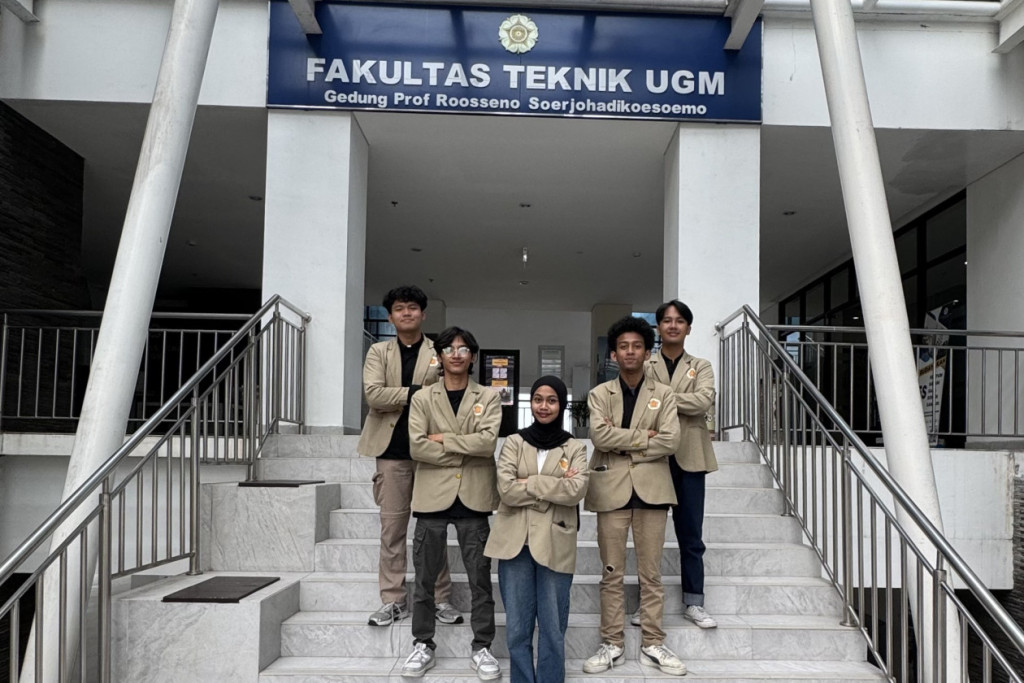
Muhammad Afnand Kabhila explained that the MBG Program is an important government initiative, yet its implementation continues to face challenges ranging from children’s food preferences to logistical challenges.
As a result, leftover food often increases and exacerbates the issue of food waste. He hopes SIKE can offer an end-to-end solution to address these problems.
“SIKE is designed as an end-to-end solution to break this paradox, ensuring proper nutritional delivery while preventing unnecessary waste,” he said on Wednesday (Nov. 19).
Furthermore, Kabhila elaborated that SIKE operates across two major priority levels.
The priority focuses on optimizing menus and supply chains, supported by AI that manages raw material stock in real time and analyzes students’ nutritional needs based on their preferences and the availability of local food sources.
The second priority centers on waste management through a circular economy approach. Food scraps are tracked using load-cell sensors, and the data is processed by AI as feedback for menu evaluation.
“Ultimately, food waste generated during meal service is processed into biogas, which is then reused for food preparation in MBG kitchens. It forms a true closed-loop system,” he added.
To broaden the initiative’s impact, the team introduced their concept through constructive idea videos on the team’s official YouTube, Instagram, and TikTok channels.
The video dramatizes a storyline of a student fainting due to an unsuitable MBG menu, followed by the introduction of SIKE as a comprehensive solution for program improvement.
The content received positive responses and has been viewed more than 146,000 times on Instagram.
“We hope this concept will continue to be developed and become a blueprint for a more effective and sustainable MBG implementation,” Kabhila concluded.
Author: Cyntia Noviana
Editor: Triya Andriyani
Post-editor: Lintang Andwyna
Photographs: Liputan 6 and SIKE Team