


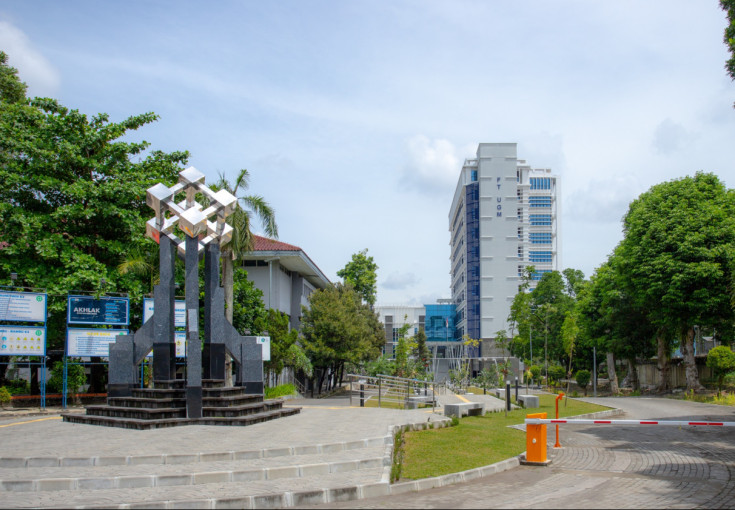
The Ministry of Higher Education, Science, and Technology (Kemdiktisaintek) has designated the nomenclature “rekayasa” as the official equivalent in the new nomenclature for Engineering Study Programs. The policy is stipulated in the Decree of the Director General of Higher Education No. 96/B/KPT/2025. The regulation sparked public discussion regarding standardization.
Kemdiktisaintek emphasized that its implementation is not mandatory and is left to each university’s readiness and academic characteristics. In response, the Faculty of Engineering, Universitas Gadjah Mada (FT UGM) stated that it currently has no plans to change the nomenclature of engineering-related terms within the university.
Dean of FT UGM, Professor Selo, affirmed that FT UGM will, in principle, continue to follow all directions and regulations issued by the ministry. However, because the nomenclature adjustment policy is not binding, the faculty has decided to retain the current terminology.
“Since the circular is not mandatory, I will encourage FT to remain as it is now. We will not change the nomenclature for the time being,” he said on Tuesday (May 19).
Professor Selo explained that the policy’s optional nature has led FT UGM to conclude that there is currently no need to discuss the matter further. He noted that changing a program name would require in-depth study and a lengthy internal process, including presentations to and involvement from the Faculty Senate.
“Because it is optional, we believe FT does not yet need to conduct further discussions. There are processes that must be studied and carried out, including those involving the Faculty Senate. In short, we interpret the word ‘may’ as indicating something that is not urgent for FT and not yet important to implement immediately,” he emphasized.
Rather than making administrative changes to the naming of study programs, FT UGM is focusing on substantive institutional achievements. Professor Selo explained that the faculty is pursuing two main priorities: improving the quality of human resources and strengthening research downstreaming.
“FT is more focused on contributing to two key areas, namely preparing excellent human resources and producing research whose benefits can be widely felt by society. FT will continue to focus on the tangible impact of higher education, particularly in the field of engineering, on society,” he concluded.
Author: Aldi Firmansyah
Editor: Gusti Grehenson
Post-Editor: Zabrina Kumara
Photo: UGM Public Relations Documentation