


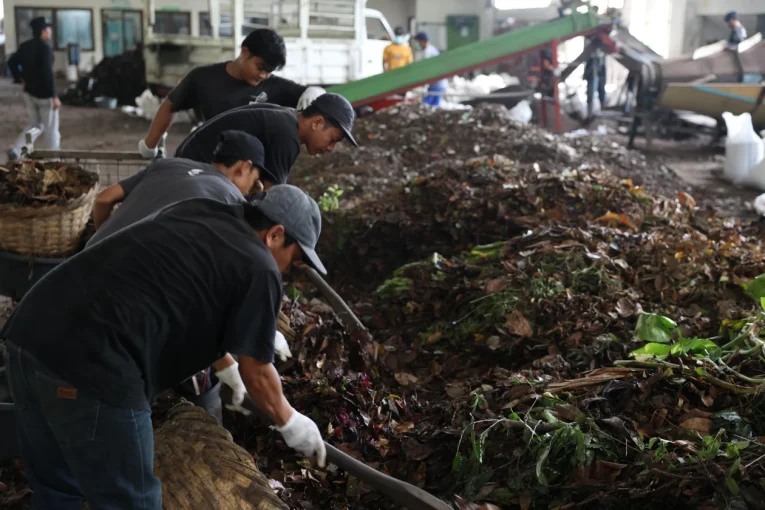
The government’s commitment to addressing the national waste crisis has been further reinforced by the President’s directive to universities to develop applicable waste-processing technologies for testing in real-world settings. The policy is strengthened by the support of the Minister of Higher Education, Science, and Technology, Brian Yuliarto, who has encouraged research-based solutions.
During a recent visit to Universitas Gadjah Mada, the Minister reviewed waste processing facilities at the Agrotechnology Innovation Center (PIAT UGM). His appreciation of the facility signaled UGM’s infrastructure readiness and innovation capacity to contribute more broadly. This momentum has opened space for discussions on the university’s preparedness to fulfill the national mandate for micro-scale waste management.
Responding to this development, a lecturer in the Chemical Engineering Study Program at the Faculty of Engineering (FT-UGM) and environmental observer, Professor Wiratni, stated that universities possess adequate technological capacity. Nevertheless, she emphasized that technology alone is not the sole solution to Indonesia’s waste problem. According to Professor Wiratni, a comprehensive upstream-to-downstream management approach within a strong ecosystem is required.
“I am confident that UGM and other universities have various leading technologies for waste processing, but Indonesia’s waste problem requires management from upstream to downstream within a robust ecosystem,” she said on Wednesday (2/25).
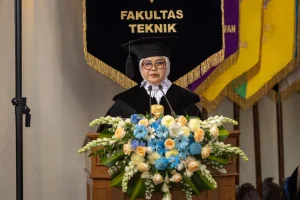
In this context, she explained that waste management issues have a strong social dimension. Therefore, technological choices cannot be standardized across all regions. Each area has distinct characteristics that influence processing strategies. Professor Wiratni cited differences between Yogyakarta and Gunungkidul Regency in terms of land availability.
“The success of any chosen technology is highly contextual and requires accurate social mapping,” she explained.
Drawing from campus experience in managing approximately eight tons of waste per day at UGM, Professor Wiratni identified three technologies that are crucial to the success of a waste management ecosystem. First, waste generation data serve as an essential foundation for designing reduction policies. To support this, UGM is currently developing Internet of Things (IoT)-based digital scales installed across various work units. The information is displayed on a dashboard for easy monitoring and evaluation.
“These scales reflect the behavior of the UGM academic community and form the basis of our zero-waste campus program,” she noted.
Second, once the monitoring system is operational, the next step is processing materials according to their characteristics. Professor Wiratni explained that organic waste can be processed through composting technology and maggot cultivation with engineered process acceleration. Third, residual waste is processed through melting and carbonization technologies into construction materials such as boards, roof tiles, and paving blocks, as well as carbon for fertilizer mixtures. These options are adjusted to the campus waste volume, which has not yet reached the economic feasibility threshold for waste-to-energy schemes.
“Converting waste into solid carbon is a low-emission option aligned with the low-carbon lifestyle mission,” she explained.
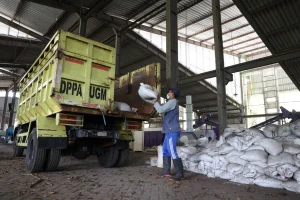
The strengthening of these technologies is centralized at PIAT UGM through the Recycling Innovation House (RINDU). The facility is currently transitioning from the experimental phase to a full-scale installation to process all waste generated by UGM. As it enters the operational scale, techno-economic calculations become a primary concern. In addition to serving as a waste-processing facility, RINDU is being developed as a living laboratory to learn about circular ecosystems.
“RINDU was indeed designed to be projected as a Living Laboratory and Learning Center where communities and government, together with UGM, can incubate ideas before they are adopted more widely,” Professor Wiratni stated.
This transformation toward full-scale operations presents significant challenges in the downstreaming of innovation. According to Professor Wiratni, the main obstacle for universities lies in strategic partnerships that are not yet fully solid. Many innovations originate on campus, but market readiness and policy support often do not align, resulting in slow implementation. Without collaboration from the design stage, technologies risk remaining laboratory prototypes.
“Downstreaming will not occur if we are only preoccupied with perfecting products in the laboratory,” she stressed.
Another challenge arises in coordinating waste management initiatives that have developed in various locations. She observed numerous positive movements both on campus and within communities; however, they often operate independently and lack concentration. This situation makes it difficult to avoid duplicating programs and to use resources inefficiently. Therefore, leadership capable of synergizing cross-disciplinary expertise is urgently needed.
“Leadership is required to orchestrate various strengths to work synergistically,” she said.
In response to these challenges, Professor Wiratni stated that UGM has begun strengthening ecosystem development in a more structured manner. These efforts are being expanded through support from the Equity mandate grant, which encourages orchestration of expertise across clusters. PIAT UGM serves as the locus for internal campus waste processing, while Terban has been selected as the pilot site for replicating the system beyond campus. Real operational data continues to be collected to calculate waste-processing costs per ton using IoT scales, which will also serve as the basis for internal policy formulation.
“UGM is building an installation with actual capacity and collecting operational data to ensure readiness for broader implementation,” she concluded.
Author: Triya Andriyani
Post-editor: Zabrina Kumara
Photo: Public Relations Documentation