


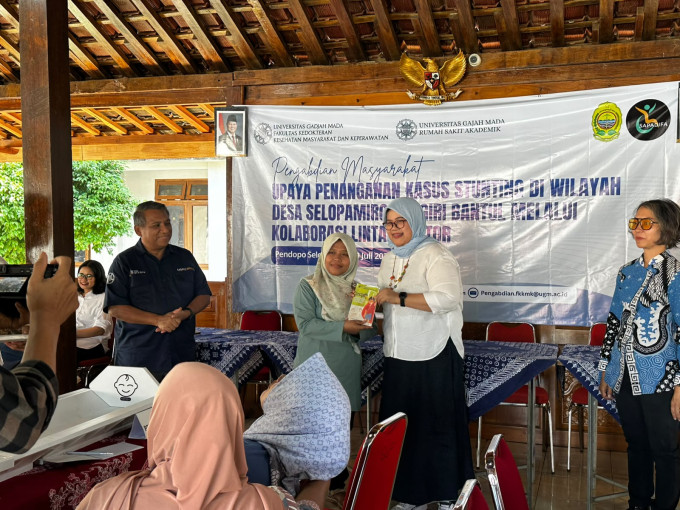
The Community Service Team from Universitas Gadjah Mada’s Faculty of Medicine, Public Health, and Nursing (FK-KMK UGM) organized a community outreach program in Selopamioro Village, Imogiri, Bantul, to strengthen collaboration in preventing and addressing childhood stunting. Held at the Selopamioro Village Hall, the program brought together community health volunteers, healthcare providers, village officials, families, and academics to promote sustainable, community-based stunting prevention.
Dr. Ade Febrina Lestari, leader of the community service team, said the program aimed to strengthen collaboration among families, community health volunteers (kader posyandu), community health centers (puskesmas), village authorities, and the university to ensure all stakeholders play an active role in preventing and managing stunting.
“We involved community health volunteers and toddlers who had previously been identified as experiencing stunting,” Dr. Ade said in a statement released on Wednesday (July 22).
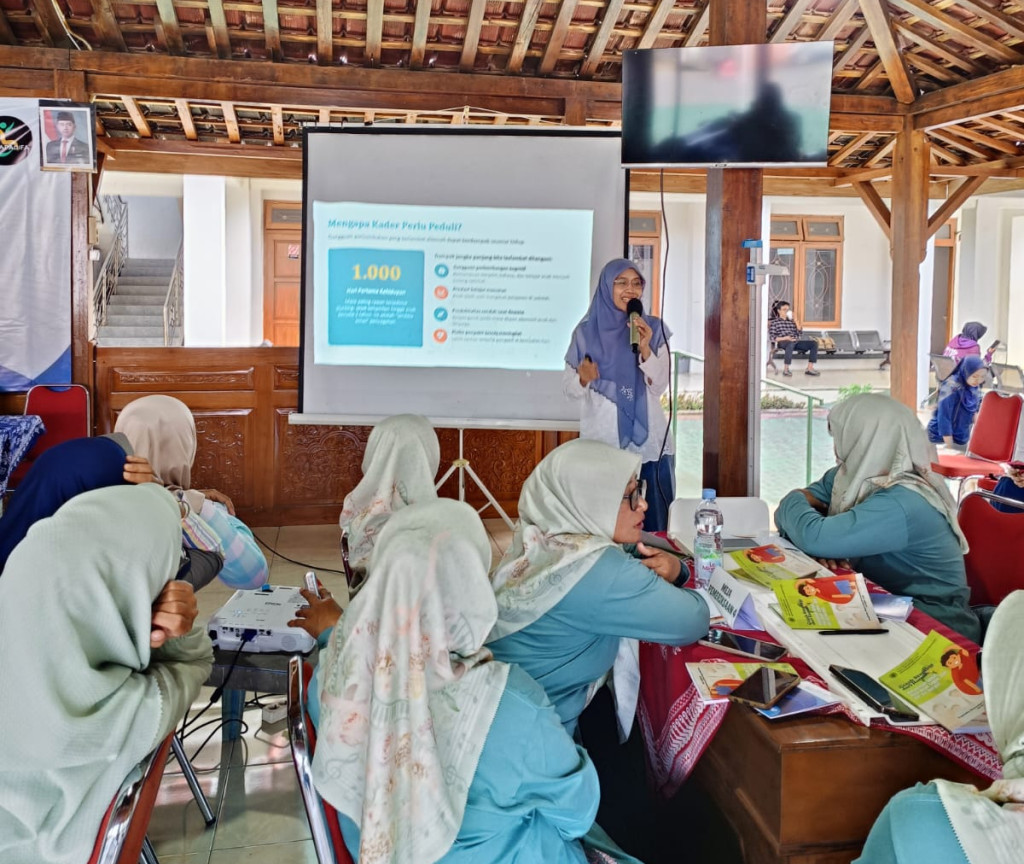
The program engaged 40 posyandu volunteers and assessed the health of 37 toddlers. Dr. Ade emphasized that community health volunteers play a critical role in detecting growth problems early. The training therefore focused on strengthening their capacity to monitor children’s growth and development within their communities.
During the program, participants learned anthropometric measurement techniques before applying them directly to toddlers under the supervision of the UGM team. Each child also received a physical examination together with growth and developmental screening, while mothers attended educational sessions on age-appropriate complementary feeding practices.
“Interestingly, not all children who had previously been diagnosed with stunting were actually stunted. Some were simply classified as having short stature,” Dr. Ade explained.
To reinforce the educational sessions, the team distributed a handbook titled Cegah Stunting dari Rumah: Kehamilan Sehat, Pola Asuh Tepat, dan MPASI Bergizi (Preventing Stunting at Home: Healthy Pregnancy, Proper Parenting, and Nutritious Complementary Feeding). The handbook serves as a practical reference for community health volunteers and healthcare workers. The team also distributed duck eggs to volunteers and mothers of toddlers to help improve family nutrition.
The Head of the Imogiri Community Health Center (Puskesmas), drg. Imung reported that the area’s stunting prevalence has continued to decline, reaching 12.7 percent in 2026.
Meanwhile, Danang Kumorojati, Head of Community Affairs (Kamituwo) of Selopamioro Village, said the main causes of stunting in the village have shifted over time. While economic hardship was once the primary driver, inappropriate parenting and child-feeding practices have now become more significant contributing factors.
“This is particularly evident in child-feeding practices, as more parents are working and entrusting childcare to other family members,” he said.
Responding to this challenge, Dr. Ade encouraged parents to make mealtimes enjoyable and stress-free for children. She explained that introducing complementary foods is an important stage of child development and should provide children with positive learning experiences rather than pressure.
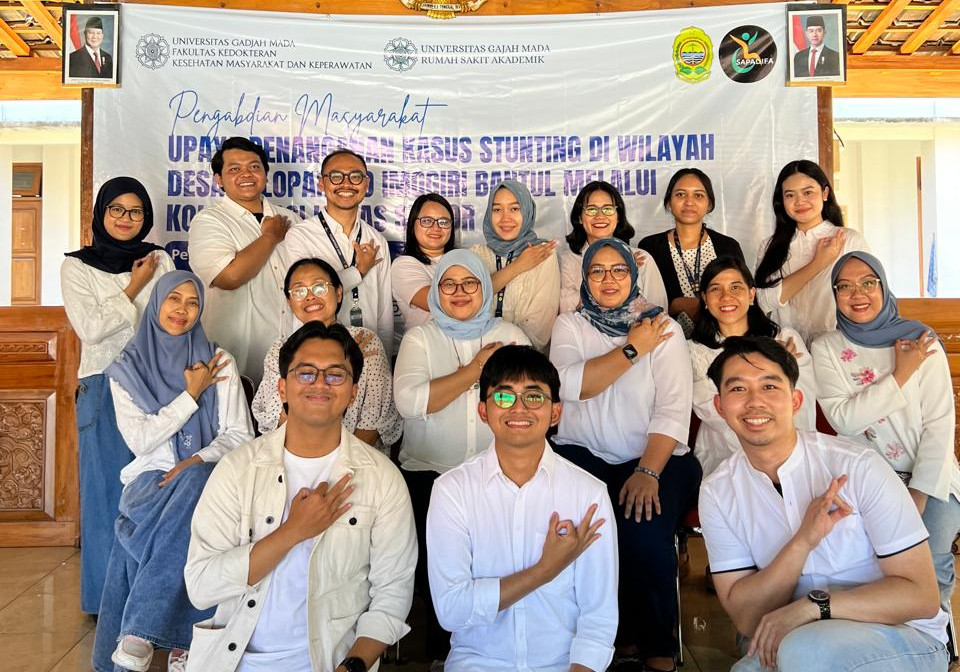
Through this initiative, FK-KMK UGM hopes to strengthen collaboration among academics, healthcare professionals, village authorities, community health volunteers, and families. The team believes that preventing stunting requires more than healthcare services alone—it depends on active community participation to ensure every child has the opportunity to grow and thrive.
Author: Cyntia Noviana
Editor: Gusti Grehenson
Post-Editor: Priyanandaningrat
Photo: Documentation of FK-KMK UGM