


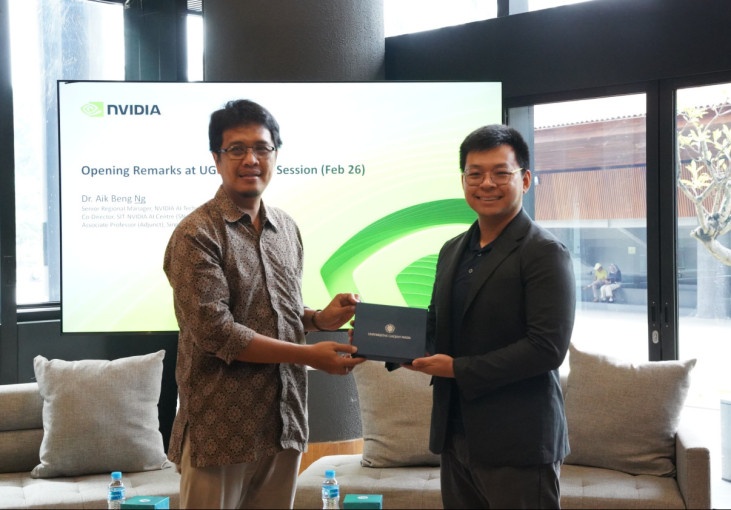
In response to the rapid growth of artificial intelligence (AI) technology and its expanding applications across various sectors, Universitas Gadjah Mada (UGM), in collaboration with NVIDIA and Indosat Ooredoo Hutchison, has established a partnership to develop AI technology for academic activities and research downstreaming.
This collaboration is part of the UGM AI Center of Excellence, which focuses on advancing AI in academic, research, and community development initiatives.
Head of UGM’s Bureau of Digital Transformation (BTD), Dr. Mardhani Riasetiawan, stated that the research collaboration aims to integrate academic research with industry needs, build open, accessible, and sustainable AI infrastructure, and support the government in advancing national AI development. According to Dr. Mardhani, this initiative represents an important step toward broader AI advancement.
“I believe this will be a positive step forward for future development,” he said in a statement released to journalists on Thursday (Feb. 12).
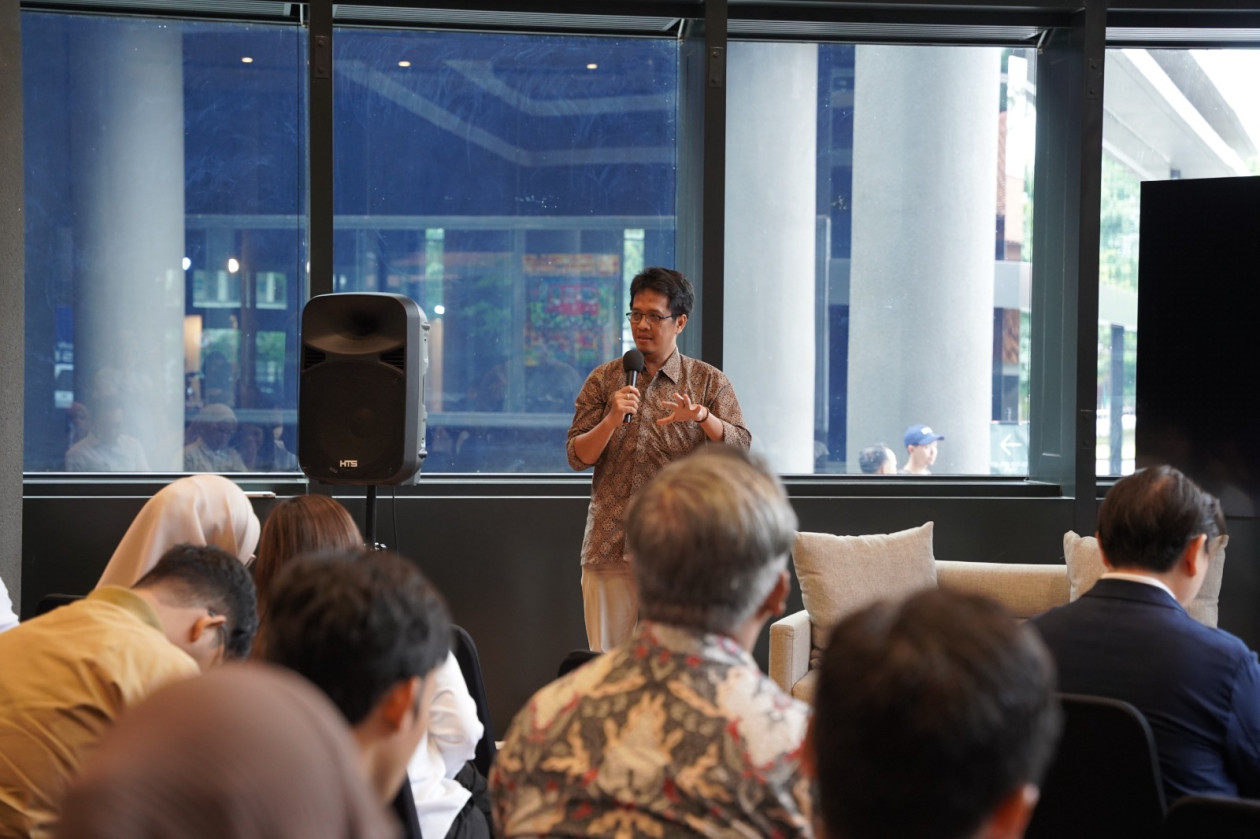
Dr. Riasetiawan explained that UGM offers several leading research areas, including AI in healthcare, energy and resource utilization, and smart technology. In the medical field, AI has significant potential to accelerate diagnostic processes.
He added that UGM, in collaboration with NVIDIA, has prepared infrastructure for a DGX Station. This infrastructure is a high-performance AI supercomputing workstation deployed at UGM’s Faculty of Engineering and Faculty of Mathematics and Natural Sciences.
“This infrastructure will support AI-based activities at UGM. Through this program, we expect to foster optimal collaboration among academia, industry, and government,” he said.
An AI researcher in the medical field from UGM’s Faculty of Medicine, Public Health, and Nursing (FK-KMK UGM) Dr. Dian Kesumapramudya Nurputra explained that AI was highly beneficial in handling COVID-19 cases. However, limited infrastructure posed a significant challenge.
“The use of AI in the medical field remains limited because we do not yet have sufficient infrastructure to conduct AI-based activities,” he said.
These challenges are being addressed through the planned collaboration with global industry partners, namely NVIDIA and Indosat Ooredoo Hutchison. The objective is to establish nationwide connectivity so that data can be uploaded to centralized servers, analyzed, and utilized for various AI developments, including in healthcare.
Senior Regional Manager of NVIDIA AI Technology Center, Dr. Ng Aik Beng, explained that in addition to collaborating with UGM in the healthcare sector, NVIDIA has also partnered with Monash University in Australia.
Furthermore, NVIDIA has established collaborations with several universities worldwide to emphasize the importance of training, consultation, and industrial capacity building to ensure readiness for AI adoption.
“This is part of the vision and aspiration we have for this country,” he said.
Dr. Ng further explained that NVIDIA has developed comprehensive AI frameworks across various fields, including healthcare and urban governance. In healthcare, MONAI is an open-source framework developed by NVIDIA in collaboration with the research community and institutions for AI applications in medical imaging.
MONAI provides an end-to-end pipeline, from data annotation, model training, and 3D segmentation (CT scans and MRI) to deployment within hospital systems. The framework also supports federated learning to safeguard patient data privacy and offers ready-to-use medical models.
“The goal is to accelerate standardized and interoperable medical AI research and implementation,” he explained.
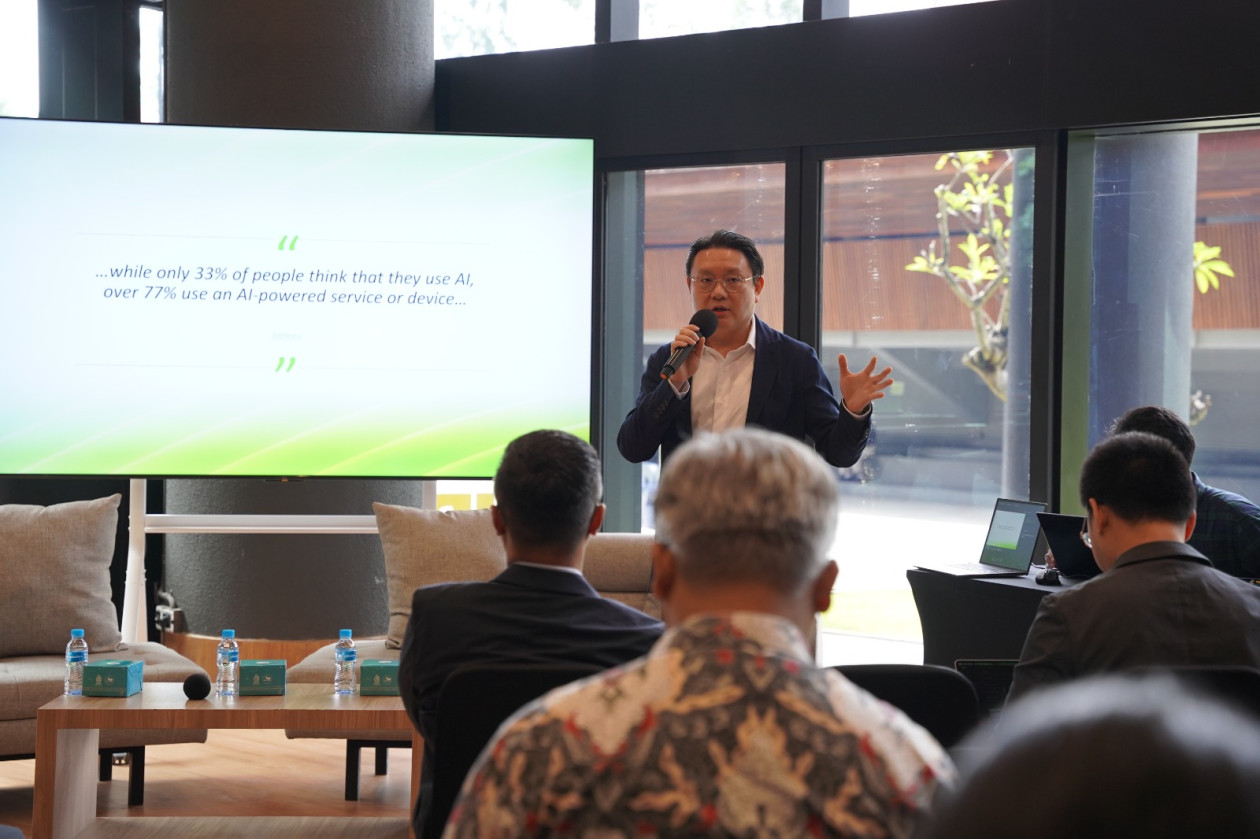
In urban governance, Dr. Ng noted that Metropolis is a framework for computer vision-based AI applications in smart-city and video-analytics contexts. The platform supports large-scale, low-latency video processing, vision and vision-language model training, and integration with deployment pipelines.
Metropolis enables automated video analysis, including object detection, activity monitoring, and event search within recorded footage. Its purpose is to enhance the efficiency of surveillance systems, transportation, and intelligent infrastructure through AI.
Meanwhile, Timothy Liu, NVIDIA Solutions Architect, explained that NVIDIA not only produces GPUs (Graphics Processing Units) but also develops software, frameworks, software development kits, libraries, developer ecosystems, and educational programs. These components are designed to complement one another, thereby accelerating AI experimentation and productivity.
Authors: Fatihah Salwa Rasyid and Leony
Editor: Gusti Grehenson
Post-editor: Jasmine Ferdian
Photographs: Jesp