


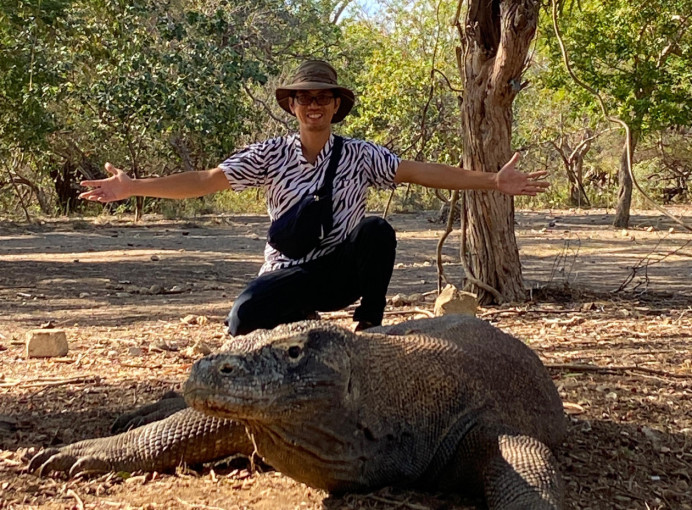
The Komodo dragon (Varanus komodoensis) is the world’s largest lizard species and is found only on several islands in Indonesia’s East Nusa Tenggara Province. As both an apex predator and an endemic species listed as Vulnerable, conservation efforts over the past several decades have largely focused on population dynamics and habitat ecology. Meanwhile, health-related aspects, particularly parasitic diseases affecting wild Komodo dragons, have received relatively little research attention.
According to a study conducted by researchers from the Faculty of Veterinary Medicine at Universitas Gadjah Mada (FKH UGM), the endemic tapeworm Kapsulotaenia sandgroundi was detected at a prevalence of 6.67%. The parasite possesses a double protective capsule surrounding its eggs, enabling it to survive in the semi-arid savanna environment that serves as the Komodo dragon’s natural habitat.
Professor Wisnu Nurcahyo, Professor of Parasitology at FKH UGM, said the findings demonstrate that parasites should not only be regarded as disease-causing organisms but also as indicators of ecosystem health, marking an important milestone in wildlife veterinary medicine.
“Parasites are not merely pathogens but indicators of ecological integrity. The increasing prevalence of ectoparasites and their interactions with the environment and humans highlight the need for more strategic biosecurity management,” he said on Thursday (July 2).
Professor Wisnu explained that the findings were produced by FKH UGM doctoral student Dr. Aji Winarso, whose dissertation examined parasite diversity in wild Komodo dragons in their natural habitat. The study adopted a multidisciplinary approach integrating classical parasitology, molecular taxonomy, and landscape ecology within the One Health framework. Conducted under a joint supervision scheme, the dissertation was supervised by Professor Raden Wisnu Nurcahyo, Dr. Dwi Priyowidodo, and Professor Ivona Foitova from Masaryk University, the Czech Republic.
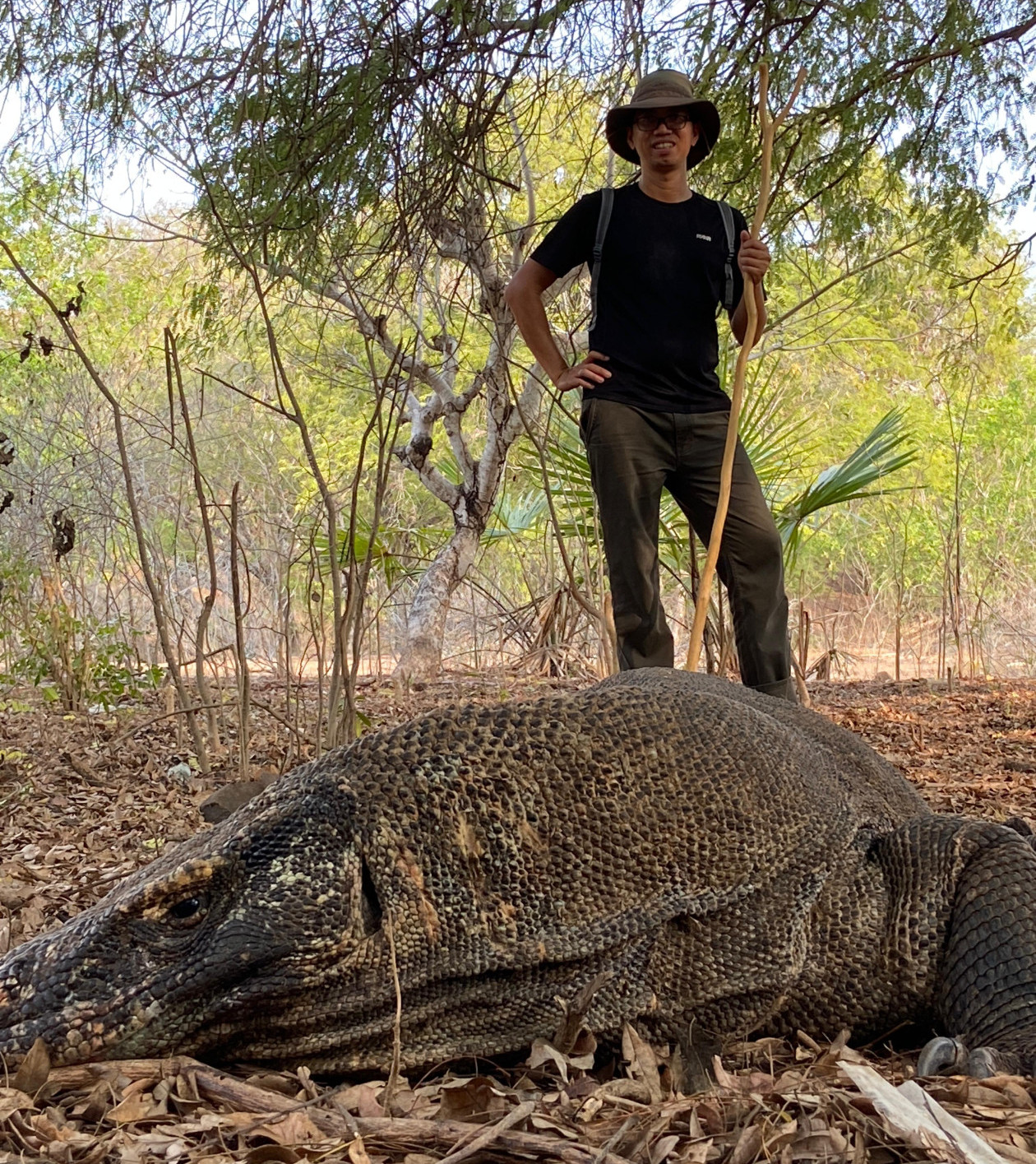
In a separate interview, Aji said his research highlights the fact that the health of wild Komodo dragons remains one of the least explored aspects of conservation efforts. Most previous studies have focused on population and ecological issues, even though disease poses a serious threat to the survival of endemic species inhabiting small islands.
“We aim to establish baseline data on Komodo dragon pathogens and parasites as a foundation for the early detection of disease threats, particularly as interactions between Komodo dragons and humans continue to increase due to tourism activities,” he said.
The research began with fulfilling all legal requirements, including obtaining ethical clearance and permits for access to genetic resources from Indonesia’s Ministry of Forestry. The research team then coordinated with the Komodo National Park Authority as a research partner before conducting habitat observations and collecting biological samples, including feces, blood, and ectoparasites from wild Komodo dragons.
The collected samples were initially identified morphologically under a microscope. To verify the identity of each parasite, the team subsequently conducted molecular analyses, enabling more accurate species identification.
Based on the findings, Aji explained that intestinal worms and ticks on Komodo dragons’ skin are common in wild populations. However, increasing parasite burdens caused by habitat changes or environmental stress could threaten the species’ survival.
He also highlighted the discovery of Komodo ticks biting humans on Rinca Island as an important warning for conservation area managers. Ticks can act as vectors for various pathogenic microorganisms, meaning that excessive interactions among Komodo dragons, prey species such as deer and wild pigs, and humans in tourism areas could increase the risk of disease spillover.
“If no clear boundaries limit close interactions among Komodo dragons, prey animals such as deer and wild pigs, and humans in tourism zones, the risk of disease spillover is very real,” he said.
Based on these findings, Aji urged the Komodo National Park Authority (TNK) and the government to establish an early health surveillance system based on the One Health approach. He emphasized that park managers should routinely monitor parasite trends in Komodo dragons, ensure that prey species remain free of infectious diseases, and strengthen biosecurity measures for park personnel and visitors to prevent potential zoonotic transmission.
Author: Zabrina Kumara
Editor: Gusti Grehenson
Post-editor: Priyanandaningrat
Photo: Documentation of Aji Winarso