


Vaccine development to prevent infectious diseases does not end with successful vaccine production; it also requires the capacity to conduct clinical trials, ensure production and regulatory readiness, and ensure public acceptance and use. Therefore, UGM continues to build research capacity, establish cross-country collaborative networks, and advance vaccine research and innovation to generate meaningful benefits for society.
This was highlighted at the International Vaccine Symposium 2026 and the 5th Annual Meeting of ARISE (Academic Research Organisations Alliance for Southeast and East Asia), held from September 28 to October 3 at the Auditorium of the Faculty of Medicine, Public Health, and Nursing UGM (FK-KMK UGM).
The international symposium brought together the ARISE and Asia-Pacific Vaccine Research Network (APVRN) networks in a single forum. More than 700 participants from 35 countries attended in person and online. Participants came from diverse backgrounds, including ministries and government agencies, universities, research institutions, clinicians, healthcare professionals, industry, and organizations working in vaccines and public health.
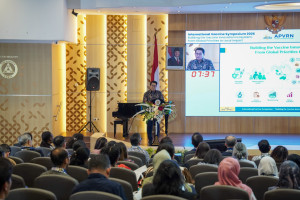
UGM Professor of Pharmacology and Therapy at FK-KMK and coordinator of the international symposium, Professor Jarir At Thobari, said the success of vaccine innovation should not be measured by the number of vaccines successfully developed, but also by the number of clinical trials that can be conducted and the number of vaccines actually administered to the public.
Equally important is stakeholders’ preparedness to respond to and anticipate emerging infectious diseases.
“Advances in vaccine science and technology need to go hand in hand with strengthening health systems, policies, distribution, and public trust,” he emphasized.
According to Thobari, the symposium encouraged participants to recognize that vaccination success is not determined solely by vaccine availability. Access to healthcare services, research and production capacity, supportive policies, and public trust are also essential to ensuring that the benefits of vaccines can be widely realized.
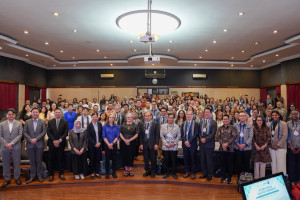
Through discussions, case studies, and the exchange of experiences among countries, participants discussed several challenges in immunization programs, including surveillance of vaccine-preventable diseases, pandemic preparedness, zero-dose children, equitable access to immunization, vaccine health economics, and the use of research findings to support policy.
For FK-KMK UGM, Thobari said the series of international meetings also strengthens universities’ role as a bridge between Indonesia’s research community and regional and international research networks.
“The collaboration being developed is not only aimed at knowledge exchange but also at capacity building and translating research findings into policies and health programs,” he said.
The collaboration is ultimately expected to go beyond the meeting forum and continue through joint research, strengthened clinical trial capacity, innovation development, and the use of scientific evidence to support a resilient immunization system that delivers tangible benefits to communities in Indonesia and the Asia-Pacific region.
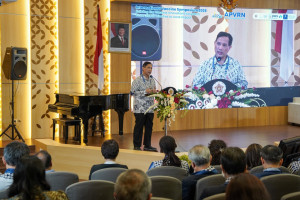
Dean of FK-KMK UGM, Professor Yodi Mahendradhata, said in his remarks that strengthening the vaccine ecosystem cannot be achieved by a single institution or sector. In his view, the success of vaccine innovation depends greatly on collaboration among researchers, regulators, manufacturers, healthcare professionals, and the public as beneficiaries.
“Within such an ecosystem, we can connect cross-country research with vaccine production, health policy, and the delivery of services to the public. Our shared goal is to protect every child and every person who needs protection,” Yodi said.
Author: Adinda Putri Rahma
Editor: Gusti Grehenson
Post-editor: Jasmine Ferdian
Photograph: Donnie Tristan