


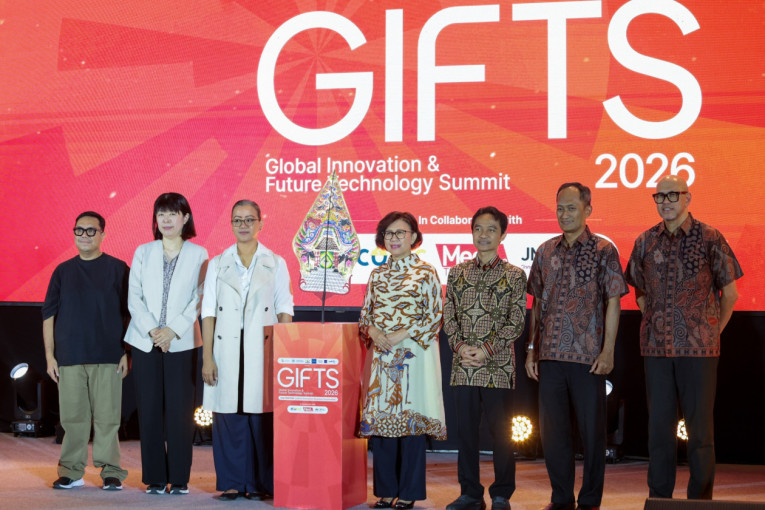
The success of innovation is measured not only by the economic value it generates, but also by its benefits to society and the environment and its relevance to the business sector. Research development must therefore go hand in hand with collaboration among stakeholders and a shared responsibility for sustainability.
This message emerged at the opening of the Global Innovation and Future Technology Summit (GIFTS) 2026, organized by Universitas Gadjah Mada (UGM) on Oct. 21–22, 2026, at UGM’s Innovation and Creativity Center (GIK). Under the theme “CULTIVATION: Culture Innovation Business Acceleration,” the forum brings together academics, industry players, investors, and government representatives to promote the practical application of research and strengthen Indonesia’s innovation ecosystem.
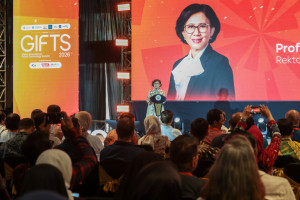
UGM Rector Professor Ova Emilia said that the success of an innovation depends not only on the value it generates, but also on its impact and accountability in supporting the sustainability of life.
“Collaboration with various stakeholders and responsibility for sustainability are essential,” Professor Ova said on Wednesday (Oct. 21).
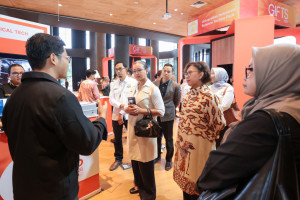
To foster collaboration among researchers, incubators, and industry, GIFTS 2026 features around 70 activities, including business matchmaking, investor speed dating, an innovation marketplace, business discussions, collaborative classes, startup grooming, and support for turning research into business ventures. These activities give researchers opportunities to meet prospective industry partners and investors to explore ways to develop and apply their research findings.
GIFTS 2026 also features an innovation showcase and brings together science and technology parks from five higher education institutions: UGM, the University of Indonesia, Bandung Institute of Technology, IPB University, and Sepuluh Nopember Institute of Technology. This synergy is expected to strengthen ties between universities and businesses, enabling research findings to be developed into products, services, or technologies that meet users’ needs.
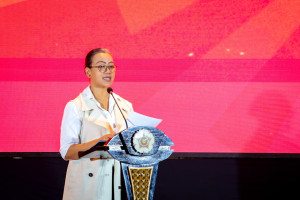
Gusti Kanjeng Ratu Mangkubumi, Chair of the Yogyakarta Special Region Chamber of Commerce and Industry (KADIN DIY), also highlighted the importance of connecting research findings with business needs. She said innovations need further development to generate economic benefits, improve competitiveness, and create jobs.
“Innovation should not stop in laboratories or academic journals. It needs to be developed further to generate economic value, increase productivity and competitiveness, and create jobs,” she said.
She added that KADIN DIY was ready to encourage greater business-sector involvement in innovation development. Through business meetings and collaboration with researchers, industry players can identify market needs and explore follow-up opportunities, including partnerships, pilot projects, investment, and technology licensing.
Dr. Fauzan Adziman, Director General of Research and Development at the Ministry of Higher Education, Science, and Technology, also expressed support for strengthening the innovation ecosystem in a video address. He highlighted the challenge of moving beyond producing research to developing it, applying it, and expanding its benefits. Collaboration among universities, government, and industry is needed to ensure research addresses real-world challenges in areas ranging from food, energy, water, and the environment to disaster management.
Meanwhile, Yumiko Yamakawa, Principal Education Specialist at the Asian Development Bank (ADB), commended UGM and its partners for their efforts to strengthen Indonesia’s innovation ecosystem. She emphasized that translating research into practical applications requires institutional commitment, adequate human resources, and effective partnerships with the private sector.
Yamakawa also highlighted several areas with potential for collaborative development, including agroindustry, medical devices, energy, water and waste management, and disaster resilience. She said the success of an innovation ecosystem should be measured by the tangible value it delivers to Indonesia, rather than simply by the number of research projects produced.
In addition to serving as a platform for researchers and businesses to connect, GIFTS 2026 featured the signing of several cooperation documents between UGM and seven partners from the industrial, commercial, and government sectors. These agreements are intended to strengthen collaboration and encourage the practical application of university innovations.
Three memorandums of understanding (MoUs) were signed by UGM with KADIN DIY, Batang Integrated Industrial Estate, and PT Mega Inovasi Organik. The agreements cover education, research, community service, and the downstreaming of university innovations.
Technical cooperation documents were also signed with the Directorate of Legumes and Tuber Crops and the Directorate of Cereals, under the Directorate General of Food Crops at the Ministry of Agriculture. The cooperation concerns the development of local soybean varieties to improve seed quality and productivity, as well as the use of innovative rice seed varieties to support food security.
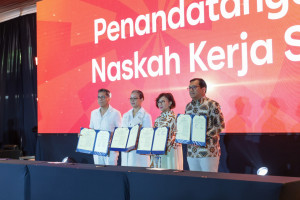
UGM also signed non-disclosure agreements (NDAs) with PT Putra Mataram Mitra Sejati Ambarukmo to apply innovations in the hotel and tourism business and with PT Daur Ulang Indonesia on waste management and processing.
Through its activities and cooperation agreements, GIFTS 2026 is expected to strengthen ties between academia and industry. The collaboration represents a step toward translating university research into practical applications while creating opportunities for innovations that benefit society and Indonesia’s economy.
Author: Adinda Putri Rahma
Editor: Gusti Grehenson
Post-Editor: Priyananda
Photo: Donnie