


Life expectancy among breast cancer patients in Indonesia remains low. Delayed early detection and diagnosis are among the leading causes of mortality. Around 70 percent of breast cancer cases in Indonesia are detected at stages three and four, where the chances of recovery are significantly reduced.
Most breast cancer patients undergo treatment at home. Only after severe clinical symptoms emerge and advanced care is required do they seek treatment at health facilities. This situation presents physical and psychological challenges, and interaction with health facilities can be difficult for patients.
Therefore, local health cadres play an important role in encouraging breast cancer patients to seek regular treatment and complete chemotherapy until declared cancer-free.
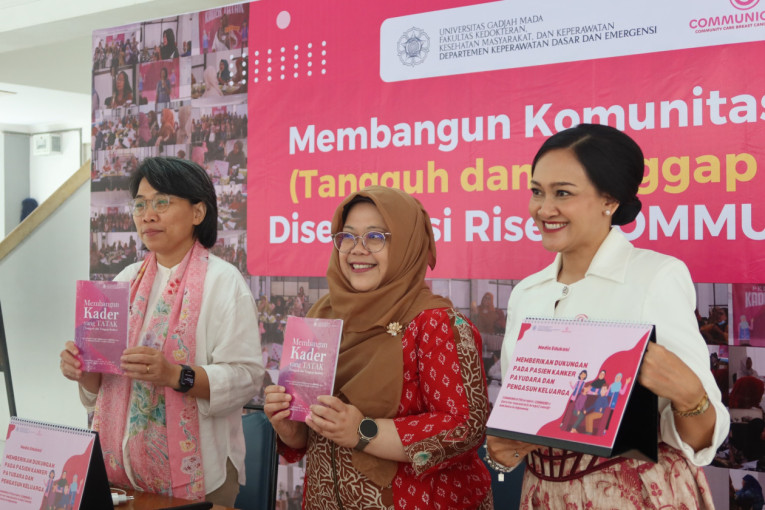
In response to this issue, the Faculty of Medicine, Public Health, and Nursing at Universitas Gadjah Mada (FK-KMK UGM) initiated a research project titled Collaborative cOMMUNIty Care breAst cancEr inDonesia (COMMUNICATED). The program aims to disseminate research findings and promote their use in policymaking, program planning, and community-based cancer services.
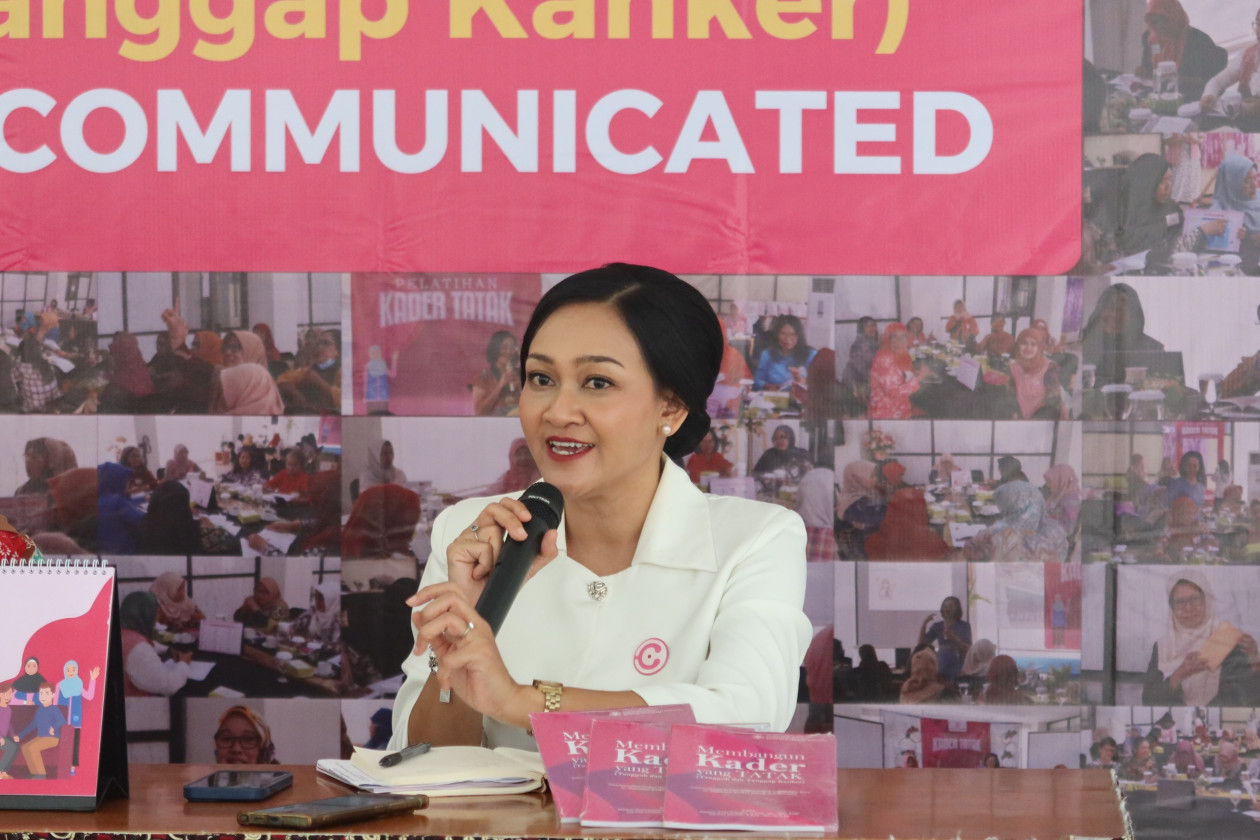
The Principal Investigator of COMMUNICATED, Dr. Martina Sinta Kristanti, explained that community health cadres have long been involved in maternal and child health, elderly care, and mental health programs. However, capacity building related to cancer, particularly breast cancer, remains limited and unstructured.
“Cancer-related training is usually temporary and incidental. Yet the need for cancer patient assistance in communities is substantial,” she said on Thursday (Feb. 12) at the Auditorium of FK-KMK UGM.
According to Dr. Kristanti, the training program aims to strengthen cadres’ roles in providing social support for breast cancer patients, including their families and caregivers.
“To date, 112 cadres have participated in the training, with 43 percent from Yogyakarta City, 23 percent from Sleman Regency, and the rest from Bantul, Gunungkidul, Kulon Progo, and Bali,” she stated.
In its implementation, the team adopted the philosophy of tonggo ngerumat tonggo (neighbors caring for neighbors), a socially grounded approach within residential communities.
Only cadres who have neighbors with breast cancer are eligible to participate in the training. This requirement is set because, after completing the training, cadres are expected to visit patients three times within a two-week to one-month period.
“Through this, we aim to evaluate the effectiveness of the training and assess changes in patients’ quality of life before and after assistance,” Dr. Kristanti explained.
The training is conducted in several waves, including the first, second, and Bali waves. The project developed the TATAK (Tangguh dan Tanggap Kanker – Resilient and Responsive to Cancer) Cadre Education Model using various educational media, such as books, flipcharts, and a web-based application.
“Each wave lasts approximately two to three weeks, combining self-directed learning and in-person sessions with facilitators,” she added.
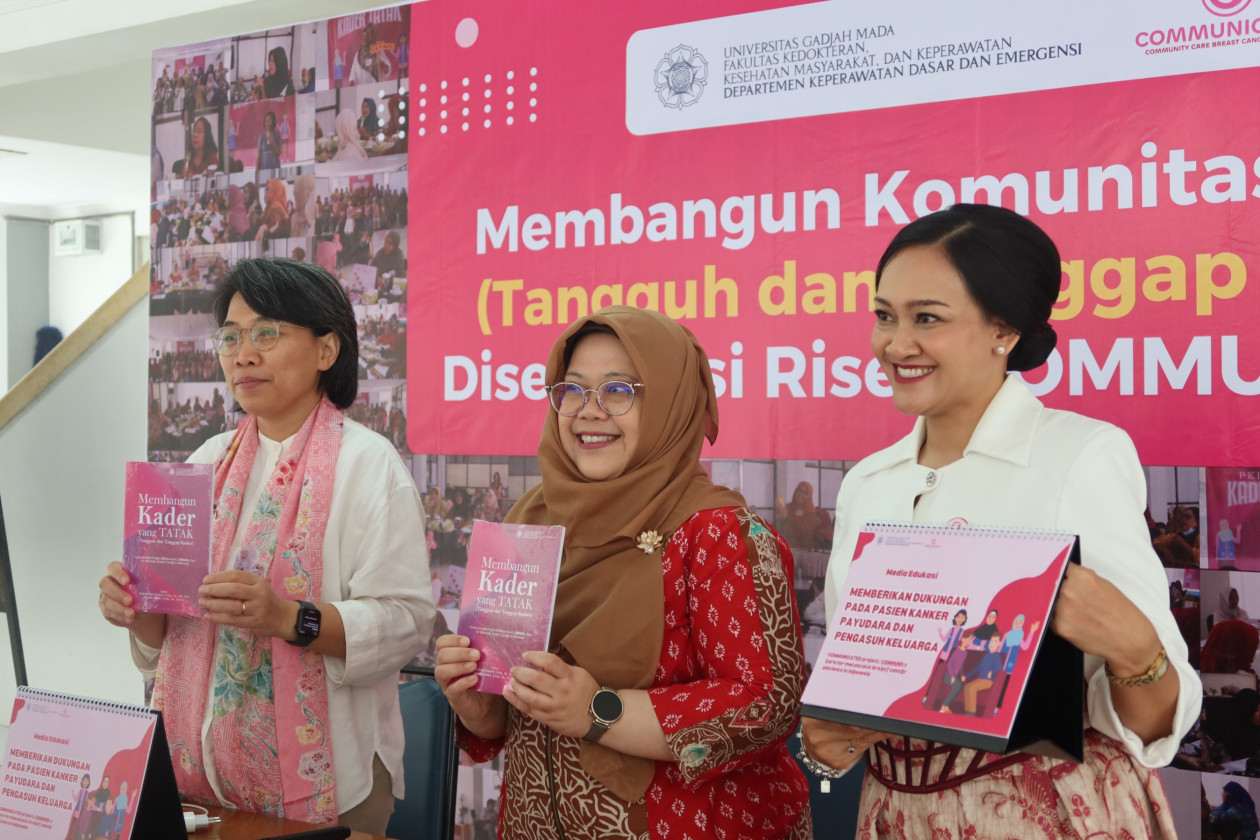
The Vice Dean for Research and Development at FK-KMK UGM, Professor Lina Choridah, emphasized that the health cadre training program integrates research and community service. She added that breast cancer remains a significant disease burden requiring serious attention, particularly among patients with metastatic conditions.
Support from the surrounding community is considered crucial in assisting the treatment process.
“With the slogan tonggo jago tonggo (neighbors supporting neighbors), this program aligns closely with Yogyakarta’s community culture and supports comprehensive cancer management,” she said.
Support for the program’s sustainability was also expressed by Ari Natalia Probandari, Professor of Public Health at Universitas Sebelas Maret. She described COMMUNICATED as an important innovation to enhance cadres’ skills in assisting cancer patients and their families.
“This good innovation needs to be sustained and considered for integration into government programs,” she remarked.
According to Professor Probandari, the outcomes of the COMMUNICATED project have strong potential to be aligned with the government’s Primary Care Integration (ILP) program. She noted that health cadres involved in government programs also need standardized skill training.
“This program can be integrated through existing community-based home visit activities,” she explained.
Author/Photographer: Hanifah
Editor: Gusti Grehenson
Post-editor: Zabrina Kumara Putri