


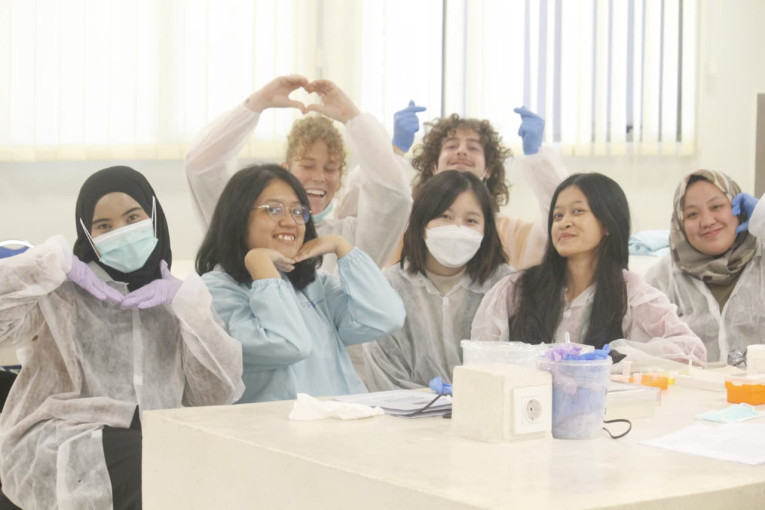
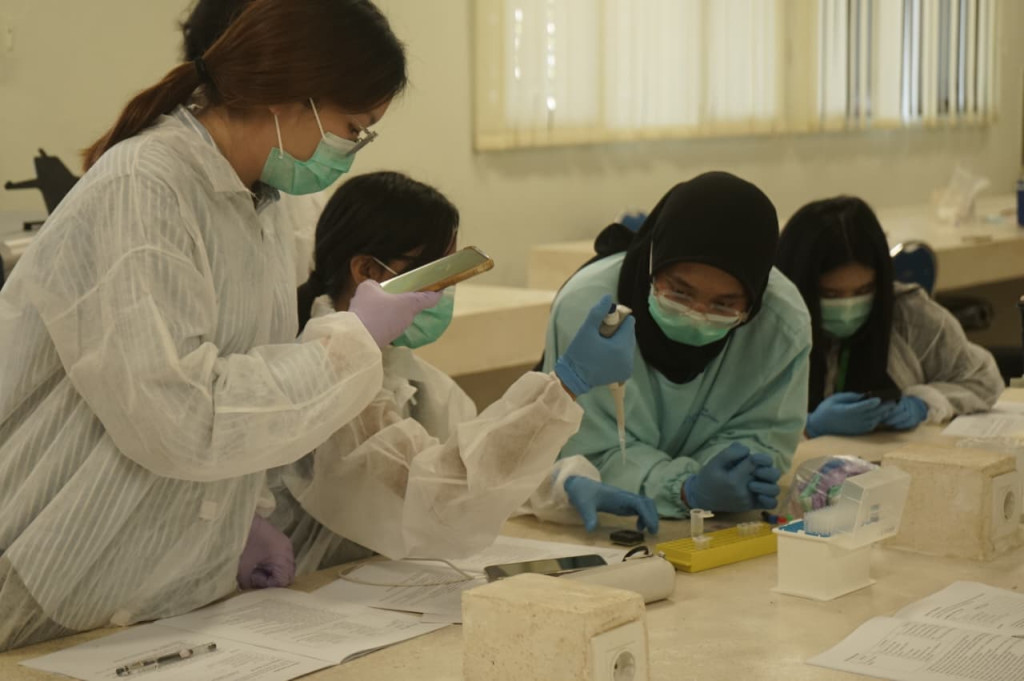
Universitas Gadjah Mada (UGM), the University of Technology Sydney (UTS), and The Australian National University (ANU) have brought together 57 students and academics for the International Summer Course on Tropical Biodiversity and Sustainable Development 2026, held from July 6 to 24 at UGM. Under the theme “From Ecosystems to Repositories: Data-Driven Insights into Tropical Biodiversity,” the program introduces participants to data-driven approaches for biodiversity research, conservation, and sustainable ecosystem management while strengthening international academic collaboration.
Professor Eko Agus Suyono, Vice Dean for Research, Community Service, Partnerships, and Alumni Affairs at UGM’s Faculty of Biology, said the summer course is designed not only to strengthen participants’ scientific knowledge but also to foster long-term international partnerships in biodiversity conservation.
“This program is not only about acquiring scientific knowledge but also about building international friendships, exchanging ideas across cultures, and strengthening global collaboration to address the challenges of biodiversity conservation and sustainable development,” he said on Wednesday (July 22).
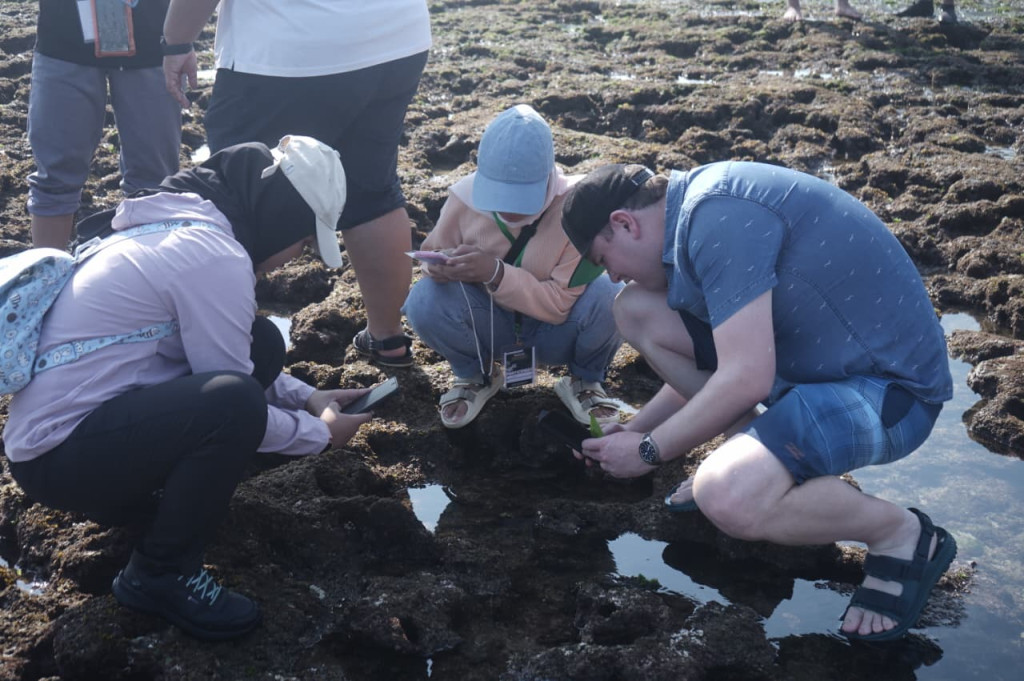
The three-week program combines classroom instruction with hands-on field experience. As part of the curriculum, participants joined a two-day field excursion to the Bayat Geological Station in Klaten and Porok Beach in Gunungkidul, where they explored tropical ecosystems while applying modern research techniques.
“Through these activities, participants connected classroom learning with field practice by conducting biodiversity surveys, applying geospatial technologies, and learning specimen documentation and preservation techniques,” Professor Eko explained.
During the field sessions, participants used uncrewed aerial vehicles (UAVs), or drones, to collect spatial data for habitat mapping and ecosystem monitoring. They also carried out biodiversity surveys, collected coastal specimens, discussed field observations, and integrated biological and geospatial data to support ecosystem analysis.
To support the principles of open science and citizen science, participants uploaded all biodiversity observations to the iNaturalist platform, allowing the collected data to contribute to global biodiversity databases that support future research and conservation initiatives.
Beyond enriching students’ academic experience, the summer course also created opportunities to expand institutional collaboration. During the program, Professor Ian Menz, Head of the School of Life Sciences at UTS, accompanied the Australian delegation and met with representatives from UGM’s Faculty of Biology to discuss future academic partnerships.
The discussions explored opportunities for broader student mobility, expanded exchange programs, prospective double-degree initiatives, and collaborative research between UGM and UTS.
Professor Eko said the partnership demonstrates the faculty’s commitment to strengthening international research networks while creating more global learning opportunities for students and academics.
“The program broadens participants’ academic perspectives while strengthening research collaboration, knowledge exchange, and long-term partnerships between Indonesia and Australia,” he said.
UGM’s Secretary of the Directorate of Partnerships and Global Relations, Professor Suherman, also emphasized that rapid advances in genomics, bioinformatics, geospatial technology, and data science have transformed the way researchers study and conserve biodiversity.
“Advances in genomics, bioinformatics, geospatial technology, and data science have transformed the way we study, conserve, and sustainably manage biodiversity,” he said.
The International Summer Course on Tropical Biodiversity and Sustainable Development is jointly organized by UGM’s Faculty of Biology, the Department of Geological Engineering at UGM’s Faculty of Engineering, the University of Technology Sydney, and The Australian National University. The program receives support from Australia’s New Colombo Plan (NCP), the EQUITY Grant for Academic Innovation and Internationalization, and PT Dynata Inovasi Corporalab.
Author: Zabrina Kumara
Editor: Gusti Grehenson
Post-Editor: Priyanandaningrat
Photo: Documentation of Faculty of Biology