


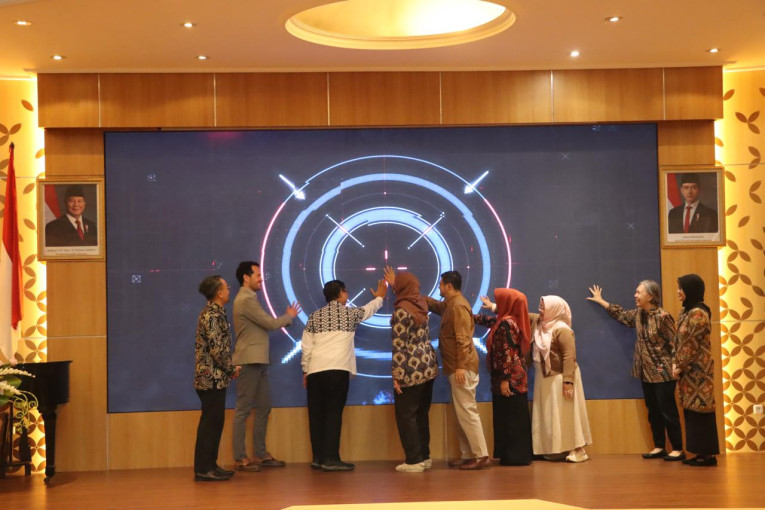
Yogyakarta Special Region is facing growing urgency in healthcare services following findings that cancer prevalence has reached 3.6 per 1,000 population, according to the 2023 Indonesian Health Survey. Recorded data show that breast cancer cases in the region are predominantly found among women aged 20 to 54.
In response to this urgent situation, Yogyakarta has been officially designated as a national pilot program to strengthen breast cancer management. This strategic step was marked by the launch of the Yogyakarta Breast Cancer Initiative (YBCI), held at the Auditorium of the Faculty of Medicine, Public Health, and Nursing, Universitas Gadjah Mada (FK-KMK UGM), on Friday (Jan. 27).
The Chair of the Indonesian Cancer Foundation (Yayasan Kanker Indonesia/YKI) Coordinating Branch for the Special Region of Yogyakarta, Gusti Kanjeng Ratu (GKR) Hemas, emphasized that breast cancer management requires a human-centered nursing approach. According to her, each individual’s cancer journey is unique and demands care that goes beyond physical treatment.
“Medical care should focus on the person, not solely the disease. Patients’ needs vary and go beyond physical treatment, encompassing ecological, spiritual, and social aspects,” she said.
Furthermore, GKR Hemas explained that a key factor in the success of the YBCI program, beyond medical services, is the presence of patient navigators who can provide assistance tailored to patients’ needs.
“Through a collaborative approach involving various elements, including communities, we can help ensure that breast cancer patients complete their medical treatment,” she added.
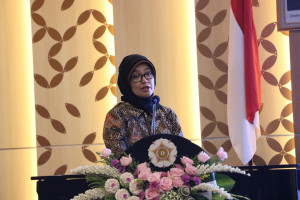
For reference, the YBCI program serves as an operational model of the National Breast Cancer Action Plan initiated by the Indonesian Ministry of Health. In its implementation, the Ministry collaborates with the City Cancer Challenge Foundation(C/Can) and has appointed FK-KMK UGM as the Lead Implementing Partner. The Chair of the YBCI City Executive Committee, Dr. Kartika Widayati, explained that the initiative is crucial for mapping the on-the-ground conditions.
“YBCI helps identify system gaps, strengthen service coordination, and set actionable priorities that can be replicated in other cities across Indonesia,” she said.
Kartika further elaborated that YBCI emerged from an eight-month program titled the City Engagement Process (CEFP). At this stage, the primary focus was on establishing a governance structure to enhance coordination among stakeholders. This structure includes the City Executive Committee (CEC) as a steering and strategic decision-making body composed of local government representatives, hospitals, academics, civil society organizations, and patient representatives.
Subsequently, under the CEC, a Breast Cancer Working Group (BCWG) will be formed, comprising technical experts.
“This working group is divided into four main pillars: cancer management and quality of care, diagnostic services, treatment services, and community and patient access,” she explained.
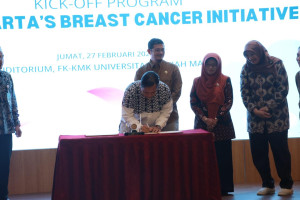
In his remarks, the Dean of FK-KMK UGM, Professor Yodi Mahendradhata, stated that FK-KMK’s long-standing history has always been grounded in addressing the real needs of community welfare.
“For us, the launch of the YBCI program represents a collective effort to ensure that policies, scientific evidence, and healthcare services truly respond to the challenges of breast cancer in Indonesia,” he said.
Professor Yodi explained that addressing breast cancer challenges in Indonesia cannot be separated from systemic issues related to governance, access, literacy, and policy. According to him, with Yogyakarta designated as the first Horizon City in Indonesia, the YBCI program can serve as an operational model for implementing the National Action Plan at the city level in a contextual, integrated, and sustainable manner.
“YBCI serves as a model for operationalizing the national action plan at the city level by connecting national policy, scientific evidence, and service access,” he concluded.
Author: Aldi Firmansyah
Editor: Gusti Grehenson
Post-editor: Jasmine Ferdian
Photo: Salwa