SDG 17: Partnerships for the Goals
UGM sends 13 PKM teams to the 38th PIMNAS, presenting diverse innovations in technology, health, environment, and social development.
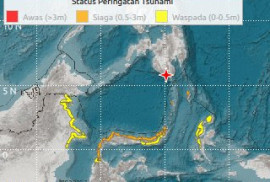
UGM expert explains causes of the Banjarnegara landslide and highlights urgent mitigation measures, early warning systems, and community preparedness.
Experts highlight the electrification of airport ground equipment as vital for reducing transport emissions and strengthening sustainable aviation in Indonesia.
UGM students win three awards at the 2025 KMI Expo, showcasing leading innovations in culture, technology, and creative entrepreneurship.
UGM’s Faculty of Animal Science hosts a national forum discussing poultry sector transformation, budget optimization, and strategies for achieving food self-sufficiency.
UGM’s Gamahumat innovation offers lignite-based soil restoration to strengthen food security, support mine reclamation, and enhance sustainable agriculture.
UGM researchers collaborate with Japan, Thailand, and the Philippines through e-ASIA JRP to advance integrated biomass waste management in Yogyakarta.
Victoria Governor Margaret Gardner underscores the importance of education and cross-sector collaboration in strengthening Indonesia–Australia partnerships.
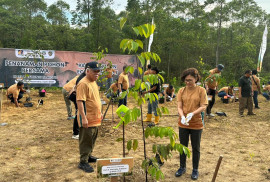
UGM students hold KAPSTRA Eco-Learning outreach on herbal medicine, TOGA planting, and eco-enzyme training to promote sustainable environmental practices.
UGM’s Resona Saintek webinar urges stronger scientific collaboration and farmer institutions to drive sustainable agriculture transformation in Indonesia.
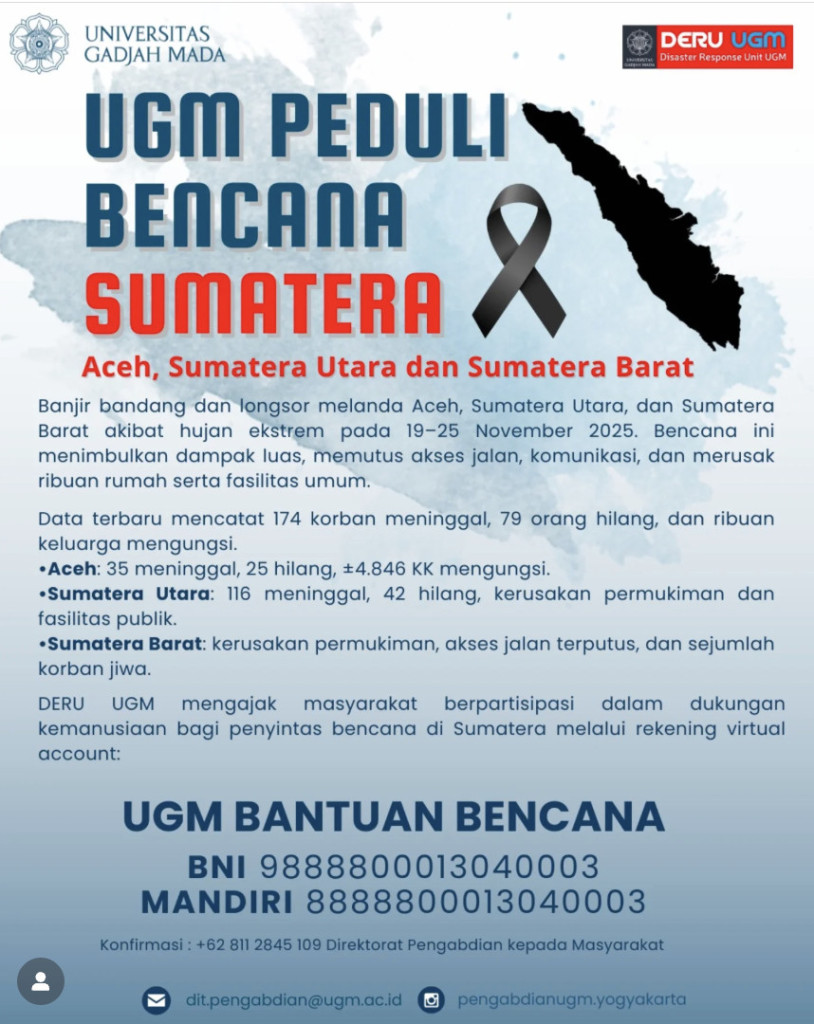
More than 200 UGM students were affected by floods in Sumatra as the Yogyakarta Government and universities coordinate aid and study support.
UGM expert urges post-disaster housing policies in Sumatra to prioritize safe permanent settlements to prevent recurring floods and landslides.
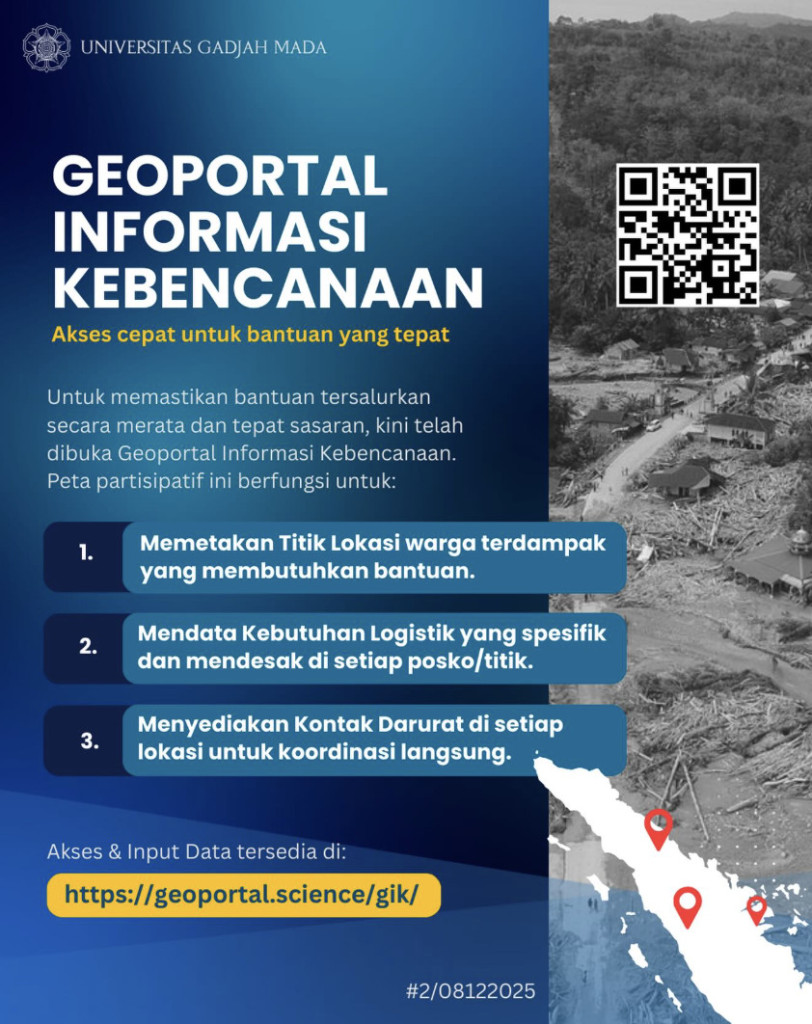
UGM, Kagama, and LPS raised Rp2.3 billion in donations to support victims of floods in Aceh, North Sumatra, and West Sumatra.
Deploying elephants to clear post-disaster debris may endanger their health and welfare, prompting calls for safer and more ethical alternatives.
Escalating multi-hazard disasters in Sumatra reveal the limits of emergency-only responses and call for stronger, cross-sector mitigation mechanisms.
Fuel shortages, power outages, and damaged telecom networks in disaster-hit regions are hampering recovery efforts, prompting calls for urgent infrastructure repairs.
UGM psychology expert highlights the importance of psychosocial support and mental health services to help disaster survivors in Sumatra recover sustainably.
UGM expert highlights the urgency of meeting basic needs and providing psychosocial support to help Sumatra flood survivors recover with dignity.
UGM experts urge stronger mitigation capacity and technical readiness of local governments to reduce disaster risks amid extreme weather threats.
UGM experts explain how geology, climate change, and ecological degradation contribute to recurring flash floods across Sumatra.
UGM’s expert stresses the need for tiered governance in determining national disaster status amid floods and landslides in Sumatra.
UGM deploys medical teams to Sumatra to support emergency health response and assist recovery efforts for disaster-affected communities.
UGM sociologist highlights the crucial role of social solidarity and strong state coordination in responding to major floods in Sumatra.
UGM hydrology expert explains the causes of recent flash floods in Sumatra and outlines urgent response priorities and long-term prevention measures.
UGM deploys a trauma healing team and coordinates aid to support communities and students affected by floods and landslides in Sumatra.
UGM experts urge archipelago-based development to reduce disaster risks, highlighting Indonesia’s geological complexity and the need for science-led policy.
Over 200,000 students affected by floods in Sumatra need psychosocial support to restore well-being and learning continuity, says UGM expert.
Integrating drones, artificial intelligence, and smartphones can speed up the search for disaster victims, a UGM expert says, amid Indonesia’s complex terrain.
UGM professor urges reallocating part of the MBG funds to restore education infrastructure and support students and teachers in disaster-hit regions.
UGM prepares data-driven psychosocial assistance for flood survivors in Aceh, focusing on rapid assessment, volunteer training, and targeted interventions.