SDG 9: Industry Innovation and Infrastructure
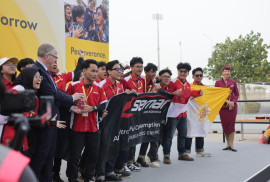
UGM sends 13 PKM teams to the 38th PIMNAS, presenting diverse innovations in technology, health, environment, and social development.
Experts highlight the electrification of airport ground equipment as vital for reducing transport emissions and strengthening sustainable aviation in Indonesia.
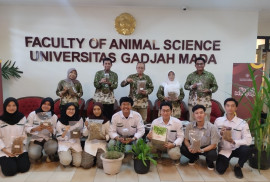
UGM’s Faculty of Animal Science hosts a national forum discussing poultry sector transformation, budget optimization, and strategies for achieving food self-sufficiency.
UGM’s Gamahumat innovation offers lignite-based soil restoration to strengthen food security, support mine reclamation, and enhance sustainable agriculture.
UGM researchers collaborate with Japan, Thailand, and the Philippines through e-ASIA JRP to advance integrated biomass waste management in Yogyakarta.
UGM’s Resona Saintek webinar urges stronger scientific collaboration and farmer institutions to drive sustainable agriculture transformation in Indonesia.
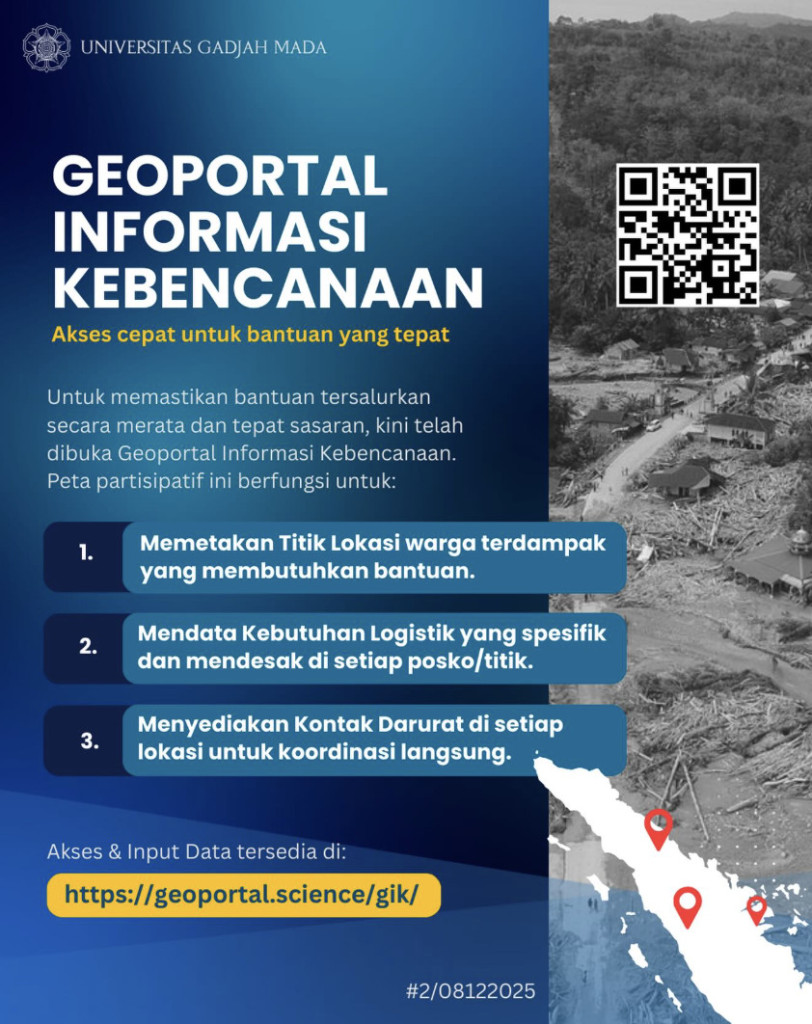
Fuel shortages, power outages, and damaged telecom networks in disaster-hit regions are hampering recovery efforts, prompting calls for urgent infrastructure repairs.
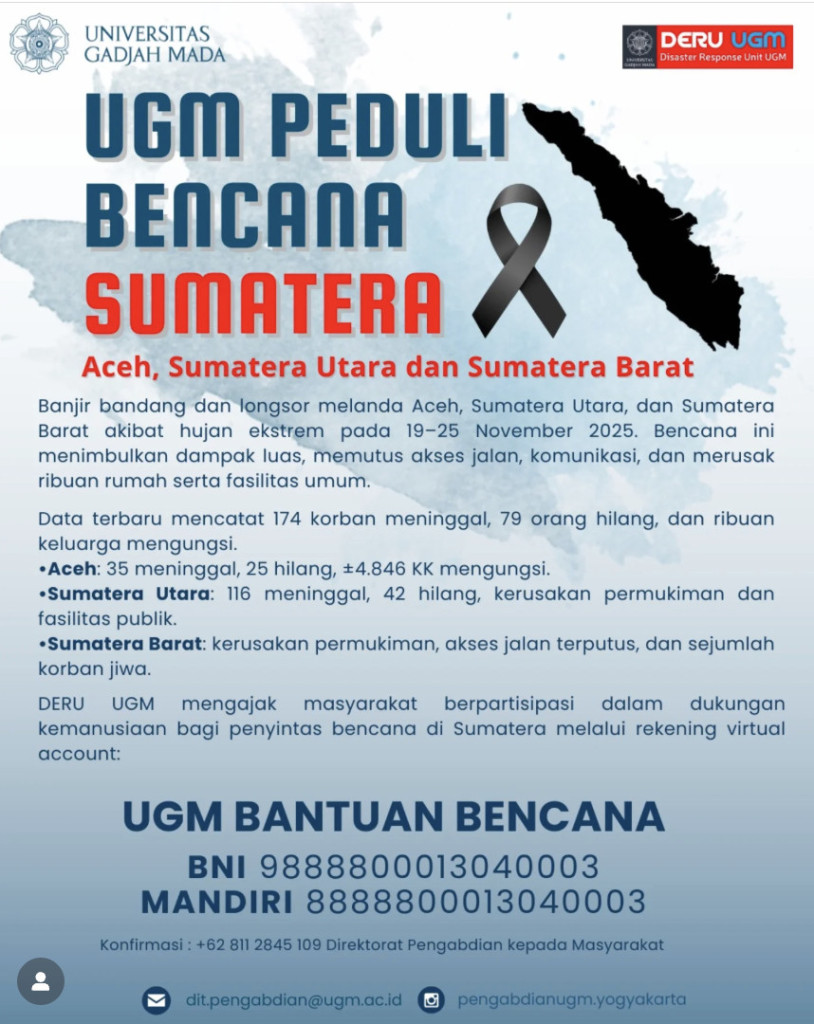
UGM expert warns that excessive forest exploitation weakens environmental resilience and heightens disaster risks, as seen in recent floods in Sumatra.
Integrating drones, artificial intelligence, and smartphones can speed up the search for disaster victims, a UGM expert says, amid Indonesia’s complex terrain.
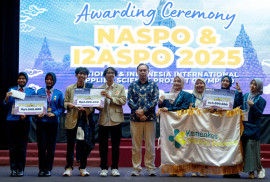
UGM wins the 2025 National ONMIPA with 6 golds, 1 silver, 6 bronzes, and 1 honorable mention, securing its position as Indonesia’s leading science university.
UGM students and community partners launched the RESIK and ROADMATE programs to improve coastal cleanliness and waste management at Parangtritis Beach.
FKH UGM hosts a workshop on stem cells and modern imaging technologies to strengthen national veterinary research and promote non-invasive methods.
UGM and Pusterau formalize aerospace cooperation with the handover of two trike aircraft to support education, research, and air defense readiness.
UGM collaborates with Indonesia’s mining industry to advance AI-powered smart mining technologies and support national digital transformation.
Coordinating Minister Airlangga Hartarto outlines Indonesia’s downstreaming agenda, the digital talent needs, and the roles of universities in accelerating economic growth.
UGM students develop SIKE, an AI-based smart kitchen system to improve the Free Nutritious Meal Program and turn food waste into renewable energy.
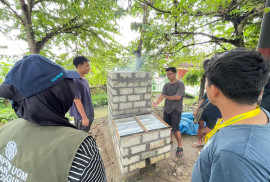
UGM empowers Dlingo forest farmers to convert wood biomass waste into biochar through training on sustainable agroforestry and rotary drum pyrolysis.
UGM launches Presokazi, a premium rice innovation enriched with iron and zinc to support daily nutrition for Indonesian families.
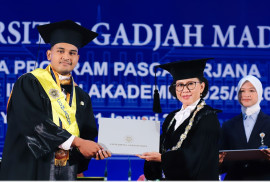
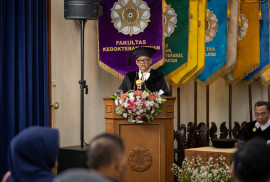
UGM inaugurates Professor Abdurakhman and Professor Atok Zulijanto as new FMIPA professors, highlighting research in financial statistics and function theory.
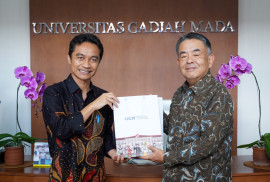
UGM and Telkom Indonesia sign an MoU to develop an AI Center of Excellence, strengthening Indonesia’s digital talent and national AI ecosystem.
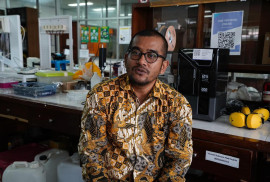
Indonesia’s Vice Minister of Health reviews the UGM-developed digital radiography device undergoing preclinical testing at UGM Academic Hospital.
ISTAP XI discusses sustainable livestock technologies, global collaboration, and innovations to boost productivity while reducing environmental impact.
UGM inaugurates Andang Widi Harto as Professor of Advanced Nuclear Power Reactor Engineering, highlighting nuclear energy’s strategic future for Indonesia.
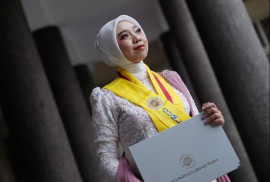
UGM faculty member, Anton Sony Wibowo, earned a doctorate for developing saliva-based biomarkers to support early detection of nasopharyngeal carcinoma.
UGM researchers develop protein-bait innovations to control fruit flies, boosting salak quality, yields, and export potential in Turi, Sleman.
Unilever Indonesia leaders highlight adaptability, cross-functional collaboration, and learning from failure as essential skills for young professionals.
UGM Vocational College students and local youth test AI-based ROADSTER app to detect road damage and illegal waste, promoting community innovation.
UGM students design an automatic pottery dryer that reduces drying time from days to hours, enhancing craftsmen’s productivity and efficiency.
Universitas Gadjah Mada wins five awards at the 2025 PKM Awards, reaffirming its commitment to student creativity and academic excellence.
UGM Rector emphasizes the need for universities to accelerate research downstreaming and innovation to achieve Indonesia Emas 2045.