



Issues of food safety and authenticity have become increasingly prevalent in society. Incidents such as student food poisoning linked to the Free Nutritious Meals (MBG) program at schools have occurred repeatedly. Additionally, many consumers suffer losses due to counterfeit food products circulating in traditional markets and on e-commerce platforms.
Currently, only a limited number of tools can rapidly detect food safety and authenticity. In general, food samples tested for safety and authenticity require laboratory analysis that can take several days.
A lecturer at the Faculty of Agricultural Technology, Universitas Gadjah Mada (FTP UGM), Dr. Widiastuti Setyaningsih, has successfully developed a rapid detection tool to assess food safety, authenticity, and quality in a short time.
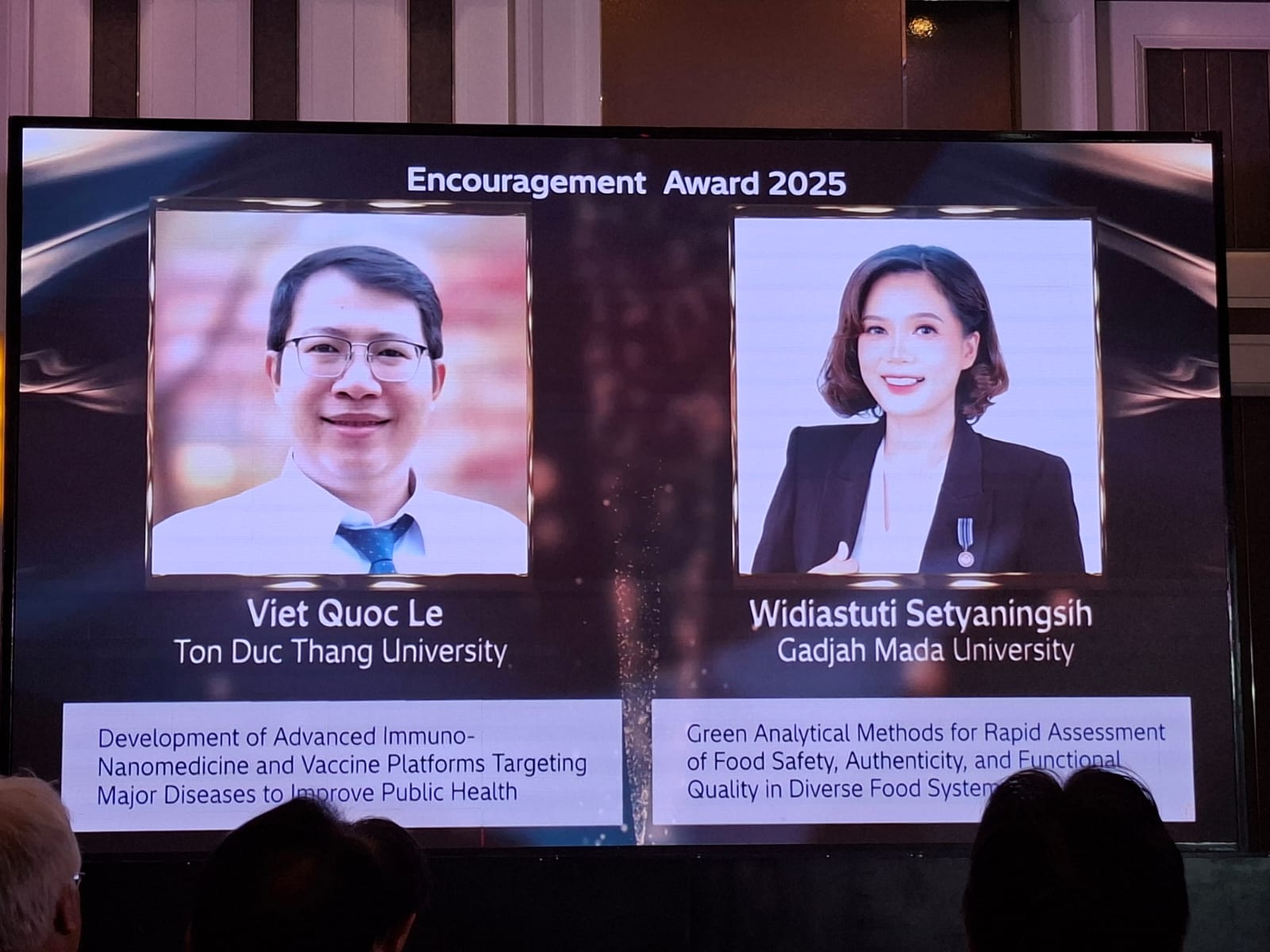
Through her research titled “Green Analytical Methods for Rapid Assessment of Food Safety, Authenticity, and Functional Quality in Diverse Food Systems,” Dr. Setyaningsih developed an innovative chemical analysis method capable of evaluating food safety, product authenticity, and functional quality within minutes or even seconds using very minimal chemical reagents, or in some cases, none at all.
This approach represents a significant breakthrough as an alternative to conventional methods, which typically require lengthy analysis times of several days and rely on hazardous chemicals that harm the environment.
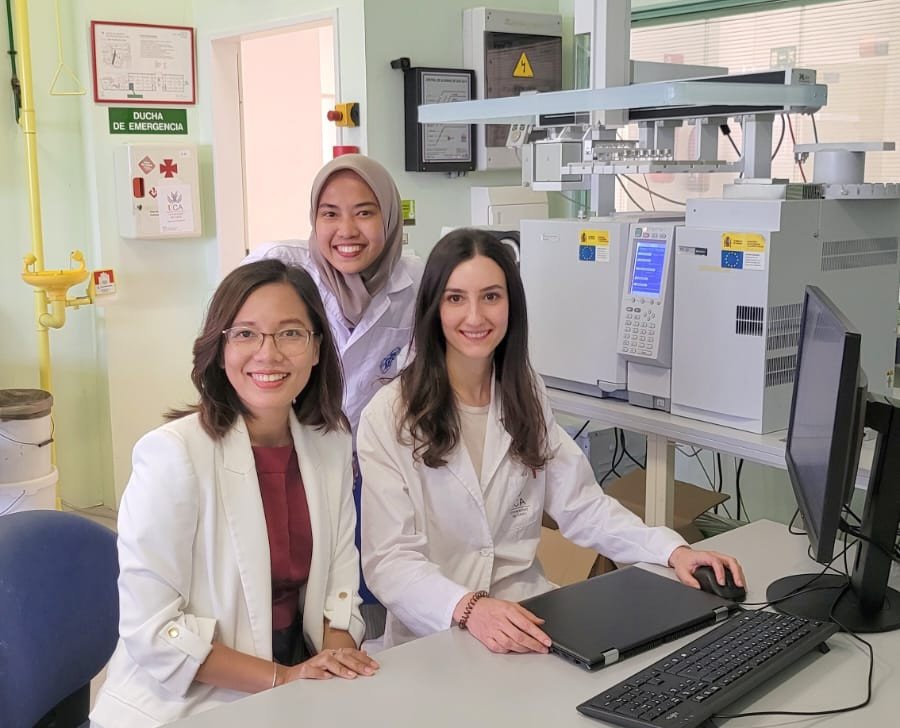
Dr. Widi, as she is familiarly known, explained that the innovation focuses on three main pillars: food safety, food authenticity, and functional quality. This approach is highly relevant for addressing the challenges of modern food surveillance, which demand speed, accuracy, and sustainability.
In addition to being fast and accurate, the methods developed are also environmentally friendly. Dr. Widi applied advanced extraction techniques, such as ultrasound-assisted and microwave-assisted extraction, which require significantly less solvent.
“These methods are faster and use minimal solvents, making them more environmentally friendly. That is why they are referred to as green analytical methods,” Dr. Widi explained during an interview on Thursday (Jan. 21).
The analysis and quantification processes are further accelerated by spectroscopic methods, analytical techniques that exploit the interaction between electromagnetic radiation and matter to examine the chemical and physical properties of compounds.
Compared to conventional chromatographic methods, spectroscopy enables analysis without lengthy extraction stages and, in some cases, is non-destructive to the sample.
She also developed high-speed chromatographic methods for comparison and complement. In conventional chromatography, analysis typically requires a relatively long time.
“With conventional chromatography, analysis can take a long time. However, by using Ultrahigh Performance Liquid Chromatography (UPLC), the analysis time can be reduced from around 30 minutes to just 3 minutes,” she explained.
Furthermore, the developed methods are not only capable of identifying and quantifying bioactive compounds beneficial to health but also of detecting various harmful substances, such as mycotoxins (aflatoxins and ochratoxins) and narcotics, psychotropics, and other addictive substances (NAPZA) that may be misused in food products.
Through this development, Dr. Widi hopes that the methods can be adopted by the National Agency of Drug and Food Control (BPOM) and other relevant institutions to strengthen the national food safety monitoring system.
Beyond safety aspects, the research also evaluates the functional quality of food, including its antidiabetic and antidepressant potential across diverse food systems.
Several studies she has conducted include testing the antidepressant activity of edible flowers, supported by a L’Oréal research grant, and testing antidiabetic compounds in roselle flowers, supported by a Kalbe grant.
“In my proposal for Hitachi, I introduced the concept of diverse food systems, meaning it is not limited to a single type of food. The edible flowers I study are also highly diverse, ranging from banana blossoms, roselle, torch ginger, senggani, turi, to safflower,” she explained.
Notably, the researcher has also developed a web-based application for analyzing macroalgae and cocoa. Through this platform, laboratories with spectroscopic data can directly upload their data to obtain rapid and accurate analytical results in the form of sample quality interpretation. The application is designed to be globally accessible and free to use.
She further explained that she has developed analytical methods capable of distinguishing coffee products derived from wild civet coffee and those produced from farmed civets, as well as methods to detect cocoa adulteration to determine whether cocoa powder is pure or adulterated, and to identify macroalgae species and their regions of origin across Indonesia.
In addition to raw materials, the analytical methods she developed have also been applied to processed food products, such as cookies and jams, to determine resveratrol content, an antioxidant compound. This underscores that the diverse food systems approach encompasses the entire food chain, from raw materials to final products.
Looking ahead, Dr. Widi hopes that the results of her research can be widely adopted by industry, government laboratories, relevant ministries, Customs authorities, and BPOM, while also contributing to the formulation of data-driven food safety policies and regulations.
“I hope that my research does not stop in the laboratory, but truly delivers tangible benefits to society,” she concluded.
Author: Leony
Editor: Gusti Grehenson
Post-editor: Rajendra Arya