


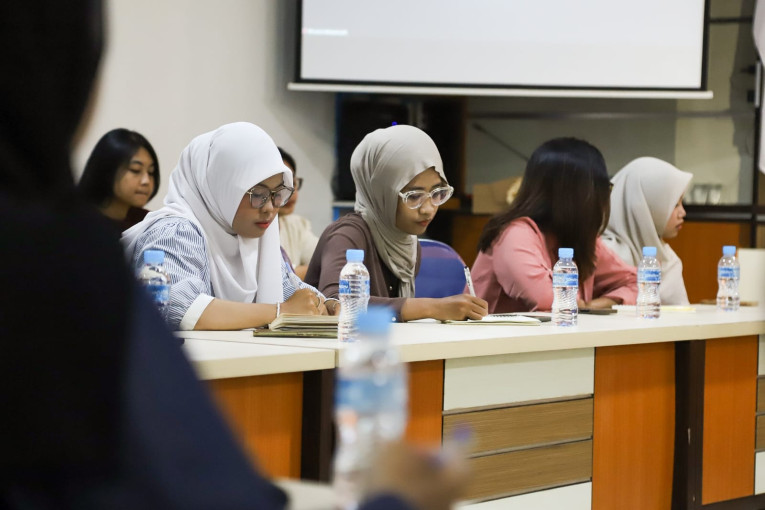
Universitas Gadjah Mada (UGM) is set to deploy a KKN-PPM Disaster Response student team to support civil society in Sumatra during disasters.
Through this community service program, a team of 30 UGM students will assist disaster mitigation efforts in Mayangcut Village, Pidie Jaya, and Geudumbak Village, North Aceh Regency, from Jan. 31 to Feb. 28, 2026.
The deployment of the KKN-PPM Disaster Response team is a follow-up to UGM’s earlier establishment of seven working groups to address hydrometeorological disasters across the Sumatra region.
Secretary of the Directorate of Community Service at UGM, Dr. Djarot Heru Santoso, explained that the KKN-PPM Disaster Response program has distinct characteristics compared to regular KKN programs. The fundamental differences lie in its duration and targeted focus.
“This KKN program is designed to continue the vision of ‘UGM Cares for Sumatra.’ Students are tasked with continuing the work and community assistance previously carried out by UGM’s expert teams,” said Dr. Santoso on Wednesday (Jan. 28).
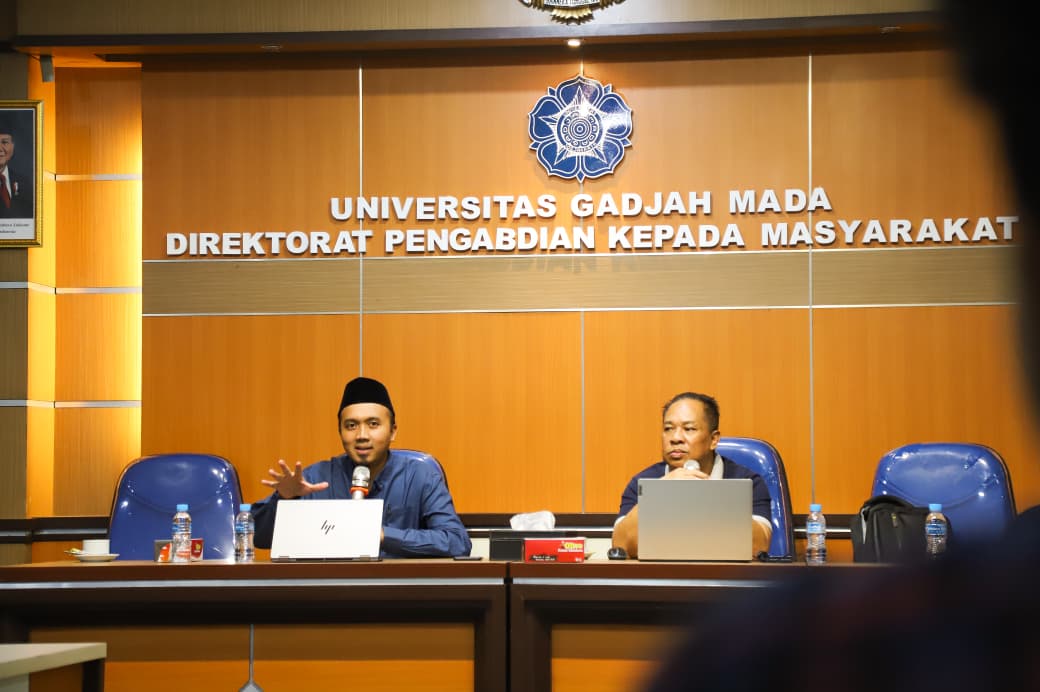
One of the key innovations that will become the focus of the KKN-PPM Disaster Response mission is the continued implementation of Rumah Geunira.
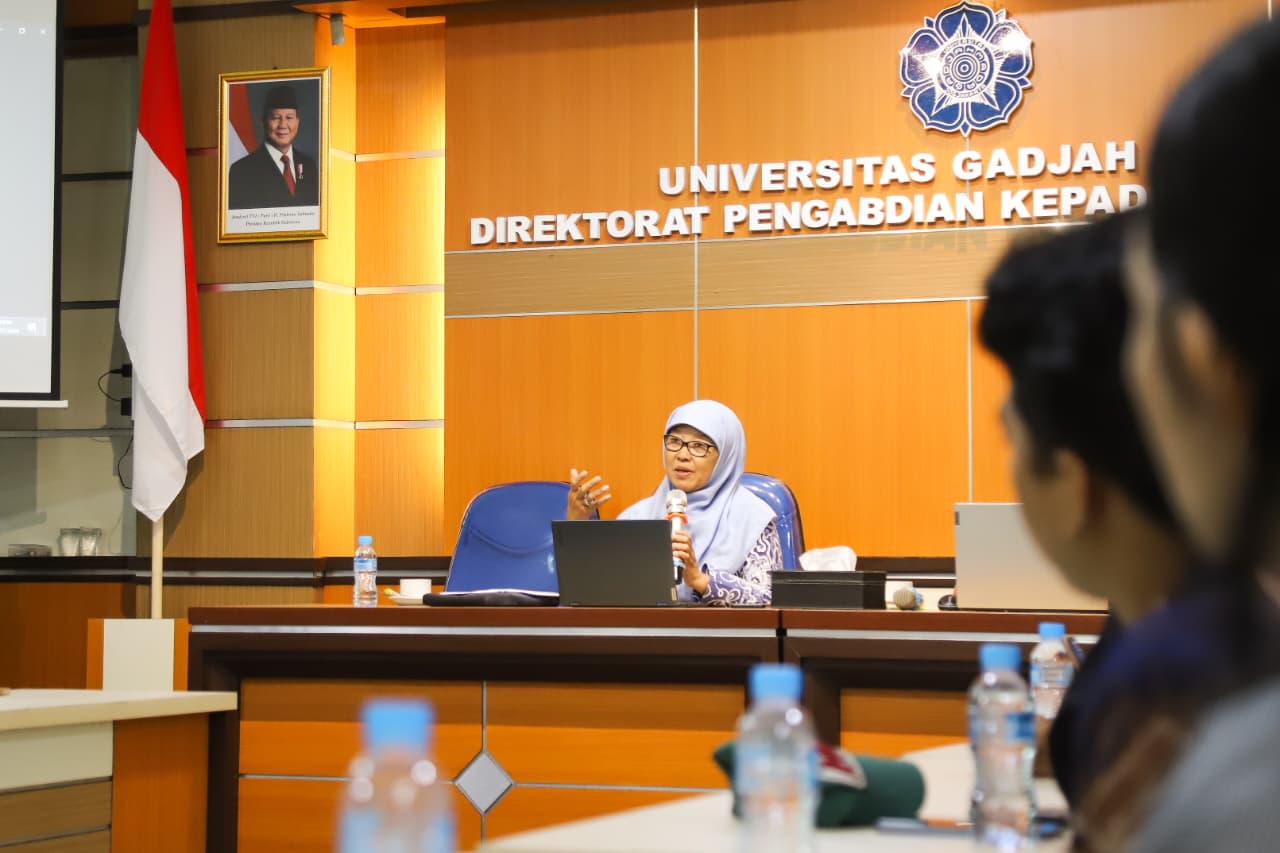
Dr. Ardhya Nareswari from the UGM’s Faculty of Engineering (FT UGM) explained that Rumah Geunira was designed as a concrete solution to post-disaster housing crises, which are often hindered by issues of habitability and privacy.
Dr. Nareswari encouraged students to assume strategic roles aligned with their areas of expertise to ensure the program’s success.
“Students from science and technology disciplines can map and ensure the availability of construction materials. Meanwhile, students from agro-related disciplines can assess the layout of livestock enclosures and productive gardens to support the economic sustainability and livelihoods of disaster survivors,” she said.
In addition to housing, energy self-sufficiency is also a priority.
Irawan Eko Prabowo from UGM’s Center for Energy Studies (PSE UGM) presented information on portable solar power plants previously installed in affected areas. Prabowo reminded KKN students to accurately calculate power requirements before implementing technology in the field.
“It is necessary to calculate the kilowatt-hours (kWh) of each device to determine the required solar panels, batteries, and inverters. If students plan to build a water purification system, the power needed for pumping must be precisely measured, from the number of pumps to their duration of use,” he explained.
Head of the Strategic Management Bureau, Dr. Wirastuti Widyatmanti, emphasized in her briefing to KKN-PPM students that their presence in the field is vital to the continuation of the expert teams’ work.
According to Dr. Widyatmanti, post-disaster recovery requires consistency and a multidisciplinary approach.
“Students will receive direct guidance from expert teams that have been and are currently implementing programs in disaster-affected areas. KKN students can follow up on findings and programs in the field while also offering new approaches to disaster management in Aceh and North Sumatra,” she concluded.
Author/Photographer: Aldi Firmansyah
Editor: Gusti Grehenson
Post editor: Rajendra Arya