


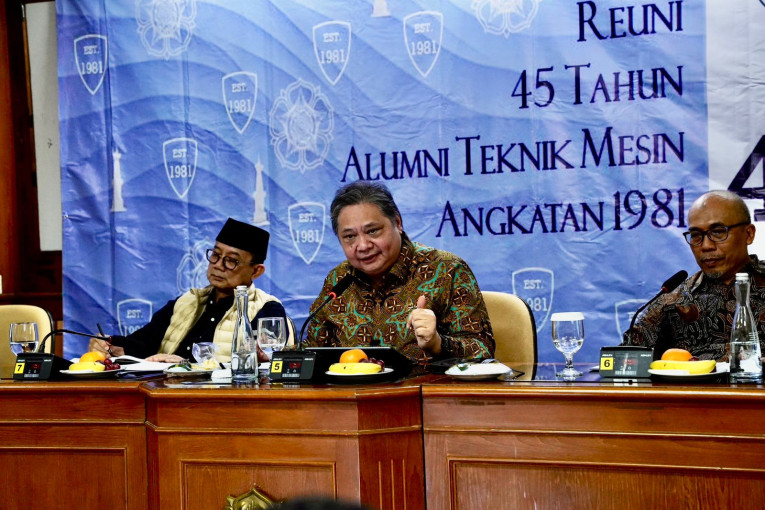
The Coordinating Minister for Economic Affairs of the Republic of Indonesia, Airlangga Hartarto, stated that three key engines are driving Indonesia’s economic growth. These growth engines include industrial downstreaming, strengthening food security, and developing human resources.
“These three engines are intended to drive our economic growth,” Minister Hartanto said during a public lecture and the reunion of Universitas Gadjah Mada (UGM) Mechanical Engineering Alumni Class of 1981 on Friday (Feb. 6) at the auditorium of the UGM’s Faculty of Engineering (FT UGM).
In the public lecture titled “Economic Transformation Toward an Advanced Indonesia: Three Growth Engines for the Nation’s Future,” Minister Hartanto emphasized that downstreaming is a key strategy for Indonesia to create greater domestic economic value added.
To support this downstreaming process, improvements in education and health systems are required. According to him, financing for domestic education and health has now become an urgent necessity.
Regarding food security, Minister Hartanto highlighted the government’s efforts to promote food sovereignty as the foundation of national resilience.
“When a crisis occurs, we must have our own food reserves. That is why focusing on food estates and the agricultural sector is extremely important,” he explained.
He assessed that future challenges facing Indonesia, which are no less important, lie in the energy and technology sectors, which require the active involvement of younger generations with scientific and technological backgrounds. Therefore, he stressed the importance of human resource development as the foundation of economic growth.
“Sustainable development is not only based on natural resources, but on human resources,” he concluded.
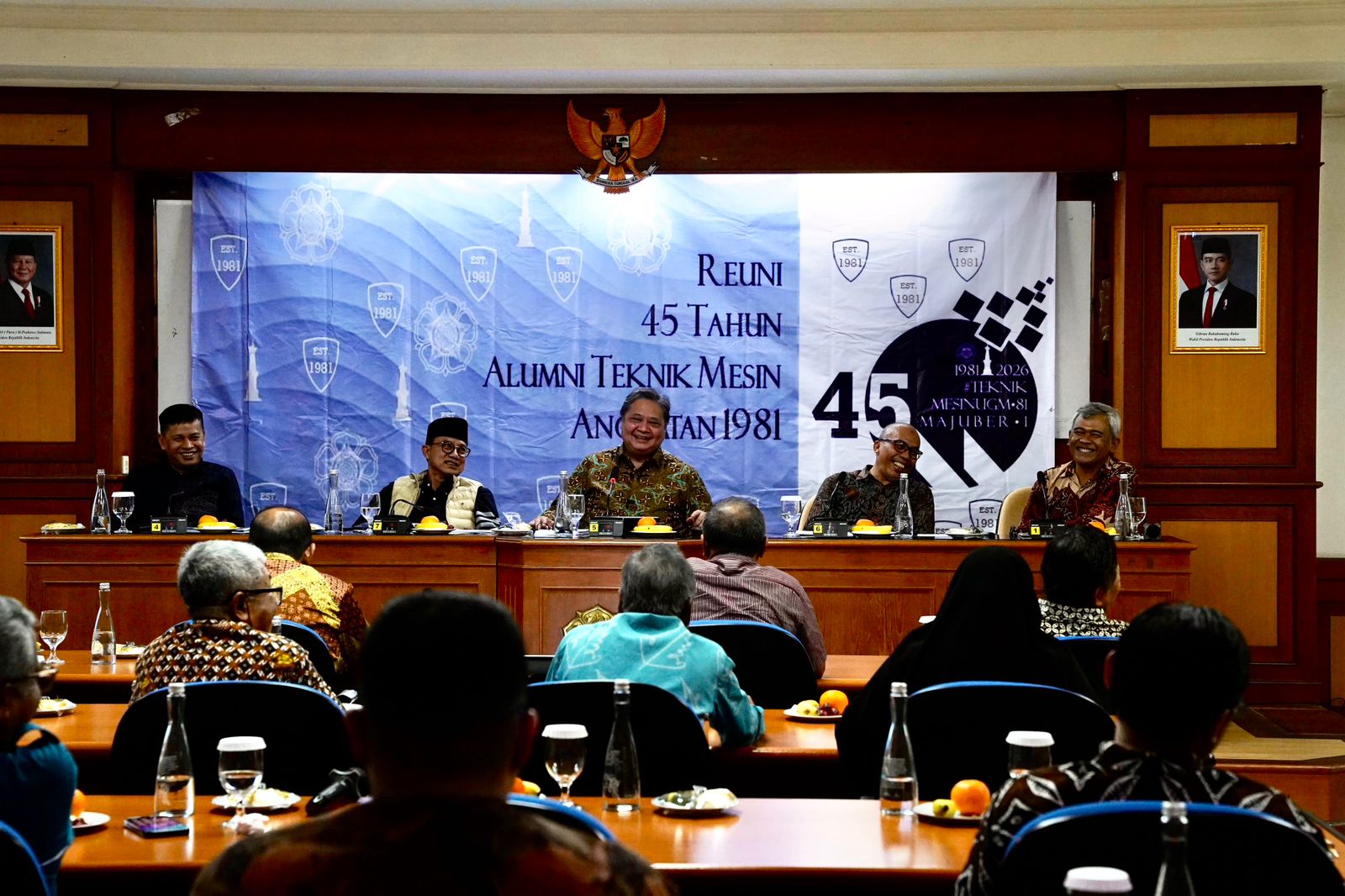
On the same occasion, Minister Hartanto also touched on other strategic economic issues, including the development of the GIG Economy platform as one of the government’s efforts to create job opportunities for younger generations.
“This program is expected to serve as a platform for young people to contribute productively amid changes in the labor market structure,” he said.
Speaking to UGM engineering students, Minister Hartanto encouraged them to master science and technology while also building character and gaining experience during their university years.
“Mechanical engineering graduates are flexible, able to move across many sectors, and are in fact likely to be needed in various fields,” he stated.
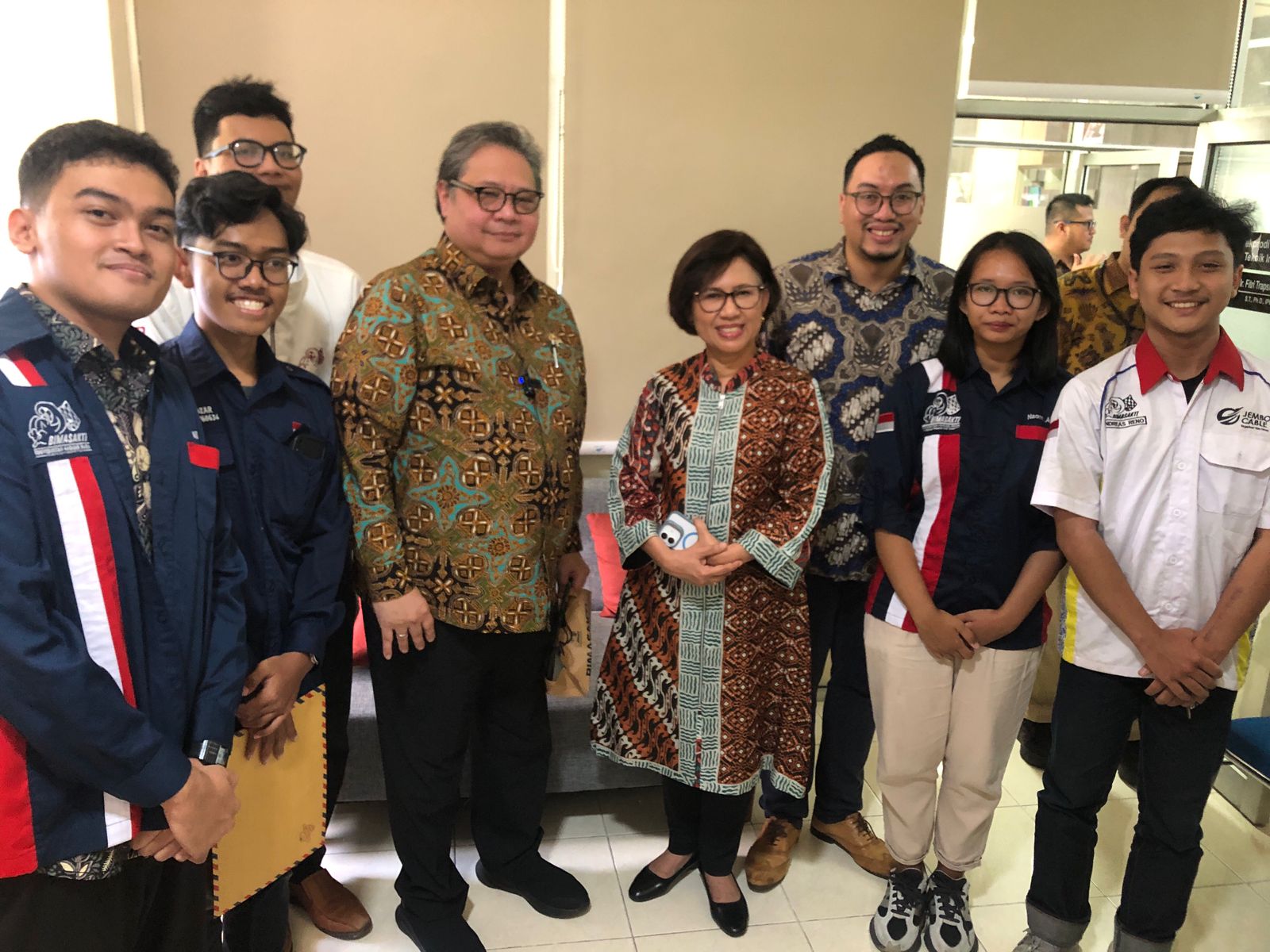
The reunion of FT UGM Mechanical Engineering Alumni Class of 1981 was attended by Professor Ova Emilia (Rector of UGM), Professor Selo (Dean of FT UGM), Dr. Muslim Mahardika (Head of the Department of Mechanical and Industrial Engineering, and Budi Sulistyono (Member of the Indonesian House of Representatives).
Minister Hartanto’s presence was part of a series of events for the Sharing Session and the 45th Reunion of UGM Mechanical Engineering Alumni Class of 1981.
Author: Diyana Khairunnisa
Editor: Gusti Grehenson
Post-editor: Rajendra Arya
Photographer: Salwa