


The signing of the Agreement on Reciprocal Trade (ART) between Indonesia and the United States on February 19, 2026, marks a new chapter in the two countries’ bilateral economic relations. The agreement emphasizes economic sovereignty, prosperity, and supply chain resilience.
The government stated that ART aims to enhance mutual benefits through reciprocal tariff and non-tariff policies. Amid this narrative, debate has emerged regarding its implications for national economic sovereignty.
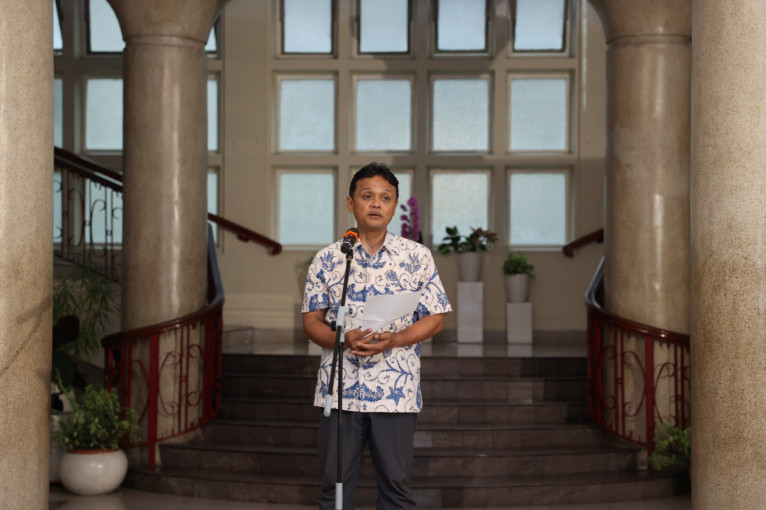
An economist at the Faculty of Economics and Business Universitas Gadjah Mada (FEB UGM), Rimawan Pradiptyo, Ph.D., believes the substance of ART warrants closer scrutiny. According to him, there are inconsistencies between the preamble and the main body of the agreement that reveal its asymmetric character. He explained that the document contains 211 instances of the phrase “Indonesia shall,” compared with only 9 instances of “USA shall.”
“The facts show a lack of consistency between the preamble and the main body and annexes of the ART,” he said during the Declaration of the Council of Professors event titled UGM Safeguards Indonesia’s Sovereignty at the Balairung on Monday (Mar. 2).
He further noted that ART is often perceived as a tariff agreement, even though most of its provisions regulate non-tariff policies. Rimawan stated that around 95 percent of the articles relate to non-tariff regulations that directly affect domestic policy space. Its scope even extends to political and security sectors that intersect with state sovereignty.
“The scope of ART goes far beyond the economic sector,” he emphasized.
Rimawan then introduced the term “poison pill” to describe the structure of the agreement. He explained that one of its main characteristics is a “blank check” obligation requiring Indonesia to align with future United States policies, including regulations that do not yet exist. In his view, this provision creates uncertainty and places Indonesia in a vulnerable position.
“The blank check obligation creates uncertainty and raises questions about Indonesia’s sovereignty,” he remarked.
In addition to the obligation to synchronize policies, he highlighted the United States’ position as the party that sets compliance standards. In several articles, the assessment of Indonesia’s compliance rests entirely with the treaty partner. According to him, such a construction places the United States as if it were acting simultaneously as prosecutor, judge, and executor.
“This clause positions the USA as prosecutor, judge, and executor at the same time,” he explained.
Another aspect he underscored is the potential transmission of United States policies to third countries through Indonesia. He noted that several provisions open up space for Indonesia to act as an extension of its external policies when dealing with other countries. This condition risks triggering retaliation from third countries that do not have direct conflicts with Indonesia.
“Indonesia would be no more than an operator in dealing with third countries for the interests of the USA,” he said.
The next impact concerns national institutions. He revealed that around 117 regulations, ranging from laws to ministerial regulations, would need to be amended or redrafted as a consequence of ART. According to him, such extensive changes could potentially conflict with several provisions of the 1945 Constitution and create a constitutional dilemma.
“If a dilemma arises between ART and the 1945 Constitution, would we sacrifice the Constitution to accommodate ART?” he asked.
Ultimately, Rimawan views ART as a moment for Indonesia to reorient institutional development and improve the quality of human resources. He argued that institutional reform cannot simply be copied from other countries but must be built based on Indonesia’s own social and cultural context.
Trade agreements, he said, must be positioned within a long-term national interest framework grounded in thorough research. The debate over ART serves as a reminder that economic sovereignty demands vigilance, policy consistency, and the courage to take a strategic position in the global order.
Writer: Triya Andriyani
Post-editor: Zabrina Kumara
Photo: Firsto