


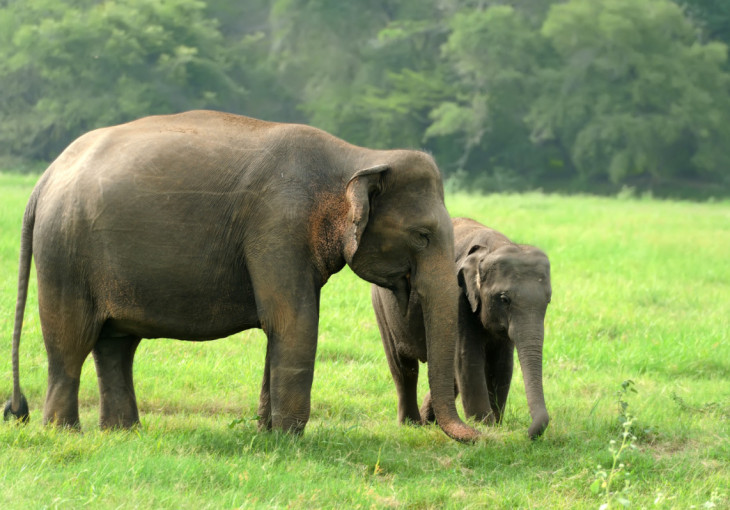
A Sumatran elephant calf was found dead in Tesso Nilo National Park, Riau. The death was suspected to have resulted from an infection in its front leg caused by a snare trap. The carcass of the Sumatran elephant (Elephas maximus sumatranus) was discovered in the Tesso Nilo National Park area, specifically in the Lancang Kuning Resort, Section I National Park Management Area, Lubuk Kembang Bunga Village on Thursday (Feb. 26) at 12:00 p.m. Western Indonesian Time.
Professor of the Faculty of Veterinary Medicine at Universitas Gadjah Mada, Professor Raden Wisnu Nurcahyo, expressed concern over the death of the elephant calf in a national park due to a snare trap. According to him, the use of snares on wildlife is a cruel threat that causes severe physical injuries. These injuries can lead to permanent disability or slow death due to starvation, dehydration, or bacterial infection. The impact is even more severe for elephant calves.
“Elephant calves have weaker physical resilience in defending themselves against starvation and dehydration compared to adult elephants,” he explained on Friday (Mar. 6).
According to Professor Wisnu, snares can also trigger drastic population declines, disrupt ecosystems, and increase the risk of zoonotic disease transmission due to bacterial infections. In the long term, elephant calves that survive often experience declining health quality, which leads to lower reproductive success. Additionally, calves that suffer physical disabilities may experience behavioral and mobility disorders that affect their ability to socialize with other elephants.
“Physical disabilities can hinder an animal’s ability to find food, move, and avoid predators, which may lead to malnutrition or food shortages,” he said.
Professor Wisnu stated that the calf’s death was likely caused by the indiscriminate nature of snares, meaning the device can trap any animal that passes through the area, rather than only the intended target. He emphasized that snares cannot distinguish between species.
“People often unintentionally trap other protected wildlife when setting snares, such as tigers, elephants, sun bears, or orangutans,” he said.
Professor Wisnu added that snares made from materials such as steel wire or strong cable slings can capture, injure, and even kill wildlife of both large and small sizes.
“If these snares are not checked for a long period or are abandoned by the person who set them while still active, they can kill wildlife and even other hunters who pass through the area,” he explained.
According to Professor Wisnu, the death of the elephant calf in Tesso Nilo National Park could have crucial consequences for the survival of the local population. The loss of a young individual reduces the group’s regenerative potential, weakens the social structure of the elephant population, and further pressures a population already critically threatened by snares and habitat loss. He explained that the death would primarily affect the local population, particularly by disrupting elephant population regeneration.
Elephant calves represent the future of their population groups. With a long gestation period and birth intervals of four to five years, the death of a calf can make population growth extremely slow, or even impossible.
The death of a single calf can also have psychological and social impacts on the elephant herd. Elephants are highly social animals with strong family bonds.
“The death of a calf can cause trauma to the mother and the group, disrupting their social structure,” he said.
He further explained that deaths caused by snares or human–elephant conflict in their habitat indicate high vulnerability to poaching and land-use change. Wisnu outlined the medical steps to take if an elephant calf trapped in a snare is encountered.
According to him, such incidents should be reported immediately to officers from the Natural Resources Conservation Agency (BBKSDA), forest rangers, or the nearest veterinarian, while remaining cautious around other wild animals.
Further handling depends on the animal’s physical condition. If necessary, sedation may be administered by a veterinary medical team to safely remove the snare, clean infected wounds, and administer antibiotics or anti-inflammatory drugs. Emergency medical procedures must be performed by veterinarians, including immobilization or sedation, depending on the position of the snare to ensure safe removal.
The snare can be removed by cutting the wire or rope using steel cutters. Afterward, intensive wound cleaning is required to remove dirt and dead tissue. Treatment of infection may involve antibiotics and anti-inflammatory drugs to prevent septicemia. For local wound care, antiseptics, special ointments, or natural materials such as honey may be applied to help accelerate tissue healing.
Meanwhile, post-treatment may involve evacuation or release if the wound has healed, allowing the calf to return to its herd.
“If the wound is severe, intensive treatment is required by evacuating the calf to an Elephant Training Center. Close monitoring is necessary to ensure the calf can adapt and that the wound fully heals,” he concluded.
Author: Fatihah Salwa Rasyid
Editor: Gusti Grehenson
Post-editor: Jasmine Ferdian
Photo: Freepik