


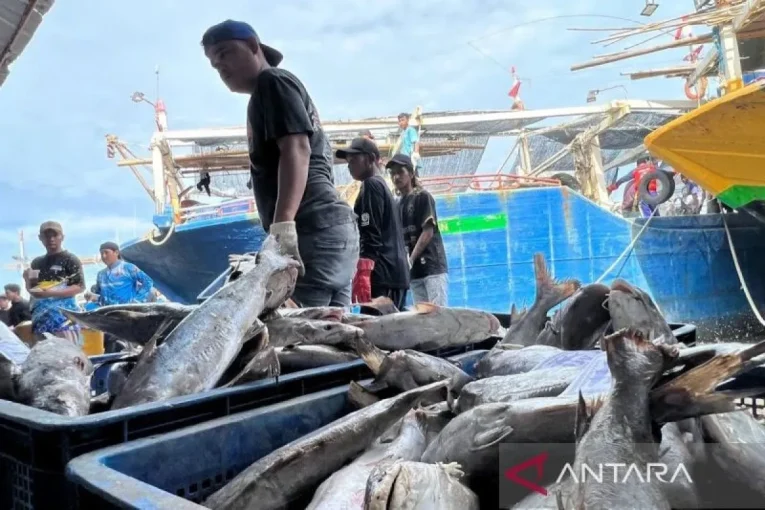
Rising fuel prices driven by escalating global geopolitical tensions are beginning to be felt by fishers along the North Coast of Java. While accompanying student practicum activities in the Juwana area, Pati, Professor Suadi from the Faculty of Agriculture, Universitas Gadjah Mada (Agriculture UGM), directly observed how some vessels have started reducing fishing operations due to soaring operational costs. This situation illustrates the vulnerability of workers in the fisheries sector, who have long depended on global economic conditions and policies.
Amid the pressures faced by fishers, Indonesia has just ratified ILO Convention 188 through Presidential Regulation No. 25 of 2026 to strengthen protection for fishing vessel crews. This ratification is seen as an important step toward improving labor standards and worker protection in the fisheries sector.
According to Professor Suadi, the ratification of ILO Convention 188 is a long-awaited step for workers on fishing vessels. So far, protection for crew members has been considered to have many gaps, especially for those working on foreign vessels. Indonesia’s existing regulations have largely provided protection at the domestic level and have not fully addressed the complexity of transnational fisheries work. Therefore, the presence of ILO 188 is expected to provide a stronger legal foundation for protecting Indonesian fisheries workers.
“This is something that has long been awaited by workers on fishing vessels because there has been a kind of regulatory gap in providing protection for fishing crews,” he said, Monday (May 11).
Professor Suadi revealed that the capture fisheries sector is categorized as high-risk work that remains vulnerable to violations of workers’ rights. Fishing activities conducted far from supervision expose workers to various threats, ranging from workplace accidents to human trafficking. Suadi assessed that this situation is exacerbated by weak oversight and uncertainty of working conditions at sea.
According to him, the Benjina case in Aru Islands Regency, Maluku, in 2015, serves as a reminder that exploitation and modern slavery practices can still occur in the fisheries sector.
“Work on fishing vessels is full of uncertainty, minimal supervision, and there is potential for human trafficking crimes,” he said.
Professor Suadi explained that Indonesia had previously adopted the Maritime Labour Convention to protect workers on commercial ships. However, this protection does not cover fishing vessel crews, whose working characteristics differ from those of seafarers on commercial ships.
Through the ratification of ILO 188, the government is seen as beginning to promote equal protection between workers on commercial vessels and fishing vessels. On the other hand, the implementation of better labor standards is believed to increase the economic value of Indonesian fishery products in the global market.
“Fishery products produced through decent work practices are seen as having better competitiveness in international trade,” he said.
According to him, the employment relationship between fishers and vessel owners will need to be made more formal and clearly documented. Standards for vessel accommodation, health facilities, and workers’ medical records are aspects that must begin to receive attention in the implementation of the convention.
In addition, mechanisms for reporting violations of workers’ rights need to be strengthened so that crew members have clearer access to protection.
“There are changes in accommodation standards and the need for medical certificates that workers must have before boarding vessels,” he explained.
The ratification of ILO 188 is also viewed as strengthening the bargaining position of Indonesian fisheries workers in the global market. So far, fishing vessel workers have often been positioned as cheap labor with minimal protection.
Professor Suadi assessed that this practice is related to social dumping, an effort to suppress production costs at the expense of workers’ welfare. With stricter international labor standards, fisheries workers are expected to be regarded as a more decent and professional occupation. The requirement for clear employment agreements is also believed to strengthen legal protection for Indonesian crew members working abroad.
Nevertheless, implementing ILO 188 is not expected to be easy. Professor Suadi assessed that regulatory readiness does not automatically translate into readiness in field practice. Limited numbers of inspectors, access to health services in remote areas, and cross-ministerial coordination are major challenges that the government must address.
In practice, this convention involves many institutions, ranging from the Ministry of Marine Affairs and Fisheries and the Ministry of Transportation to the Ministry of Manpower. According to him, these conditions mean that implementation requires gradual adjustments and adequate infrastructure support.
On the other hand, the ratification of ILO 188 is also expected to bring economic consequences for fisheries businesses. Vessel owners need to adjust ship infrastructure to meet new accommodation and occupational safety standards. These adjustments are predicted to increase both investment and operational costs. However, Suadi assessed that the impact on small-scale fishers can be relatively minimized because the convention provides flexibility for countries in its implementation.
“Gradual implementation and government support are important so that worker protection can proceed without crippling fisheries businesses,” he said.
Another challenge considered crucial is the supervision of vessel activities at sea, which, so far, has been conducted without public oversight. He described this condition as “out of sight, out of mind” because fisheries workers’ activities often occur without adequate control. Therefore, the use of technologies such as AIS and the Vessel Monitoring System (VMS) is considered important to strengthen supervision. He also emphasized the importance of fisher-worker organizations and cooperation among countries to ensure that protection standards are truly implemented.
In addition to the government and business actors, the implementation of ILO 188 ratification is also seen as requiring the involvement of universities. According to Professor Suadi, campuses have a strategic role in bridging the needs of fisheries workers and the challenges of implementation in the field. This involvement is important so that protection for crew members extends beyond regulatory requirements and is truly felt by workers. Academic support is considered capable of strengthening the transition process toward more decent labor standards in the fisheries sector.
“Universities can reach this area through certification, technology development, legal assistance, and community service programs for fishers and fishing crews,” he concluded.
Author: Triya Andriyani
Post-editor: Rajendra Arya
Photo: Public Relations Documentation and Antara