


Indonesia is home to around 5,000 orchid species spread across various regions. Each area has distinct characteristics that contribute to the uniqueness of its native orchid species. This diversity makes Indonesia the second-largest center of orchid diversity in the world. Therefore, conservation efforts are crucial to preventing these species from becoming extinct.
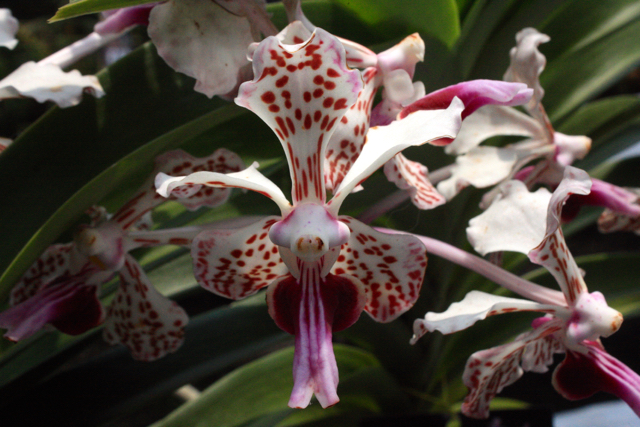
One orchid species that has become an icon of Yogyakarta is Vanda tricolor. This orchid is characterized by white petals with reddish-brown spots and a white lip. It also emits a very fragrant aroma in the morning and is commonly found around the slopes of Mount Merapi.
“In addition, Vanda tricolor has relatively strong heat resistance. This was evident during the 2010 eruption of Mount Merapi, when this orchid was still found surviving in its habitat,” said Professor Endang Semiarti, a professor at the Faculty of Biology, Universitas Gadjah Mada (Biology UGM), Monday (May. 11).
Professor Semiarti noted that to date, at least 59 types of Merapi orchids have been preserved at the Gunung Merapi National Park Center. However, this number may decline due to natural and human factors, such as natural disasters, climate change, and infrastructure development. At the same time, the discovery of new orchid species remains possible if communities or researchers continue exploring forest areas.
“Many orchid species in forests have not yet been properly identified,” she said.
For Professor Semiarti, one important conservation step is a community-based approach. Residents living near mountain slopes and forests are encouraged to preserve orchids by cultivating them in their home gardens to replicate natural habitat conditions.
“Together with fellow orchid enthusiasts, I educate residents around forest areas to carry out independent conservation through simpler seedling and seed-sowing methods that are easy for everyone to follow,” she explained.
In addition to simple methods, conservation can also be carried out by researchers and academics through innovation. Professor Semiarti and her students, for example, have developed in vitro culture techniques for various orchid species collected from different regions of Indonesia.
The Provincial Government of Yogyakarta has projected Vanda tricolor as a regional icon. This effort is supported by instructions to plant orchids across government office compounds throughout Yogyakarta. The Perhimpunan Anggrek Indonesia also plays an important role in orchid conservation in Indonesia. The association cultivates newly discovered orchids by adjusting them to conditions similar to their original habitats.
“In addition, PAI frequently organizes competitions and seminars as educational and conservation initiatives,” she added.
Professor Semiarti hopes that orchids in Indonesia will continue to be preserved and become better known to the wider public. She collaborates with colleagues from other disciplines to write books based on research conducted. This approach is intended to continue the efforts of previous orchid enthusiasts to ensure conservation work continues.
“Orchids are part of our national identity, and it is our shared responsibility to ensure their preservation,” she concluded.
Author: Jesi
Editor: Gusti Grehenson
Post-editor: Rajendra Arya
Photo: Mongabay/Nuswantoro