


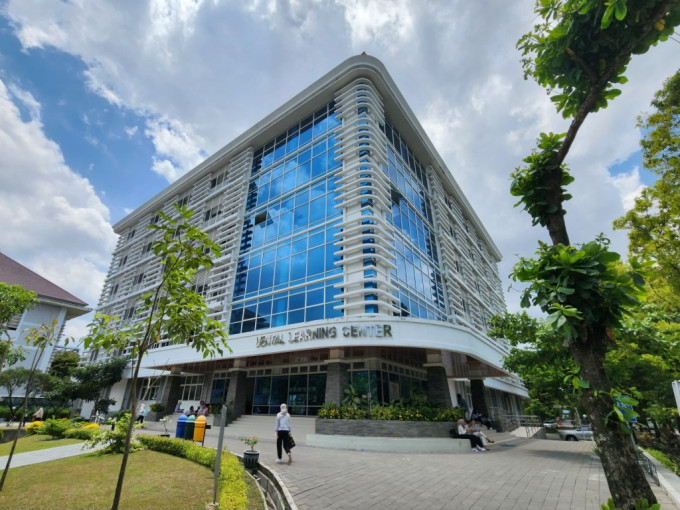
The Faculty of Dentistry of Universitas Gadjah Mada (FKG UGM) has once again achieved international recognition through its performance in the World University Rankings for Innovation (WURI) 2026.
This year’s WURI rankings involved participants from 96 countries, 1,927 universities, and 13,211 innovation programs. In the competition, FKG UGM secured positions in the global top 100 across eight categories, including two first-place rankings in the Representative Research Project category for its Dental Silkbon innovation and the Financial Impact-Driven Technology Transfer category for its Propasdent innovation.
Dean of FKG UGM, Professor Suryono, expressed his gratitude and pride over the achievement. According to him, the success reflects the result of the faculty’s sustained efforts over the past several years.
“I am very pleased and proud of the team that has worked so hard. Over the last two to three years, FKG UGM has successfully positioned itself in various global ranking categories,” he said on Tuesday (Jun. 2).
Notably, FKG UGM was the only faculty competing alongside major universities worldwide. According to Professor Suryono, the achievement was made possible not only by the institution’s innovations but also by its ability to effectively communicate its reputation and accomplishments.
He noted that many universities have outstanding achievements but have yet to effectively promote them to the international community.
“No matter how remarkable an achievement is, if it is never introduced to external audiences, it will never receive recognition,” he said.
He also emphasized the importance of creative and innovative management in building an institution’s image. According to him, the ability to strategically communicate achievements is essential for gaining visibility among global ranking organizations. In 2024, FKG UGM was ranked sixth in the world in the Entrepreneurial Spirit category, outperforming several prestigious institutions, including Oxford and Harvard University.
“Rankings are not the ultimate goal, but they at least demonstrate that achievements left unnoticed are like gold buried beneath mud,” he remarked.
Speaking further about the two award-winning innovations, Professor Suryono explained that one product has completed the prototype downstreaming stage, while the other is progressing toward commercialization. The first innovation involves developing silk fiber as a dental material. The prototype can be used to stabilize loose teeth and as a material for dental prostheses. He emphasized that the material is derived from natural silk fibers produced by local farming communities.
The second innovation is the development of Propasdent toothpaste, which focuses on maintaining the balance of oral microflora. The concept is based on the understanding that the oral cavity does not need to be sterile but rather requires a balanced microbial ecosystem to prevent oral and dental health problems.
“One of the strengths of our innovations is the use of local wisdom as part of the material base. As we know, around 90 percent of dental materials are imported. Yet we have proven that locally sourced materials can also produce innovative solutions,” he explained.
Professor Suryono added that both innovations reflect FKG UGM’s commitment to ensuring that research outcomes extend beyond academic publications. The faculty seeks not only to secure intellectual property rights but also to advance innovations through downstream development and commercialization. According to him, research culture within higher education institutions should be directed toward generating broader economic and social impacts.

Despite achieving global recognition, Professor Suryono believes the next challenge is to strengthen the commercialization of innovation outcomes. He hopes UGM can establish a dedicated unit to support the marketing and development of research-based products from various faculties.
“We hope that UGM will have a specialized unit that can assist in commercializing products resulting from research downstreaming, allowing them to become an additional source of funding for institutional development,” he said.
Looking ahead, FKG UGM plans to continue participating in various international ranking categories. However, Professor Suryono noted that the faculty is determined not to compete repeatedly in the same categories but instead to explore new fields that align with its strengths. He hopes the culture of innovation, creativity, and confidence in showcasing institutional potential will continue to thrive among the FKG UGM academic community.
“Nothing is impossible as long as we are willing to make the effort. I am confident that the next generation at FKG UGM will continue and surpass the extraordinary achievements we have attained,” he concluded.
Author: Hanifah
Editor: Gusti Grehenson
Post-editor: Rajendra Arya
Photo: FKG UGM Documentation