


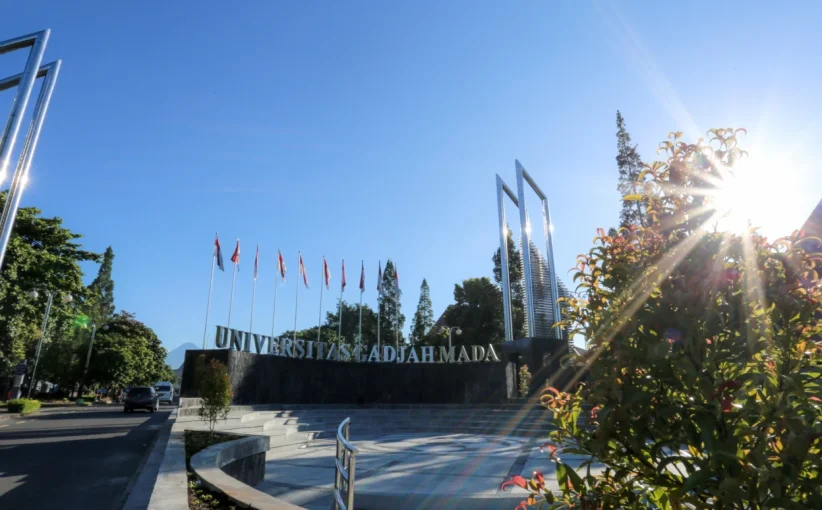
Chair of the UGM Academic Senate, Professor Sulistiowati, said the Academic Senate plays a strategic role in formulating academic policies for education, research, and community service. These policies support the university’s Tri Dharma implementation, and the resulting papers guide university leadership in drafting academic regulations. The Academic Senate does not issue regulations, but prepares the papers that shape policymaking.
“UGM has the authority to formulate academic policies, but it does not have the authority to enact regulations. The academic papers we prepare serve as the basis for the rector and the Board of Trustees in drafting various regulations,” she said during a benchmarking visit from the Academic Senate of Universitas Muhammadiyah Yogyakarta (UMY) at the UGM Central Office on Monday (Jul. 14).
During the 2021–2026 term, the UGM Academic Senate has produced numerous academic policy papers through its five commissions. These recommendations aim to strengthen educational quality, promote the commercialization of research, improve university governance, and expand strategic partnerships. One of the main priorities has been enhancing UGM’s international reputation through integrated academic policies. According to Professor Sulistiowati, this goal is part of a mandate that must be achieved collectively by the entire academic community.
“During the Academic Senate’s annual work meeting, we identified achieving a place among the world’s Top 100 universities as a key agenda that must be supported through various academic policies,” she explained.

Professor Sulistiowati stated that achieving a strong global reputation requires more than improving university rankings. UGM continues to strengthen the quality of education, research, and scientific publications through policies included in the rector’s regulations and the Board of Trustees’ policies.
Graduate students, for example, are encouraged not only to complete their studies with strong academic performance but also to produce publications in internationally reputable journals. At the same time, research is being strengthened through flagship initiatives, community service programs, and expanded global collaborations.
“It is impossible for UGM to achieve a place among the world’s Top 100 universities without adequate funding and stronger international research collaboration,” she said.
In addition to strengthening research, the UGM Academic Senate is also focusing on transforming higher education governance in the era of artificial intelligence. Through various academic policy papers, UGM is promoting the development of the Intelligent University concept, information system governance, and stronger partnerships with universities, industry, government agencies, and donor institutions.
According to Professor Sulistiowati, these policies are formulated by studying leading universities worldwide and adapting them to UGM’s needs. The expectation is to accelerate institutional transformation while preserving the university’s unique strengths and identity.
“We study modern university practices to identify strategies and infrastructure that can be adapted to further advance UGM’s governance,” she said.
Responding to questions during the discussion regarding the relevance of academic programs in the era of artificial intelligence, Professor Sulistiowati explained that all study programs, including newly established ones, are continuously evaluated. However, the decision to close a study program requires careful consideration because it affects many aspects, including faculty members, students, and institutional sustainability. Therefore, evaluations are conducted comprehensively while taking into account societal needs and developments in academic disciplines.
“If a study program has become critically problematic and burdensome, the best course of action must certainly be considered. However, every decision must be based on thorough evaluation because its implications are far-reaching,” she emphasized.
 Regarding the need to maintain academic integrity amid advances in artificial intelligence, Professor Sulistiowati emphasized that the university has issued ethical guidelines for AI that govern how faculty members and students may use it in educational, research, and learning activities. The guidelines outline ethical principles, risk mitigation strategies, and academic sanctions for violations. AI should be embraced adaptively without compromising academic integrity.
“We cannot separate ourselves from AI, but academic decisions must always remain in human hands while upholding ethics and academic integrity,” she said.
Meanwhile, Secretary of the UMY Academic Senate, Professor Halim Purnomo, expressed his appreciation for UGM’s openness in sharing its experiences. The best practices implemented by UGM provide valuable inspiration for UMY, particularly in strengthening the role of the academic senate, developing human resources, promoting research commercialization, and enhancing the university’s reputation. He hopes the discussion will mark the beginning of closer collaboration between the two universities in advancing higher-quality academic governance.
“We hope this will strengthen our efforts to follow the path of Universitas Gadjah Mada’s success,” he concluded.
The meeting between the UGM and UMY Academic Senates provided a forum for sharing experiences in academic governance, human resource development, research commercialization, and strategies for enhancing global university reputation. These issues were discussed in an engaging, interactive dialogue. The visit also opened opportunities for future collaboration in developing academic policies.
Author: Triya Andriyani
Post-Editor: Jasmine Ferdian
Photo: Firsto