



Students from 20 countries participated in the One Health Summer Course themed “Transdisciplinary One Health Approaches to Emerging and Re-Emerging Diseases,” held on June 15–20, 2026, at Universitas Gadjah Mada (UGM). The program served as a forum for learning and cross-border collaboration, bringing together students, academics, researchers, healthcare professionals, and practitioners to strengthen the implementation of the One Health approach in responding to emerging and re-emerging infectious disease threats.
Organized by the UGM’s One Health Task Force, the program was conducted in both in-person and online formats. Participants came from Indonesia and abroad, including Pakistan, Palestine, Ethiopia, Philippines, India, Iran, Bangladesh, Timor-Leste, Uganda, Yemen, Nigeria, Libya, Madagascar, Morocco, Egypt, Nepal, Papua New Guinea, Sudan, Myanmar, and the United States. The diverse backgrounds of participants enriched discussions with global perspectives while strengthening international networks in the fields of human, animal, and environmental health.
Fikri Wahiddinsyah, a member of the organizing committee, explained that during the first three days, from June 15–17, 2026, the program was conducted in a hybrid format in the 1st- floor Auditorium of the Tahir North Building, FK-KMK UGM. National and international experts delivered sessions on strategic topics ranging from the fundamental concepts of One Health, human and animal health surveillance, emerging and re-emerging diseases, fungal infections, public health early warning systems, and evolutionary factors driving the emergence of new pathogens.
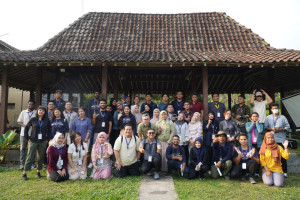
In addition, participants gained insights into zoonotic diseases, wildlife conservation, urban ecology, and the social and cultural dimensions of epidemic management.
“These various topics underscored the importance of integrating human, animal, and environmental health as a foundation for addressing increasingly complex global health challenges,” said Fikri in a statement received on Tuesday (June 23).
As a tangible implementation of the learning- beyond- the- classroom concept, the program continued with a two-day field activity. On June 18, participants visited Wonokerto Village in Sleman to directly observe community empowerment initiatives and the application of the One Health approach at the community level.
“Through the visit, participants gained an understanding of the importance of collaboration among communities, government institutions, and academics in preserving environmental sustainability and strengthening community resilience against various health risks,” he said.
On June 19, 2026, participants took part in two activities that illustrated the close interconnection between human, animal, and environmental health. The first activity took place at Turgo Hill in Sleman, where participants engaged in birdwatching as an introduction to wildlife surveillance and to understand the role of birds as indicators of ecosystem health and potential reservoirs of zoonotic diseases.
“The second activity was held at UGM Academic Hospital, where participants learned about hospital waste management systems as an effort to prevent environmental pollution and control disease transmission,” he explained.
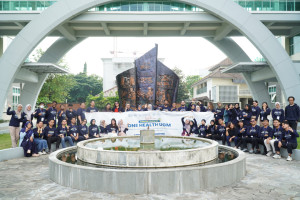
The program concluded on June 20, 2026, with group presentations integrating lecture materials, field experiences, and challenges related to implementing the One Health approach in participants’ respective countries. These presentations demonstrated how a transdisciplinary approach can generate more comprehensive solutions to global health challenges.
The implementation of the One Health Summer Course #2 reaffirmed UGM’s commitment to developing human resources capable of working across sectors and national boundaries while strengthening international collaborative networks, which are expected to advance One Health-based research, innovation, and policymaking in the future.
Fikri emphasized that through the organization of the One Health Summer Course #2, UGM once again reaffirmed its position as a center for scientific development and international collaboration in building a healthier, more resilient, and sustainable future through the One Health approach, which integrates human, animal, and environmental health as an inseparable whole.
Author: M. Aidil Syahputra
Editor: Gusti Grehenson
Post-Editor: Priyanandaningrat
Photo: Courtesy of FK-KMK UGM and Magnific