


Universitas Gadjah Mada (UGM) and the Embassy of Chile to Indonesia, ASEAN, and Timor-Leste have strengthened their commitment to academic and research collaboration, particularly in Antarctic and climate change research. The commitment was highlighted during a meeting between UGM’s Vice Rector for Research, Business Development, and Cooperation, Dr. Danang Sri Hadmoko, UGM’s Director of Research, Professor Mirwan Ushada, and the Director of the Tropical–Polar Interconnection Research Group (TPI-RG), Ir. Nugroho Imam Setiawan, S.T., M.T., D.Sc., IPM, with the Chilean Ambassador, H.E. Mario Ignacio Artaza, on Thursday (June 18) at the UGM campus.
Danang stated that both parties reaffirmed their commitment to continuously support and facilitate communication between UGM and various strategic institutions in Chile. UGM will also strengthen its ongoing partnerships with several Chilean higher education institutions. He noted that one significant development is the ongoing collaboration process with Pontificia Universidad Católica de Chile. This partnership is expected to serve as a gateway for expanding academic and research collaboration between Indonesia and Chile.
“We hope this collaboration will grow not only in education and academic exchange but also in joint research that supports the sustainable development agendas of both countries,” Danang said in a statement received on Monday (June 22).
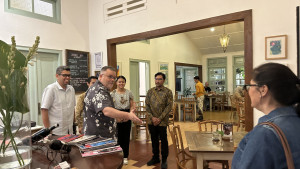
During the discussion, Danang explained that the parties also addressed the importance of Indonesia’s involvement in Antarctic-related issues, particularly within the framework of the Antarctic Treaty System (ATS). Antarctica is viewed not only as a region for scientific research but also as a strategic area that requires active participation from the international community to maintain peace, environmental sustainability, and global scientific cooperation.
“Government involvement is a crucial aspect of strengthening Indonesia’s position in developing future scientific cooperation and diplomacy related to Antarctica,” he said.
The Chilean Ambassador highlighted several potential areas for collaboration in Tropical–Polar Research involving the Chilean Antarctic Institute (INACH), Universidad de Magallanes (UMAG), Instituto Milenio BASE, and Universidad de Chile.
“This support includes facilitating communication, exploring partnership opportunities, and strengthening academic and research networks between the two countries,” Danang said.
In addition to Antarctic and climate change research, Danang emphasized that opportunities for collaboration between Chile and Indonesia remain wide open across various academic disciplines. He noted that several fields hold significant potential for joint development, including agriculture and food security, natural resource management, environment and sustainability, marine and fisheries studies, disaster management and climate change, as well as volcanology and geological disaster mitigation.
He further explained that Chile and Indonesia share similar volcanic characteristics, as both countries are located along active tectonic zones within the Ring of Fire. According to him, this similarity creates substantial opportunities for collaborative research on volcanic activity, disaster mitigation, volcano monitoring systems, geothermal energy, and the impacts of volcanism on the environment and society.
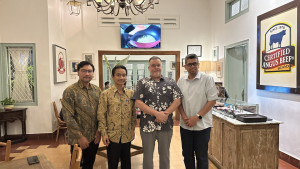
Meanwhile, Mario Artaza emphasized that Chile, particularly the city of Punta Arenas, occupies a highly strategic position as one of the primary gateways to Antarctica. He noted that the region’s infrastructure, logistics networks, and research ecosystem have developed significantly. As a result, Chile has become an important partner for Indonesia and UGM in enhancing participation in research and scientific activities in the Antarctic region.
Furthermore, the meeting highlighted the shared position of Chile and Indonesia as Global South countries that play an essential role in addressing global challenges. According to Ambassador Artaza, both nations share a common interest in strengthening the contribution of developing countries to strategic global issues.
“These include climate change, environmental sustainability, natural resource management, and polar research,” he said.
Ambassador Artaza also expressed his commitment to supporting greater involvement of UGM and Indonesia in scientific activities and collaborations related to Antarctica. This support is based on the principles of equality, mutual respect, and shared interests.
“The partnerships we build can generate benefits for Chile, Indonesia, and the broader international scientific community,” he concluded.
Author: Hanifah
Editor: Gusti Grehenson
Post-Editor: Priyanandaningrat
Photo: UGM TPI-RG Team and Magnific