


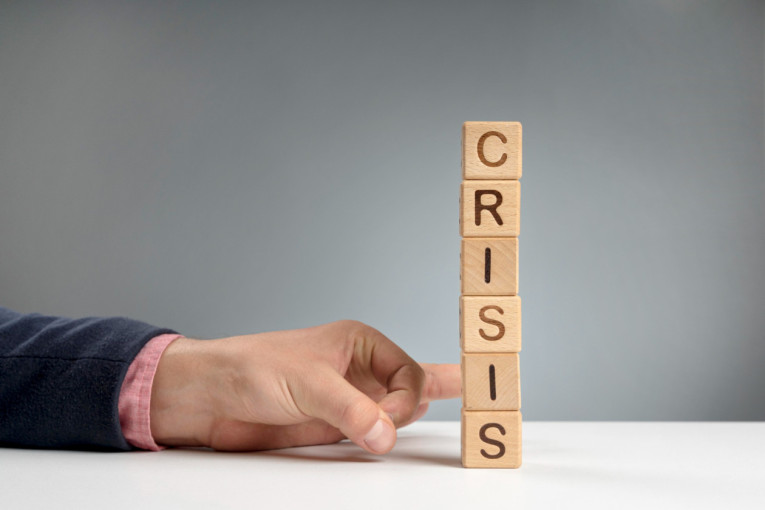
Managing a crisis in higher education requires far more than responding quickly to public attention. It demands a clear understanding of the issues, a commitment to continuous learning, the ability to distinguish personal opinions from institutional communication, and the judgment to know when speaking publicly is—and is not—the right course of action.
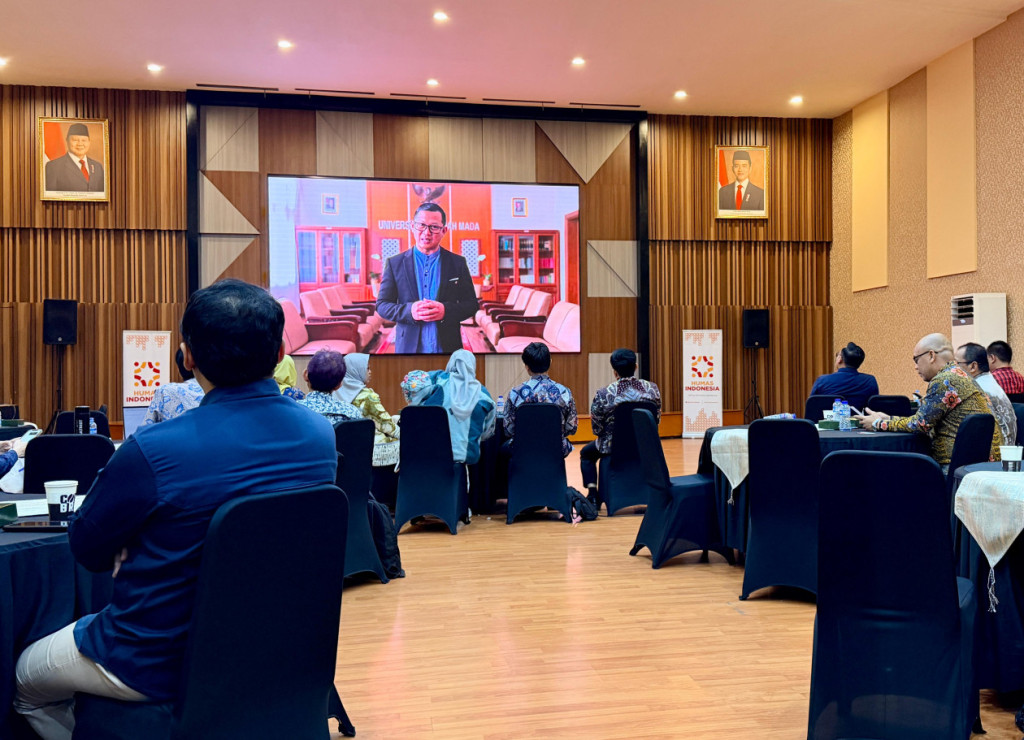
These were the key messages delivered by Universitas Gadjah Mada (UGM) spokesperson Dr. I Made Andi Arsana during the Policy Forum and Strategic Communication Technical Guidance, Managing Higher Education Crises in the Digital Era, organized by HUMAS INDONESIA in Jakarta on Wednesday (July 22).
Drawing on his experience handling several high-profile public issues involving the university, Dr. Arsana outlined four principles that guide his approach to crisis communication.
The first principle, he said, is ensuring a thorough understanding of the facts before making any public statement.
Reflecting on his experience serving as UGM’s spokesperson during the public controversy surrounding President Joko Widodo’s university diploma, Dr. Arsana explained that he deliberately postponed media interviews until he had gathered sufficient information from university leaders, faculty members, the University Secretariat, and the Public Relations Office.
“I wanted to understand what had actually happened first. Once we are confident about the facts, we can communicate our message more calmly,” he said.
According to him, fact verification is more than an administrative requirement—it is the foundation of public credibility.
“If we are still uncertain ourselves, it will be difficult to convince others. Understanding the facts is the first step that should never be overlooked.”
Dr. Arsana said crisis communication frequently requires spokespersons to explain issues beyond their own academic expertise.
Throughout his experience, he has studied medical terminology, laboratory procedures, and scientific research to ensure he could accurately communicate complex issues to the public.
He emphasized that spokespersons should never hesitate to seek advice from subject-matter experts.
“Not every case falls within our academic background. That is why we should never hesitate to learn and consult with experts.”
The third principle focuses on maintaining a clear distinction between personal identity and institutional responsibility.
As both an academic and an active content creator, Dr. Arsana said he carefully considers which issues can be discussed through his personal social media platforms and which should only be communicated in his official capacity as UGM’s spokesperson.
“We must be able to distinguish what is appropriate to express as individuals and what should be communicated as representatives of the institution,” he said.
Maintaining that distinction, he added, helps preserve institutional credibility while allowing individuals to retain their personal identities.
The final principle may be the most challenging in today’s fast-moving digital environment.
According to Dr. Arsana, effective crisis communication does not always require an immediate public response.
In some situations, remaining silent while gathering facts and allowing internal processes to unfold is the most responsible communication strategy.
“Sometimes remaining silent does not mean we are doing nothing,” he said. “It can be the wisest choice until we are truly ready to communicate with the public.”
He reminded participants that every public statement has consequences and may generate new questions or even deepen a crisis if delivered prematurely.
For that reason, spokespersons must balance transparency with careful judgment, ensuring that communication supports—not complicates—the institution’s efforts to resolve a crisis.
Author: Triya Andriyani
Post-Editor: Zabrina Kumara
Photo: Magnific and Documentation of Triya