


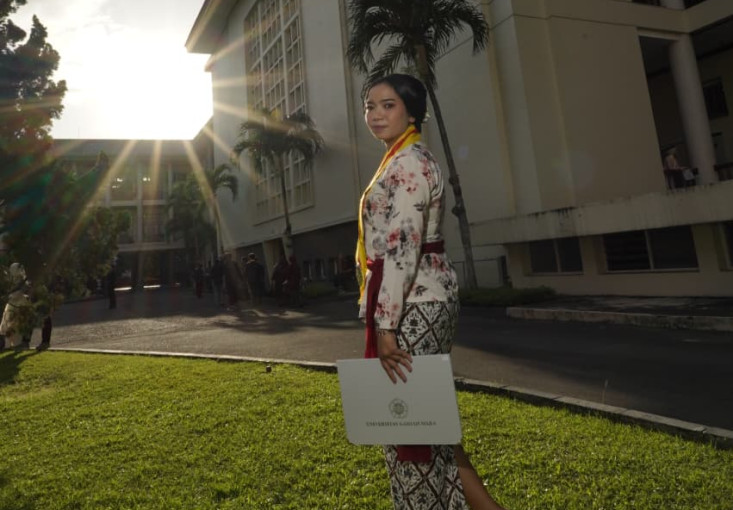
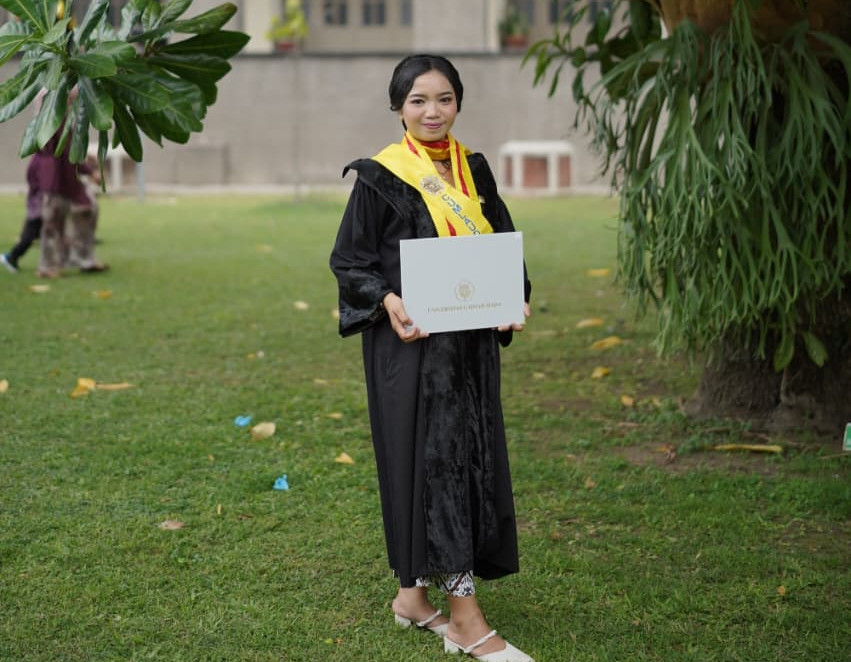
Yesita Vera Saraswati was overcome with emotion as she graduated as the youngest doctoral graduate at Universitas Gadjah Mada’s fourth postgraduate commencement ceremony. After 3 years, 9 months, and 10 days of study, she completed the Doctoral Program in Animal Science with cum laude honors and earned an almost perfect GPA of 3.99.
At 27 years, 10 months, and 8 days old, Yesita was recognized as the youngest graduate at the ceremony, held on Wednesday (Jul. 23) at Grha Sabha Pramana. By comparison, the average age of the 90 doctoral graduates—including one international graduate and 19 graduates from the previous period—was 42 years, 6 months, and 16 days.
The journey to earning her doctoral degree was far from easy for the Klaten native. Completing her studies required tremendous emotional, mental, and physical effort.
“It feels incredible. There’s a great sense of relief knowing that everything that once felt so difficult has finally paid off with graduation,” she said on Tuesday (Jul. 28).
Known affectionately as Sita, she faced an additional responsibility during her dissertation research. Alongside conducting her own fieldwork, she supervised around 70–80 undergraduate and master’s students, a team she had been managing since joining the research group.
“The challenge wasn’t just about managing myself, but also about leading a team across multiple laboratories while continuing to write my dissertation for my own studies,” she explained.
Sita pursued her doctoral degree through the Accelerated Master’s to Doctoral Program for Outstanding Undergraduates (PMDSU). Initially, she had not planned to continue through the program, especially because it was introduced during the COVID-19 pandemic.
“At first, I hadn’t considered it because it was still during the COVID period. Eventually, I decided to continue both my master’s and doctoral studies through the PMDSU program at the UGM Faculty of Animal Science,” she said.
She completed her doctoral studies with a dissertation titled “Studi Karakteristik Eksterior dan Genetik Ayam Lokal dan Persilangannya” (Study of the Exterior Characteristics and Genetics of Native Chickens and Their Crossbreeds), focusing on the development of a new strain of Indonesian native chickens.
Through the research, Sita and her team explored the genetic potential of Indonesia’s native chickens, which serve a distinct market segment. As native chickens are an important source of animal protein, the research is expected to contribute to government efforts to strengthen national protein security.
“We have been working to improve the genetic quality of native chickens through crossbreeding and selective breeding, and we have now reached the fifth generation,” she explained.
The team hopes the research can eventually translate into commercial applications that benefit the wider community.
Sita acknowledged that the research process was highly demanding. Managing extensive datasets and working through repeated rounds of trial and error were among the biggest challenges.
Data collection was particularly time-consuming. The team had to mate and crossbreed chickens, raise them to approximately 32 weeks of age, and then breed the next generation. The team repeated the process—from hatching eggs to raising chickens to maturity—through the second generation to obtain the necessary data.
Another challenge was coordinating research teams with different areas of expertise, including meat, egg, dairy, and nutrition studies, all of which contributed data to the project.
“Through this experience, I learned how to manage both my time and the people involved in the team while also building professional networks and securing research funding,” Sita said.
Despite the demands of doctoral research, Sita remained active beyond her academic work. She participated in research projects, social activities, and campus organizations, while also producing research publications and poster copyrights.
During her postgraduate years, she also took part in traditional Javanese gamelan (karawitan) activities.
“For me, in addition to pursuing academic excellence, it is important to maintain meaningful social relationships and make time for activities that bring joy so life remains balanced,” she said.
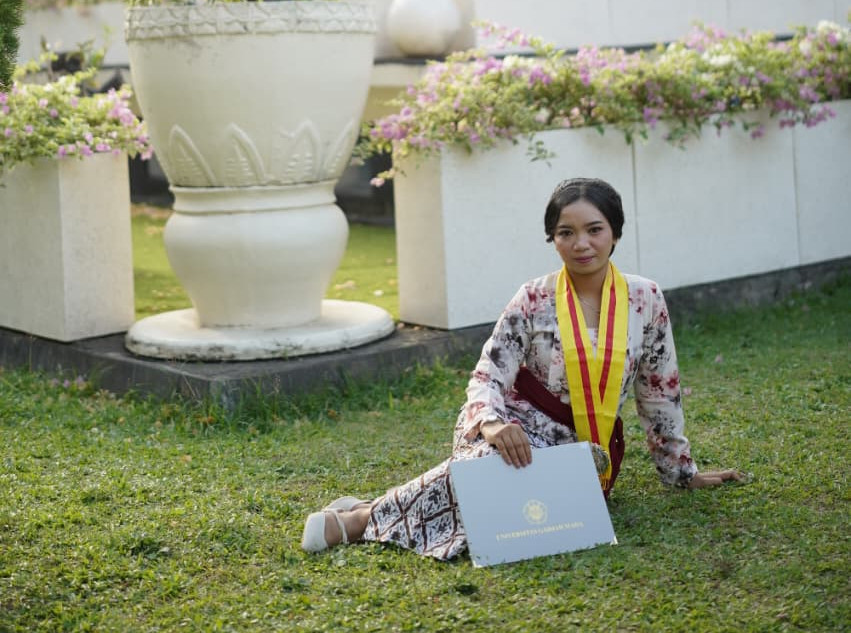
Looking ahead, Sita hopes to pursue a career in academia. Her aspiration to become a lecturer began during high school, when she enjoyed gathering children in her neighborhood to study together.
That experience sparked her passion for teaching and eventually shaped her career aspirations.
After earning her doctoral degree, she hopes to continue developing herself while upholding integrity and dedication in her future career as a lecturer. She also wants to continue contributing positively to society through education and research.
“For me, learning never ends, even after completing a doctoral degree,” she concluded.
Author: Fatihah Salwa Rasyid
Editor: Gusti Grehenson
Post-Editor: Jasmine Ferdian
Photo: Courtesy of Yesita