


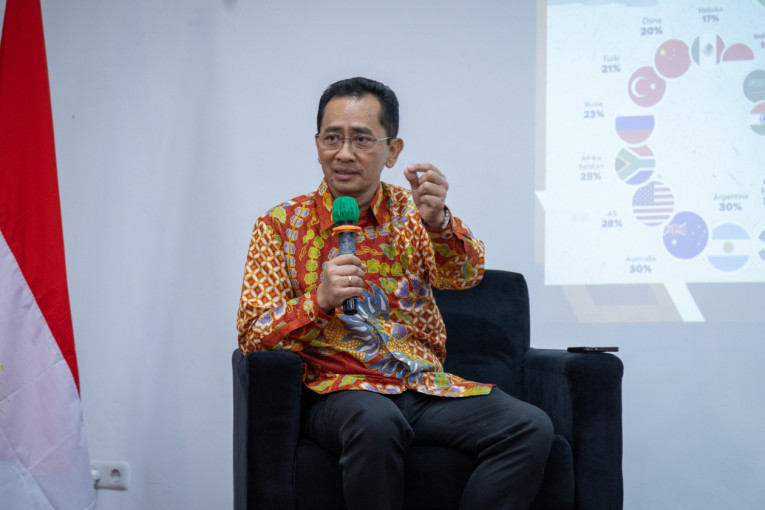
Dr. Budi Nugroho, a Supreme Court Justice assigned to the State Administrative Chamber of the Supreme Court of the Republic of Indonesia, delivered a public lecture titled “Peranan Mahkamah Agung dalam Aspek Perpajakan” (The Role of the Supreme Court in Taxation) on Friday (Oct. 9) at the Department of Economics and Business (DEB), UGM Vocational College (SV UGM).
Dr. Budi Nugroho discussed the judiciary’s role in ensuring taxation is administered in accordance with the law. Taxation involves not only calculating, paying, and reporting taxes but also matters of law and justice.
“As an important source of state revenue, tax collection must have a clear legal basis,” he said.
According to Budi, tax disputes can arise from differing interpretations of regulations, inconsistencies between provisions, and developments in business transactions and activities.
“These circumstances underscore the importance of legal mechanisms that allow taxpayers to file objections when they believe they have been harmed by a tax decision or assessment,” he added.
Tax dispute resolution involves several stages and engages both tax authorities and the judiciary. Taxpayers may file an objection with the relevant tax authority, appeal to the Tax Court, and, in line with applicable regulations, pursue an extraordinary legal remedy through a judicial review petition to the Supreme Court.
Through these mechanisms, the Tax Court and the Supreme Court resolve disputes and provide legal certainty for the parties involved.
“Understanding these mechanisms is important for students so that they can develop a more comprehensive view of taxation, including its relationship to taxpayers’ rights and obligations,” he said.
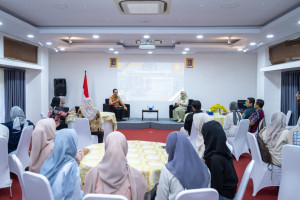
Dr. Wiryanta, Dean of SV UGM, in his remarks said the public lecture gave students an opportunity to deepen their understanding of taxation, not only in theory but also in practice. Practitioners’ experience is important in complementing classroom learning, particularly in understanding tax law issues and resolving disputes encountered in practice.
“We hope students will not only understand taxation in theoretical terms but also gain practical insights into its application, particularly in legal matters and tax dispute resolution,” Dr. Wiryanta said.
He also hopes that the event will create opportunities for collaboration between universities and practitioners. Such collaboration could include curriculum improvements and joint research, helping ensure that university-level learning keeps pace with developments in tax practice.
“Students can gain a more comprehensive understanding of taxation from both academic and professional perspectives,” he emphasized.
Author: Adinda Putri Rahma
Editor: Gusti Grehenson
Post-editor: Jasmine Ferdian
Photos: Donnie