


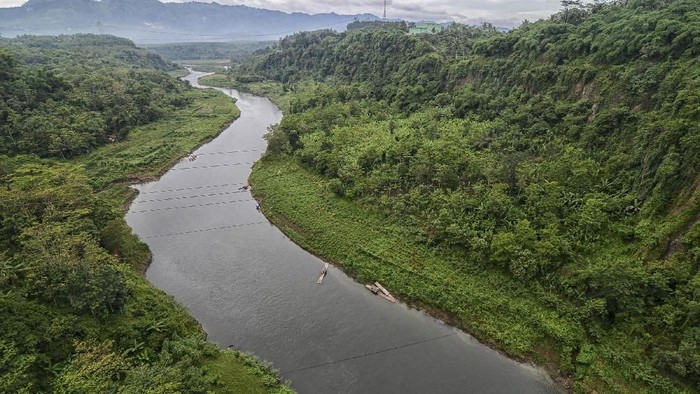
Drought affecting several regions in Indonesia has become an issue that cannot be ignored. Some areas are beginning to experience water shortages, and several rivers have reportedly dried up after prolonged periods without rainfall. This situation requires immediate action rather than concern alone. Communities, village governments, and regional governments need to work together to address the ongoing drought while preparing for water security during the next dry season.
UGM hydrology expert Professor Agus Maryono said drought measures include identifying and protecting available water sources, including springs with low flow rates. He emphasized that even the smallest water sources can make a difference for communities facing drought.
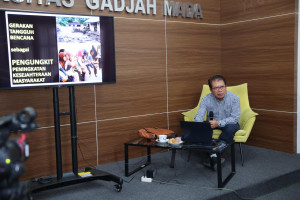
“Even a small spring can make a difference. One liter can serve a thousand people. A quarter of a liter can mean that 250 people have access to water,” Professor Maryono said at the Journalist School event “Gerakan Restorasi Sungai Indonesia dan Pengembangan Pariwisata Sungai di Jogja” (The Indonesian River Restoration Movement and River Tourism Development in Yogyakarta) held at the Fortakgama Room at UGM on Thursday (October 8).
For rivers that have dried up, Professor Agus said communities can look for water that remains beneath the riverbed. He explained that excavating certain sections and digging small wells can make underground water available for use until rainfall returns.
“Try excavating the dried-up rivers and digging small wells. There is still water in those rivers, beneath the riverbeds,” he explained.
Efforts to address drought must also focus on upstream areas and water sources. Professor Maryono encouraged communities to restore disused or dried-up reservoirs, reforest, and replenish groundwater by directing rainwater into unused wells. He said these measures need to be implemented more widely rather than relying solely on government programs.
He also called for joint, community-based programs to address the current drought and prepare for the next dry season. Since future weather conditions cannot be predicted with certainty, he said, water resilience must be built now.
“We need to develop programs together with communities and implement them simultaneously. These community-based initiatives should address the current dry season and prepare us for the next one,” he said.
For Professor Agus, water management must be preventive. Rainwater collected during the wet season should be prepared as a reserve for the dry season. This approach reflects a shift in how people view rivers: rather than responding only when water has run out, communities need to build systems that help ensure water remains available.
“Water management must be preventive. We need to think about rainwater during the rainy season in preparation for the dry season,” he concluded.
On the occasion, he explained that the river restoration movement, which began in Yogyakarta in 2014, had grown from one or two communities to more than 2,500 communities across Indonesia. This growth shows how river restoration can become a broader community movement when environmental awareness is built through knowledge, collective action, and long-term commitment.

A sense of love and care for rivers is the starting point of such a movement. When communities begin to feel ownership and care for the condition of their rivers, that concern can grow into solidarity, enthusiasm, and motivation to bring about change.
“If we nurture that feeling, we can restore the rivers and make them clean again. A sense of togetherness will follow, along with the spirit and motivation to act,” he said.
Professor Agus added that river restoration requires people who care about rivers and are willing to work together. However, he emphasized that such movements cannot rely on enthusiasm and physical effort alone. Knowledge is essential to help communities understand river-related problems more comprehensively.
“A movement requires not only enthusiasm but also knowledge. It takes more than muscle; people need to be equipped with knowledge,” he said.
The next challenge is sustaining the movement. According to Professor Maryono, restoration activities that rely solely on volunteer work may face difficulties with continuity and regeneration. Community members cannot necessarily remain involved indefinitely without tangible benefits.
For this reason, developing river tourism could help sustain the movement while stimulating the local economy. Restored rivers can become destinations for environmental tourism, bringing ecological interests together with local economic activities.
“River tourism can be a realistic option if it can significantly improve the welfare of the communities living along the river,” Professor Agus said.
He explained that river tourism can generate flows of people, information, and economic activity through various community businesses, including micro, small, and medium enterprises (MSMEs), food services, parking, facility provision, and environmental education. Communities, he added, should be positioned as managers of these areas rather than merely as workers.
“This creates a cycle in which well-maintained rivers attract visitors, tourism generates economic benefits, and those benefits encourage communities to continue protecting the river environment,” he concluded.
Author: M. Aidil Syahputra
Editor: Gusti Grehenson
Post-Editor: Priyananda
Photo: Firsto, Antara