


A research team from the Faculty of Engineering, Universitas Gadjah Mada (FT UGM), has developed an innovative rice-field irrigation system that prevents percolation and downward seepage, offering a sustainable agricultural solution for areas with limited surface water availability, particularly in dryland regions such as Gunungkidul Regency and other parts of Indonesia.
The irrigation system is designed by installing a geomembrane sheet beneath the rice plant root zone to minimize water loss in rice plots due to percolation into the soil, thereby significantly improving water use efficiency.
Before planting, the rice field is excavated, lined with a geomembrane, and then covered with soil again.
This method has proven effective in preventing water from seeping downward.
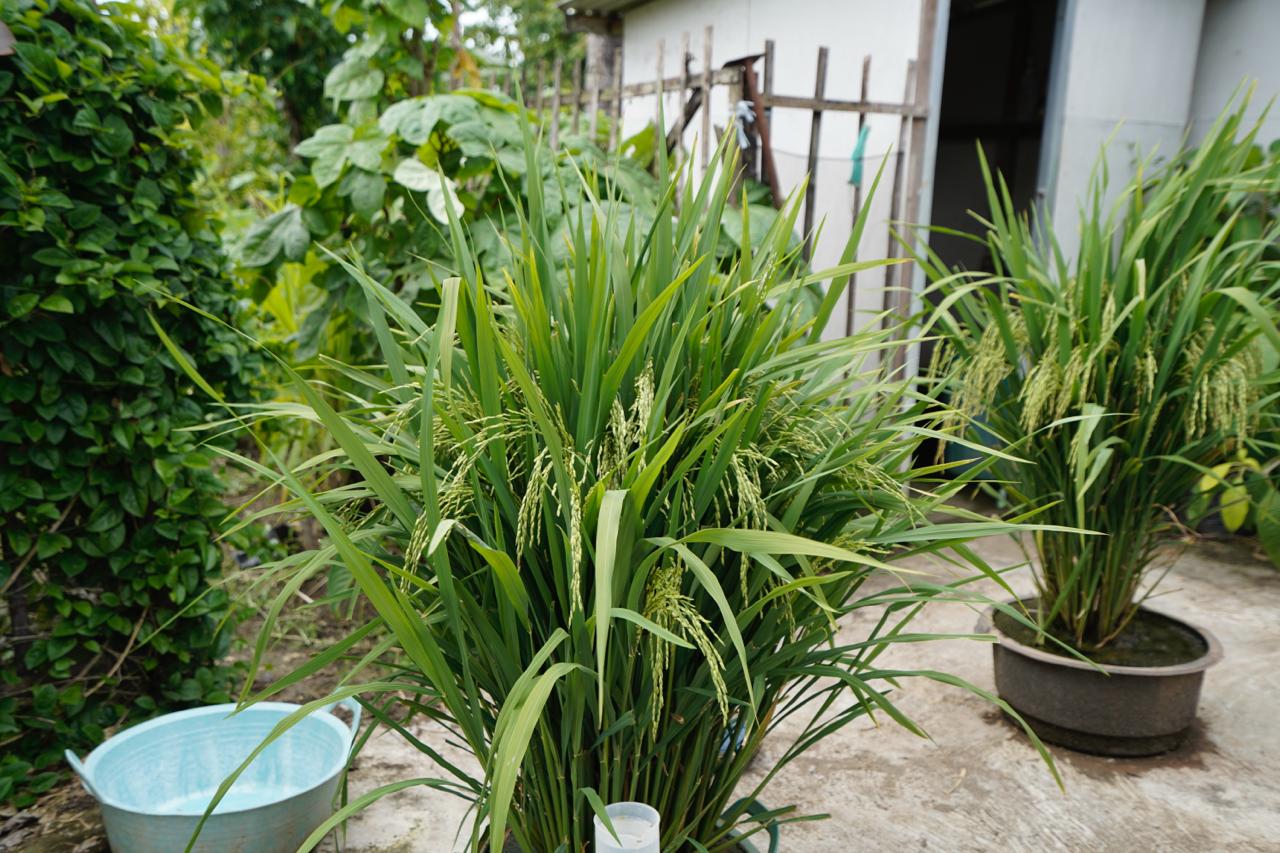
The head of the research team, Professor Fatchan Nurrochmad, along with research team members Dr. Rachmad Jayadi and Endita Prima Ari Pratiwi, explained that the irrigation system controls water movement in rice fields.
Water is not allowed to seep into the ground through percolation but is instead directed to meet plant metabolic needs through evapotranspiration, which includes evaporation and water loss through leaf stomata (transpiration).
“This non-percolation rice-field system is designed so that water and nutrients are not lost into the ground but can be optimally utilized by rice or other crops, meaning that water and nutrient needs meet the criteria of timeliness, appropriate quantity, and suitable quality,” Professor Nurrochmad said on Wednesday (Dec. 24, 2025).
Professor Nurrochmad added that the consumptive water requirement for rice crops ranges from 7 to 8 millimeters per day.
In conventional rice fields in areas with black clay soil, such as Gunungkidul, most of the supplied water seeps immediately below the soil surface during the dry season, causing drought in the root zone and preventing plants from utilizing it.
“The soil here is actually very fertile, but when it is dry and watered, the water immediately seeps downward. This is what makes it difficult for farmers to cultivate crops during the dry season,” he explained.
According to Professor Nurrochmad, the Gunungkidul area has considerable potential, including fertile soil, ample land, and abundant groundwater resources.
Based on drilling results, groundwater depth in the region ranges from 60 to 70 meters, with depths exceeding 100 meters at some locations.
Ideally, agricultural water should come from surface water sources such as rivers.
However, local geographical conditions make this approach difficult to implement.
Therefore, water from bore wells is pumped to the surface and stored in water tanks before being distributed to rice plots through PVC pipes, regulated as needed.
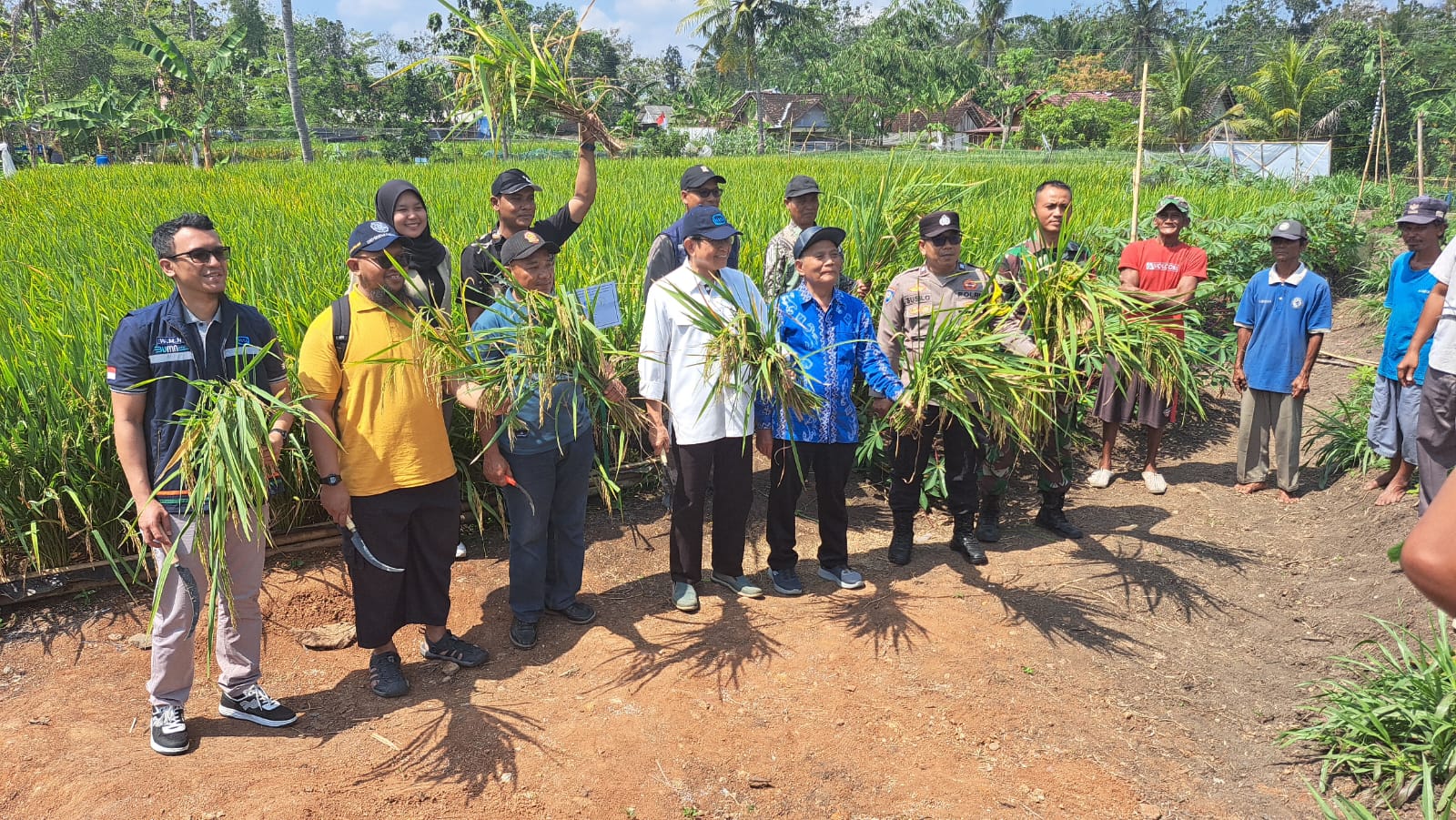
The initial investment required for bore-well construction, water pumps, PVC piping networks, and geomembranes poses a challenge for farmers.
“Technically, this system is effective, but the cost is still high. That is why support from other parties, such as CSR programs, is greatly needed so this system can be implemented more widely,” Professor Nurrochmad said.
Applying this irrigation system collectively among several farmers is one option to address cost constraints.
In addition to water management innovations, the cultivation system in these rice fields also uses the Jajar Legowo 2:1 planting pattern, in which two rows of rice plants alternate with one empty row.
This pattern aims to prevent nutrient competition among plants by distributing nutrient sources across multiple points.
At the end of the planting season, or after harvesting, the soil is enriched with organic fertilizer to allow the land to be replanted the following season.
Land preparation is carried out carefully to avoid damaging the geomembrane.
“The interval between the first planting and the next ranges from about 10 days to one month to allow the rice-field soil to be ready for replanting,” he explained.
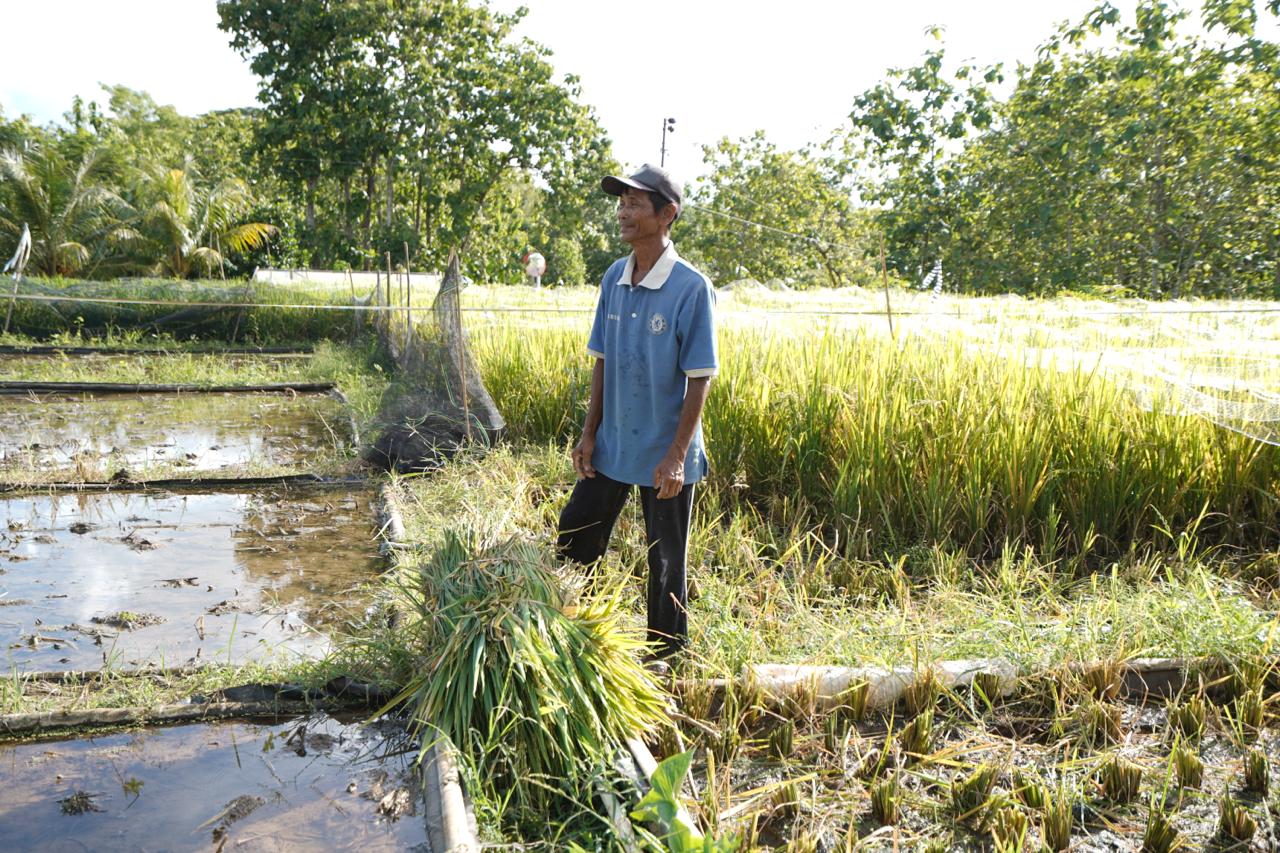
Danar, the head of the farmer group, hopes this innovation will encourage traditional farmers to transition to more efficient, productive farming systems on their household land.
“We hope that in the future most traditional farmers can shift to modern non-percolation rice fields because this system is far more effective and efficient, especially in terms of maintenance and water management,” he said.
He added that, based on FT UGM research and official data from Statistics Indonesia (BPS) Gunungkidul, traditional rice-field productivity averages only about 0.5 kilograms per square meter.
Meanwhile, non-percolation rice fields can produce between 1 and 1.1 kilograms per square meter, or more than double.
“This productivity increase is very significant. In addition to higher yields, water is truly utilized by plants because percolation is nearly zero. Water is only lost through evaporation and transpiration,” he explained.
Professor Nurrochmad noted that the non-percolation rice-field area is also designed to be developed under a mixed-farming concept, integrating rice cultivation, goat farming, and eel cultivation.
Goat manure can be used for worm cultivation as part of a sustainable, integrated farming system.
Author: Jelita Agustine
Editor: Gusti Grehenson
Post-editor: Lintang Andwyna
Photographer: Salwa