


The government is accelerating economic development through priority programs, including food self-sufficiency, energy security, and the downstreaming of strategic commodities. In a webinar titled “Synergy of Science and Institutions for Sustainable Agriculture,” Professor Ferian Anggara, from the Faculty of Engineering of Universitas Gadjah Mada (FT UGM), explained that Gamahumat research is one of the innovations aligned with these national agendas while also supporting the target of achieving net-zero emissions (NZE).
“By utilizing low-calorie coal reserves, we still have around six billion tons of resources that can support NZE in the agro-industrial sector,” he said on Friday (Nov. 21).
Professor Anggara explained that current Gamahumat research focuses on developing raw materials and production processes. At the same time, field trials are conducted in collaboration with experts in soil science, agriculture, forestry, and relevant stakeholders.
A multidisciplinary approach is deemed essential to ensure that research outcomes can be appropriately applied across various land types.
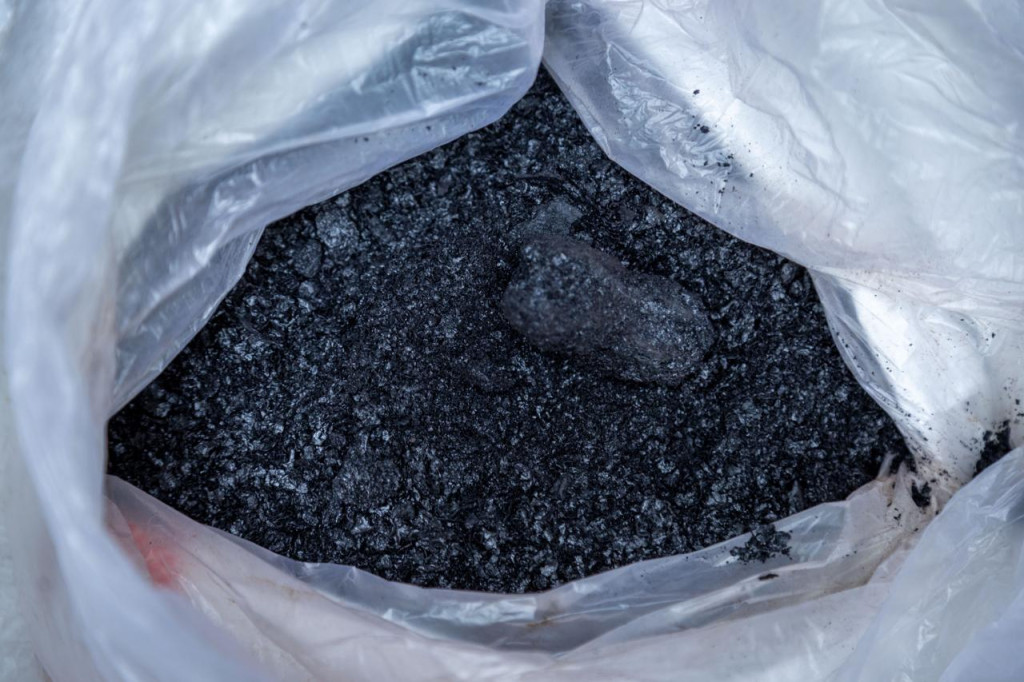
In his presentation, Professor Anggara highlighted that Gamahumat is a soil conditioner derived from lignite, a low-rank coal that has not been optimally utilized.
Through engineering processes, lignite is transformed into high-quality humate, improving soil structure and enhancing fertility.
“We refer to it as the Gamahumat Lignite-Based Soil Stabilizer because its foundation lies in restoring degraded soils,” he explained.
He added that humus has long been recognized as a key component of soil fertility, whereas Gamahumat represents its engineered counterpart, produced in large volumes with greater control over quality.
“Simply put, humate is humus. The difference is that what we produce is available in much larger quantities and can be tailored to the needs of different land conditions,” he said.
According to Professor Anggara, one of the biggest challenges in agriculture is soil compaction caused by repetitive fertilization.
Humate helps repair soil structure, enabling plant roots to absorb nutrients more effectively. Long-term use of humate can also reduce dependence on chemical fertilizers without lowering productivity.
However, he emphasized that Gamahumat is not a substitute for NPK fertilizers. Its primary function is to rehabilitate soil so that fertilization becomes far more efficient.
He noted that chemical fertilizers often have an effectiveness rate of only around 50 percent due to leaching, and humate helps recover these losses by improving soil quality.
The appropriate amount of Gamahumat use depends greatly on soil conditions and crop type. Gamahumat products have been tested on various land types, including Bukit Asam’s oil palm plantations, karst areas, and post-mining zones with suboptimal acidity levels.
In the mining sector, the demand for humate is substantial, as major mining companies are required to reclaim hundreds of hectares of land each year.
“And that is only from one company. We are talking about even larger areas, and these reclaimed lands can later support agricultural or plantation development,” he said.
To date, Gamahumat has obtained Grade A product certification under the Ministry of Agriculture’s standards.
With this achievement, the innovation is expected to serve as a viable solution for managing extreme lands, mine reclamation, and land preparation for future food security.
“We want this research to reach the ground and be used by frontliners, by farmers working directly on agricultural lands,” emphasized Professor Anggara.
The webinar was part of the science and technology campaign “Empowering Research, Advancing Food Security” supported by the Directorate of Science and Technology Dissemination and Utilization, Ministry of Higher Education, Science and Technology, through the science and technology campaign program (Resona Saintek).
Author: Hanifah
Editor: Triya Andriyani
Post-editor: Lintang Andwyna
Photographer: Donnie Trisfian