


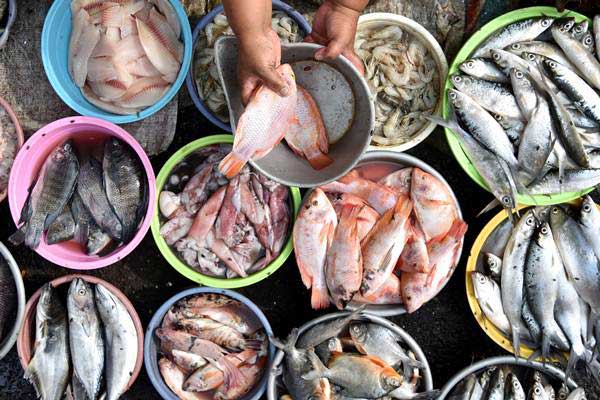
Indonesia is a maritime nation and the world’s second-largest fisheries producer after China, supplying approximately 25% of global fish demand. According to data from the Ministry of Marine Affairs and Fisheries (KKP), the country’s total fisheries production reached 26.25 million tons in 2025, comprising 11.65 million tons of seaweed, 7.85 million tons of capture fisheries, and 6.75 million tons of aquaculture. Despite this substantial production, fish consumption among Indonesians remains relatively low. Compared with neighboring countries such as Malaysia and Japan, Indonesia’s fish consumption lags behind. National Fish Consumption (AKI) in 2024 stood at 58.76 kilograms per capita per year. In the Special Region of Yogyakarta and Java in general, average consumption is even lower than in coastal regions or Eastern Indonesia, where annual consumption ranges from 77 to 82 kilograms per capita.
Professor Alim Isnansetyo from the Department of Fisheries at Universitas Gadjah Mada (UGM) said that low seafood consumption is particularly evident across Java. According to him, several factors contribute to this trend, including dietary habits. In Java, fish is generally not the primary source of protein at the family dining table. From an early age, many Javanese are accustomed to consuming protein from chicken, tofu, or tempeh, whereas children in Eastern Indonesia are introduced to fish as a staple protein source.
“This is essentially a habit formed from childhood. We need to educate younger generations from an early age to make fish a regular part of their diet,” he said on Monday (Jun. 29).
Beyond dietary habits, Professor Alim said limited public awareness also contributes to Indonesia’s low fish consumption. Many people are still unaware that fish is highly nutritious, containing complete amino acids, both essential and non-essential, as well as unsaturated fatty acids such as omega-3, which support cardiovascular health and brain development without increasing cholesterol levels.
“There are still too few ready-to-eat processed fish products available, making people less inclined to consume fish,” he said.
According to Professor Alim, distribution and logistics also play a significant role in limiting fish consumption. Most of Indonesia’s fish supply originates from the eastern part of the country, meaning that transporting fresh fish to densely populated areas requires considerable time, cost, transportation, and specialized handling. Because fish is highly perishable, it relies on a reliable cold chain, yet such logistics infrastructure is not available in all regions.
“Transporting fish to densely populated areas requires time, cost, and specialized handling. Not every region has adequate logistics infrastructure, which limits distribution,” he explained.
Professor Alim further noted that low fish consumption also affects the fisheries industry. Fish prices become highly sensitive to consumer demand. During peak harvest seasons, abundant catches combined with weak consumption reduce market prices because consumer absorption remains low.
At the same time, he pointed out that Indonesia continues to face serious marine ecosystem challenges, ranging from ecosystem degradation to overfishing, which threatens the sustainability of fish populations.
“In certain areas, overfishing has already occurred. This poses a serious threat to fish populations because excessive numbers of fish are being harvested,” he explained.
Professor Alim outlined several measures that the government and other stakeholders should prioritize to address these issues. First, they should promote fish consumption through educational campaigns beginning in early childhood. Second, they should support fish processing enterprises in developing ready-to-eat fish products that are easier to consume and distribute. Third, they should ensure a stable supply of fresh fish as raw material for processing industries. Fourth, they should strengthen fish distribution systems so fresh products can reach population centers quickly without compromising quality.
Finally, he emphasized the importance of stronger law enforcement. The government must continue taking firm action against activities that damage marine ecosystems and address overfishing to safeguard the quality and sustainability of Indonesia’s maritime sector. Marine conservation areas must also be protected through strict enforcement.
“These measures require firm law enforcement, and marine conservation areas must be protected rigorously,” he concluded.
Author: Fatihah Salwa Rasyid
Editor: Gusti Grehenson
Post-Editor: Priyanandaningrat
Photo: Antara