


The Patriot Expedition Team of Universitas Gadjah Mada (TEP UGM) has completed field data validation to map on-the-ground findings and identify potential in 154 transmigration areas across Indonesia, in collaboration with seven partner universities. UGM’s community service team involved 10 faculties and four research centers by deploying young talents to 14 transmigration locations as part of the Patriot Expedition program initiated by the Ministry of Transmigration of the Republic of Indonesia.
The Minister of Transmigration of the Republic of Indonesia, M. Iftitah Sulaiman Suryanagara, emphasized that the presence of academics in transmigration areas is key to creating new centers of economic growth.
“The stories of these patriots dispel much of the pessimism that Generation Z has no contribution or is overly pampered. They have truly internalized this program,” he said during the Closing Ceremony and Soft Launch of the TEP UGM book at the Faculty of Social and Political Sciences (Fisipol UGM) Auditorium on Friday (Dec. 19).
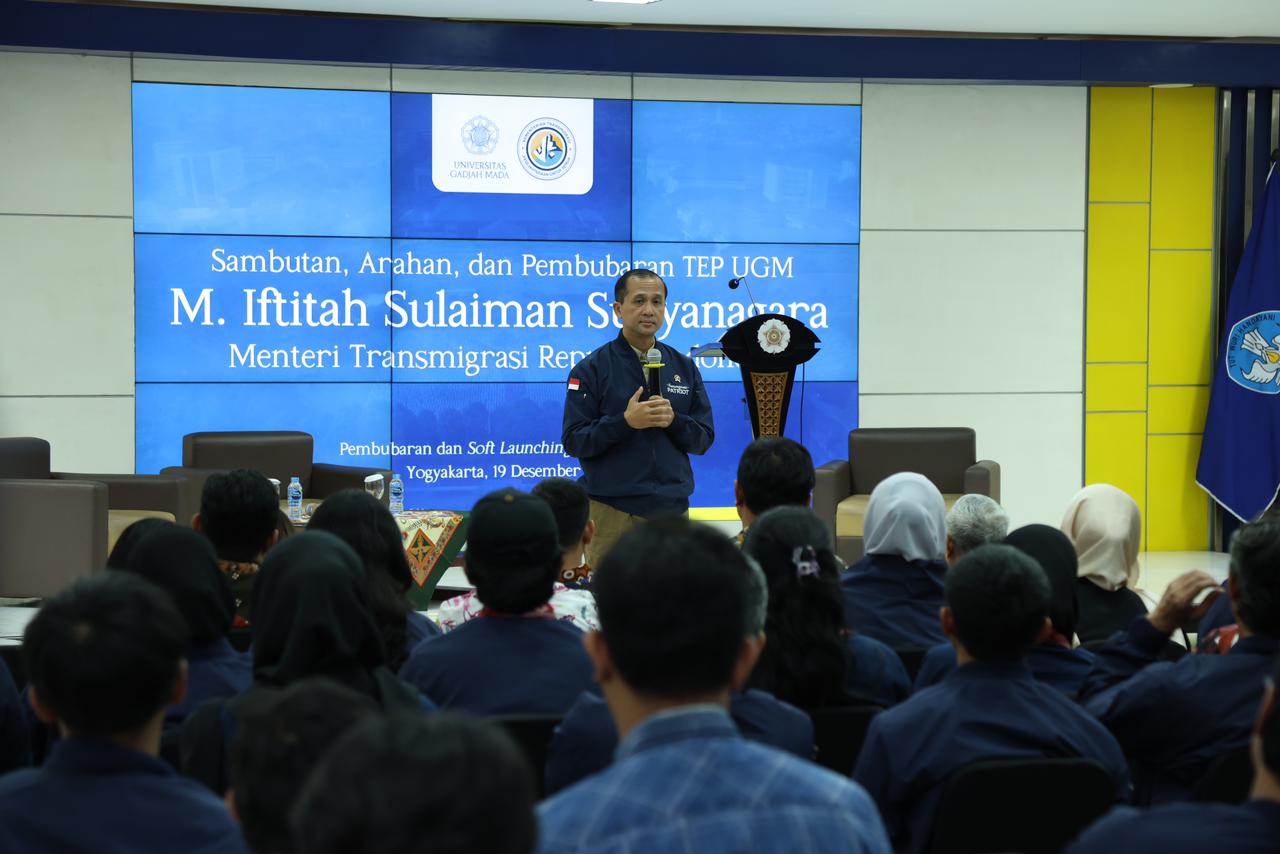
According to the minister, data produced by universities will enable concrete responses to the development needs of transmigration areas.
“We want transmigration areas to become living laboratories for producing more leaders equipped with both theoretical knowledge and field missions,” he added.
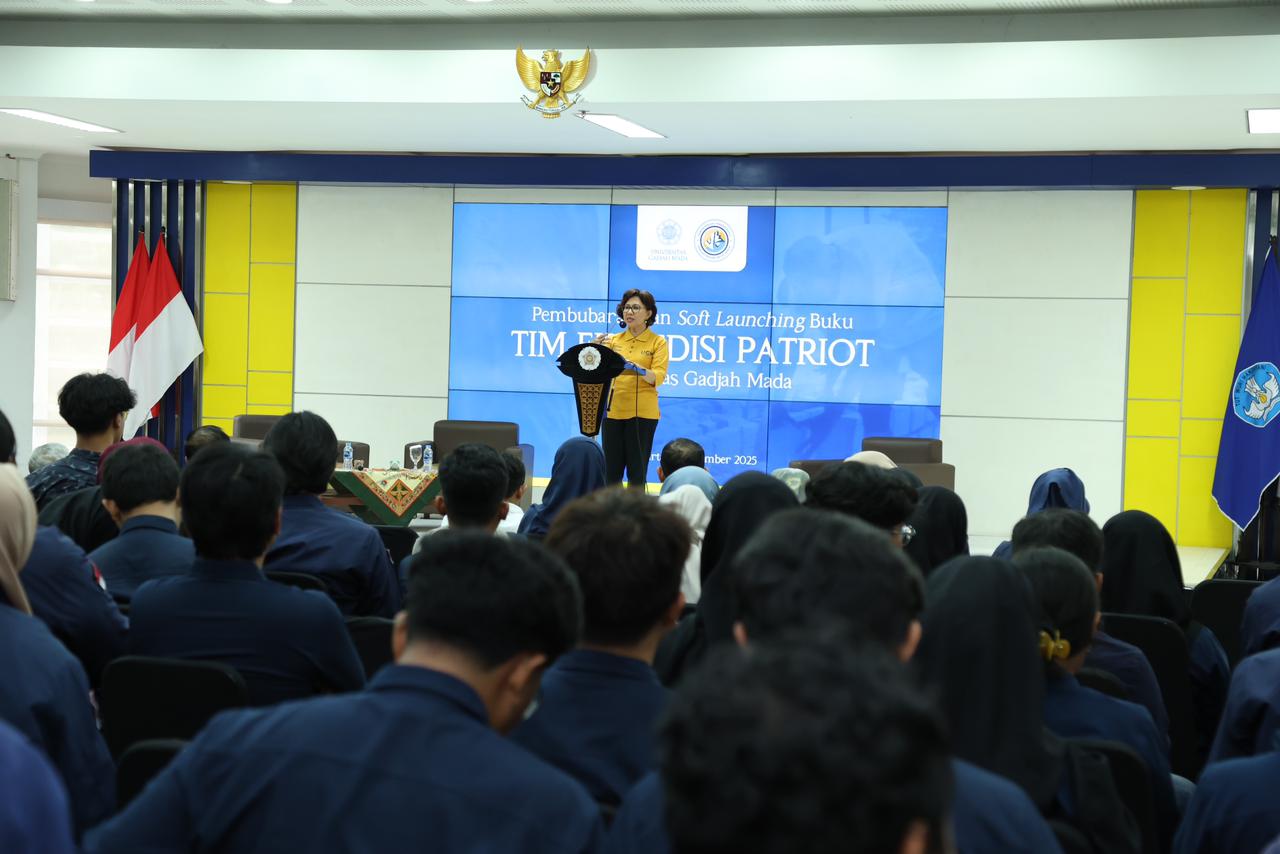
UGM Rector, Professor Ova Emilia, assessed that the collaborative deployment of TEP reflects the tangible implementation of the tri-dharma, particularly in the research and development (R&D) function.
“Indonesia faces major challenges related to equitable development, poverty reduction, and food security. At the same time, universities are centers for research and development. Through the hands of young generations in the field, this program not only explores existing conditions but also provides concrete solutions for self-reliance,” Professor Emilia remarked.
From a technical perspective, UGM Vice Rector for Student Affairs, Community Service, and Alumni, Dr. Arie Sujito, explained that field data validation is the main foundation to ensure transmigration remains relevant as a development instrument. Through 58 teams deployed across 14 locations, UGM focused on thematic analyses ranging from economic potential to social conflict mitigation.
“Our spirit is to offer new ways of thinking and perspectives through evidence-based strategic recommendations. This is crucial so that the reports produced can serve as a basis for government decision-making,” he explained.
Dr. Dewi Cahyani Puspitasari, as coordinator of TEP UGM, stated that the community service activities carried out over approximately 120 days resulted in a book titled “Transformation, Transmigration, Social Impacts, Opportunities, and Challenges.” The compiled findings will later serve as an evidentiary basis for policymaking and future development planning in transmigration areas.
Through this initiative, Dr. Puspitasari noted, UGM reaffirms its role as an academic institution that not only produces knowledge but also directly contributes to strengthening research-based national development policies.
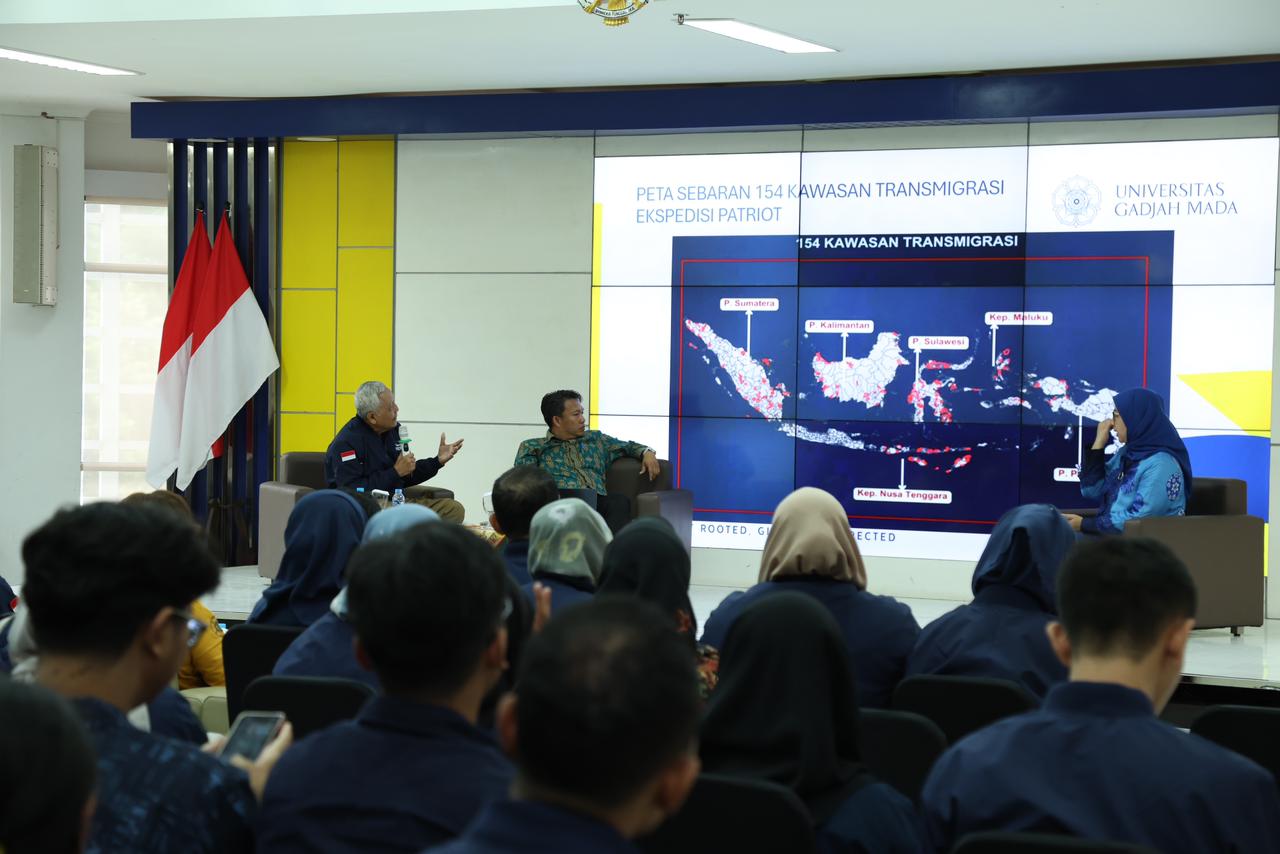
The fourteen transmigration areas included in the deployment of the TEP UGM comprise the Muting transmigration area in Merauke Regency, South Papua Province; Trans Gane, North Maluku; Bena, South Central Timor (TTS); Hialu Transmigration Area, North Konawe; Mentebah, Kapuas Hulu, West Kalimantan; Muara Sahung, Kaur, Bengkulu; and Babahrot-Kuala Batee, Southwest Aceh Regency.
Author: Aldi Firmansyah
Editor: Gusti Grehenson
Post-editor: Rajendra Arya
Photographer: Donnie Trisfian