



Universitas Gadjah Mada (UGM) has once again recorded a regional achievement by earning the highest rating, 5-star plus, in the Healthy University Rating System (HURS) 2025, organized by the ASEAN University Network-Health Promotion Network. This assessment places UGM among the universities with the best health promotion implementation in the ASEAN region. The achievement reflects UGM’s sustained commitment to building a healthy, safe, and inclusive campus environment. The university has received this recognition consecutively since 2022.
Chair of the Health Promoting University (HPU) UGM, Professor Yayi Suryo Prabandari, explained that HURS is an assessment system developed to encourage higher education institutions to establish integrated health ecosystems on campus. The system was initiated through collaboration among universities in the ASEAN region in response to global shifts in disease patterns, particularly the rise of non-communicable diseases. UGM was among the universities actively involved from the outset in formulating the healthy campus framework.
“At that time, there was no clear concept of what a healthy campus should look like, so we worked with several ASEAN universities to develop the framework from scratch through various meetings since 2014,” she said on Monday (May. 4).
In its implementation, the HURS assessment comprises three main pillars: systems and infrastructure, zero-tolerance areas, and health promotion areas. These three aspects form the basis for evaluating how effectively a university creates an environment that supports overall health.
Professor Prabandari emphasized that systems and infrastructure carry the greatest weight, as they encompass policies, facilities, and integration into the tridharma of higher education. This indicates that achieving the highest rating is built on sustainable systems rather than temporary programs.
“To be considered a healthy campus, it is not enough to have activities; there must be policies, facility support, and integration into the university’s system,” she stressed.
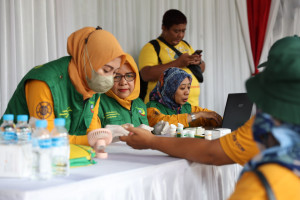
Achieving a 5-star-plus rating indicates that UGM has met the criteria for a healthy campus in accordance with HURS standards. This accomplishment reflects consistency in developing integrated policies and programs across the university. Professor Prabandari explained that the development of a healthy campus is directed toward fostering a culture of healthy living within the academic environment. With this approach, health becomes part of daily life for the UGM community.
“We have gone through several assessments, from five stars to finally reaching five plus, so this has been a gradual process,” she noted.
Professor Prabandari revealed that since the launch of the Health Promoting University initiative in 2019, UGM has continued to develop various initiatives covering health services, education, and the strengthening of a safe and inclusive campus environment. These programs are implemented collaboratively, involving faculty, students, and education staff.
These efforts are also integrated into education, research, and community service activities. This comprehensive approach strengthens a campus ecosystem that supports sustainable, healthy lifestyles.
In practice, various programs have begun to show an impact on behavioral changes among the academic community. Activities such as integrated health posts (posbindu) encourage individuals to become more aware of their health conditions.
According to Professor Prabandari, physical activity has increasingly become part of daily routines, from group exercise to community-based activities. These changes indicate a growing awareness of the need to adopt a healthy lifestyle on campus.
“Initially, they were surprised when they learned about their health conditions, but afterward, they began trying to change their habits, for example, by walking regularly,” she said.

Changes are also evident in consumption patterns and social interactions within the campus environment. Professor Prabandari noted that several units have begun offering healthier food options, while students actively remind each other of the importance of maintaining a healthy lifestyle.
Mental health support has also been strengthened through the presence of peer counselors across faculties. This initiative reinforces a campus culture that increasingly prioritizes collective well-being.
“Students are now starting to remind each other, even those outside the health field are becoming more aware,” she added.
Looking ahead, UGM is committed to further strengthening the implementation of a healthy campus through more measurable and data-driven approaches. Professor Prabandari emphasized that developing regular health surveys is one of the strategies being promoted to monitor behavioral changes and the health conditions of the academic community.
This effort is expected to serve as a foundation for designing more targeted programs while enhancing the quality of the campus learning environment. A healthy environment is believed to contribute to the development of more productive individuals who are ready to face challenges after graduation.
“Universities are expected to produce graduates who are not only intelligent but also healthy and productive, so they are ready to enter the workforce,” Professor Prabandari concluded.
Author: Triya Andriyani
Post-editor: Jasmine Ferdian
Photo: Donnie