


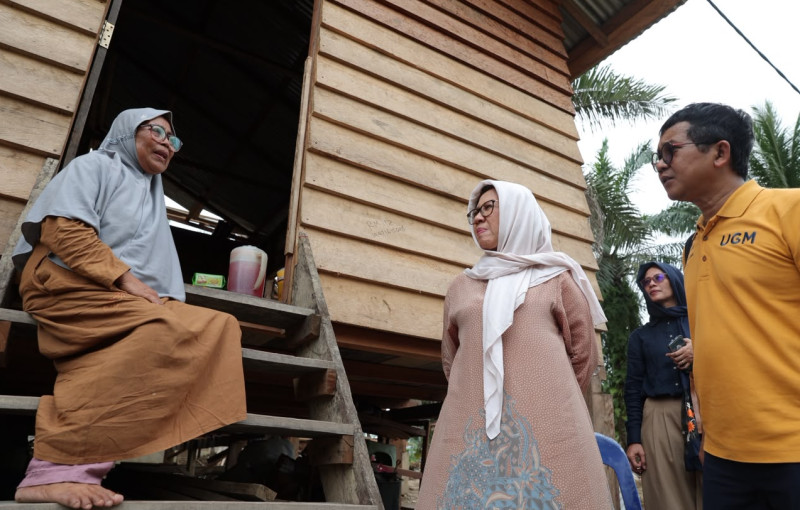
The devastating flash floods and extreme rainfall that struck Aceh Tamiang caused severe hardship. Roads, bridges, and residents’ homes were damaged, leaving communities isolated and difficult to reach. UGM and the Aceh Chapter of the UGM Alumni Family (Kagama Aceh) then mapped the areas most in need of assistance, and Sekumur Village was identified as the top priority for immediate aid.
UGM Rector Professor Ova Emilia explained that the decision was based on the severity of the disaster’s impact on the ground.
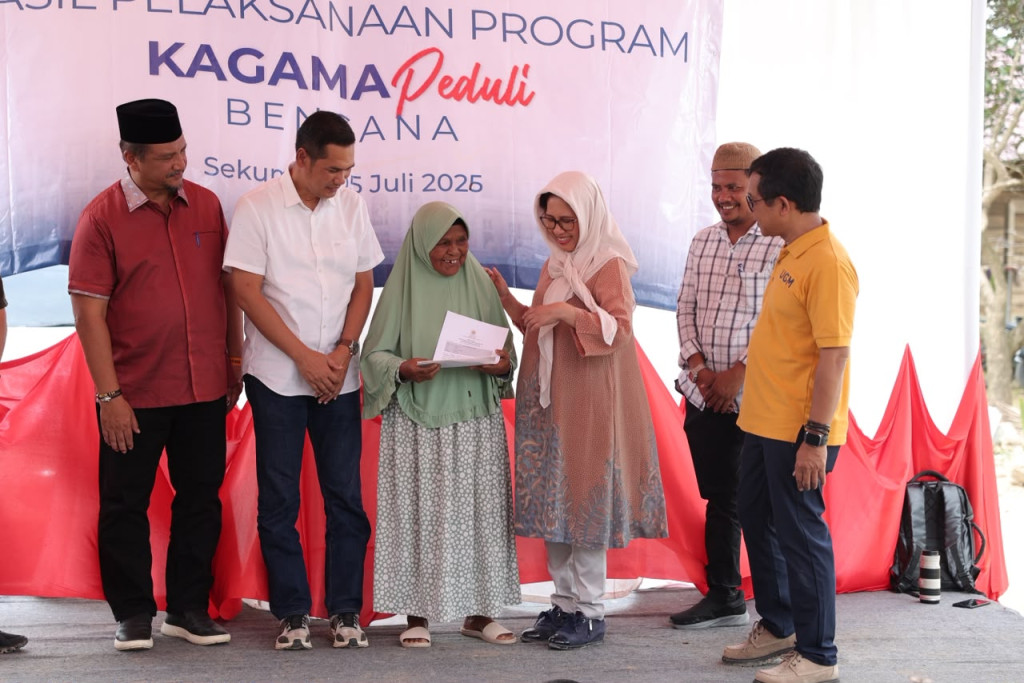
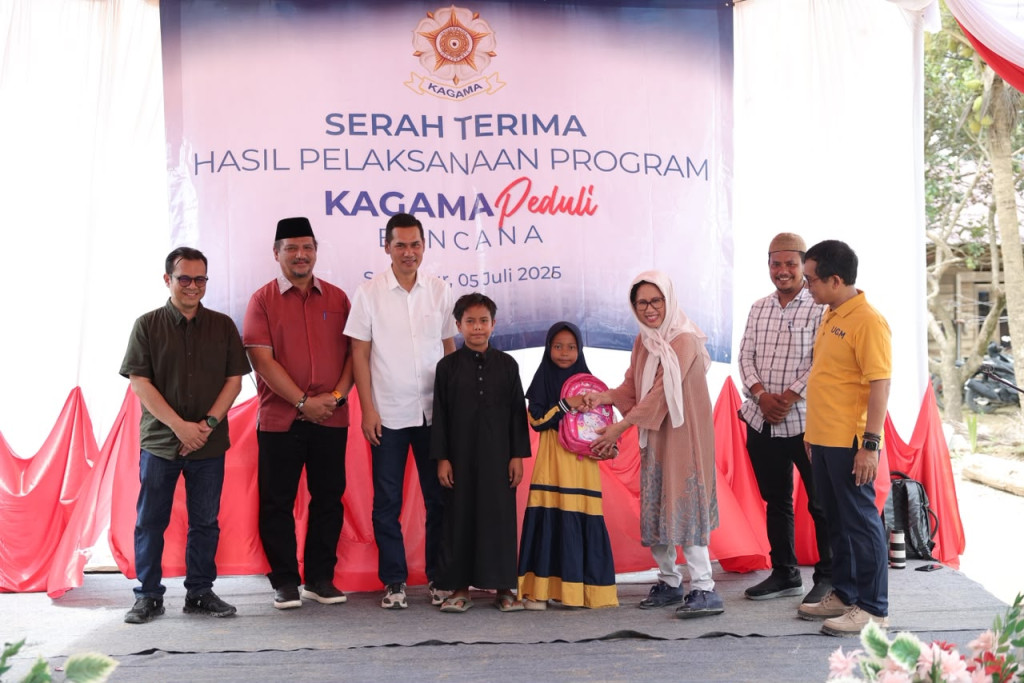
“This area was among the hardest hit, requiring urgent assistance while also being difficult to reach. Therefore, we focused our efforts here. The decision was made jointly with Kagama Aceh, whose members conducted an assessment to determine which areas should be prioritized,” said Professor Emilia in an interview with reporters following the handover ceremony for temporary housing in Sekumur Village on Sunday (Jul. 5).
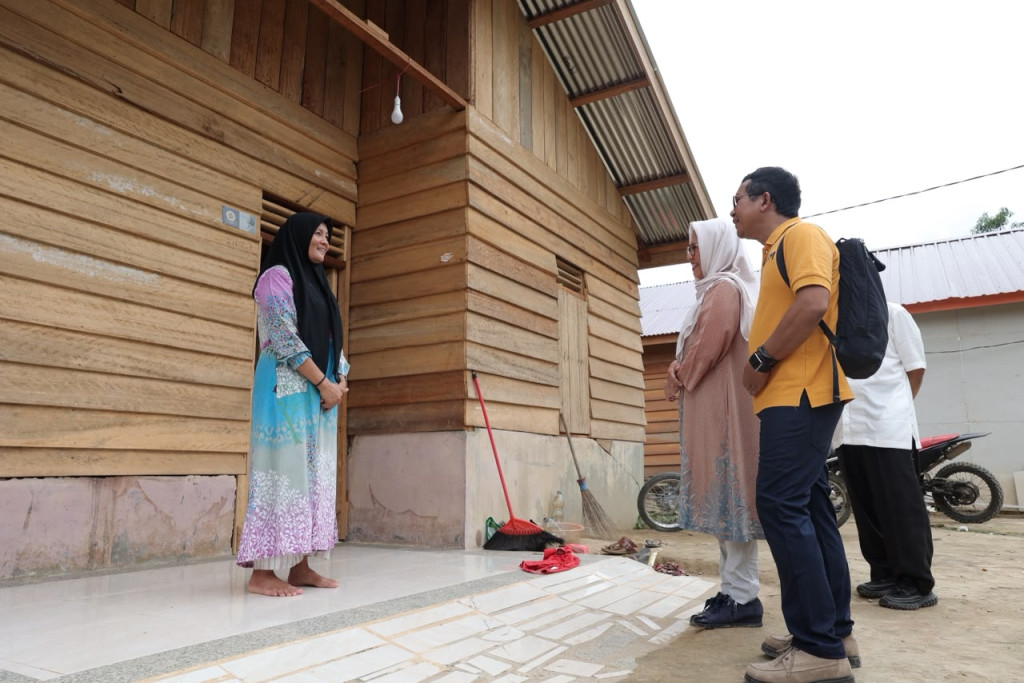
As a concrete response, UGM and Kagama Aceh built 26 temporary housing units for residents of Sekumur Village. Notably, the shelters were constructed using timber carried downstream by the flash floods last November, demonstrating an innovative approach amid limited resources and logistical challenges.
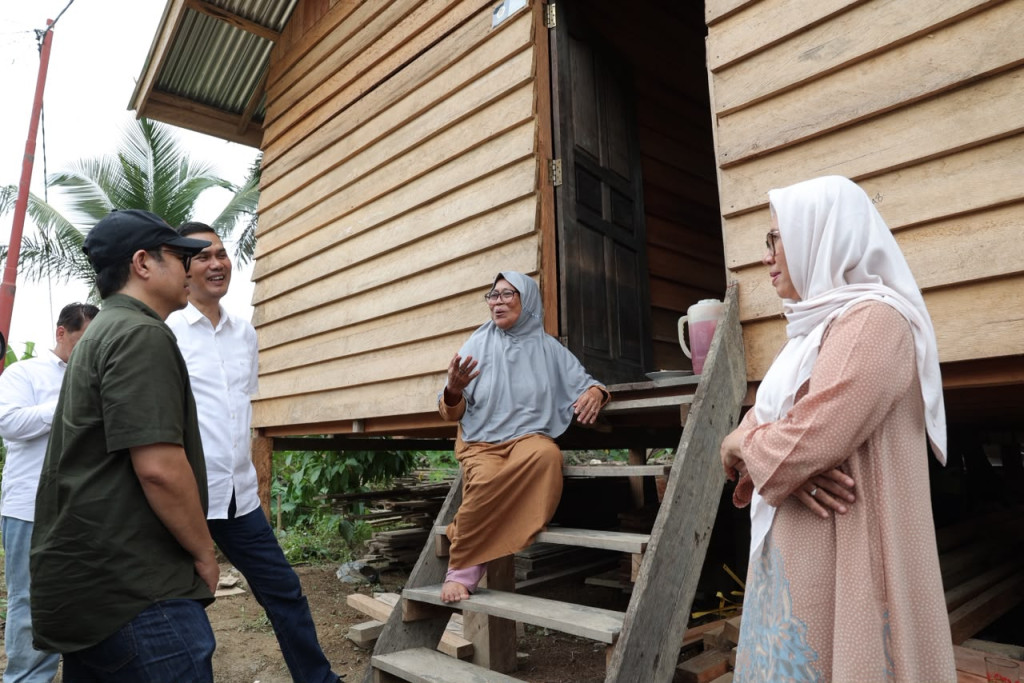
The assistance has had a direct impact on the lives of local residents, including 60-year-old farmer Sariyah. After spending months in an inadequate emergency tent, the temporary shelter has restored not only her sense of security but also her dignity. Fighting back tears, she expressed her deep gratitude for the assistance.
“We cannot thank you enough. We are truly grateful. We used to live in a tent, but now we finally have a house. We can sleep peacefully without suffering from the heat or getting soaked by the rain,” she said emotionally.
Eager to leave the evacuation tent, Sariyah moved into the shelter even before construction had been fully completed. During her time in the temporary tent, her health deteriorated as she frequently fell ill. To recover from the disaster, she even sold all of her family’s transportation assets to pay for the removal of mud and debris that had buried her home.
“We sold everything. Around eleven million rupiah was spent just to clear the mud covering the house,” she recalled.
Another resident, 40-year-old Mardiah, also shared her gratitude. Although the flood completely destroyed her oil palm plantation, which had been her family’s primary source of income, she is relieved to finally have a decent place to live.
“We are so happy. It feels like we have finally received real help because we now have a place to live. We used to wait in the evacuation tent, but now we have a house. We are truly grateful for this assistance,” she said.
The program’s success reflects the strong solidarity within UGM’s alumni network. Secretary General of the Central Executive Board of Kagama, Nezar Patria, praised Kagama Aceh as one of the organization’s strongest regional chapters. The assistance was funded through collective contributions from the national organization and regional Kagama chapters across Indonesia.
“We built 26 temporary housing units. In addition, we have supported school rehabilitation and provided educational supplies at several locations in Aceh Tamiang and East Aceh,” said Nezar.
He added that during the first week after the disaster, his team also moved quickly to provide essential logistical support for displaced residents.
Seeing the program’s positive impact, the Regent of Aceh Tamiang encouraged the residents of Sekumur Village to take good care of the facilities provided.
“I hope these disaster relief facilities will be maintained, protected, and utilized as well as possible. Let us use this momentum to recover more quickly and emerge stronger,” he said.
His message echoed that of the Governor of Aceh, as conveyed by Aceh Kagama Chair M. Nasir, who also serves as Regional Secretary of Aceh Province. He said the provincial government has officially concluded the disaster recovery transition period and is now entering the rehabilitation and reconstruction phase.
“We have completed the recovery transition process and are now moving directly into rehabilitation and reconstruction,” he said.
UGM and Kagama’s commitment extends beyond building temporary shelters. During his visit to the village, Patria, who also serves as Indonesia’s Deputy Minister of Communication and Digital Affairs, found that several sections of the route to Sekumur had no cellular signal. In response, he pledged to accelerate the installation of internet access points in the village.
“We will expedite the development of internet access points in Sekumur Village to support education, healthcare services, and village governance,” said Patria.
Meanwhile, Professor Emilia expressed her appreciation for the strong collaboration among all parties involved. She affirmed that UGM will continue supporting the long-term recovery of the Aceh Tamiang community to help build disaster resilience. One of the university’s planned initiatives is to deploy students through its Community Service Program (KKN-PPM).
“UGM will continue assisting the people of Aceh Tamiang as they move into the rehabilitation and reconstruction phase by sending KKN students to conduct assessments, carry out studies, and help identify the best solutions,” said Professor Ova.
The university is also opening new opportunities for young people in the region through its pre-university program. The initiative is designed to provide students from underserved communities with the opportunity to experience studying at UGM and prepare them for higher education.
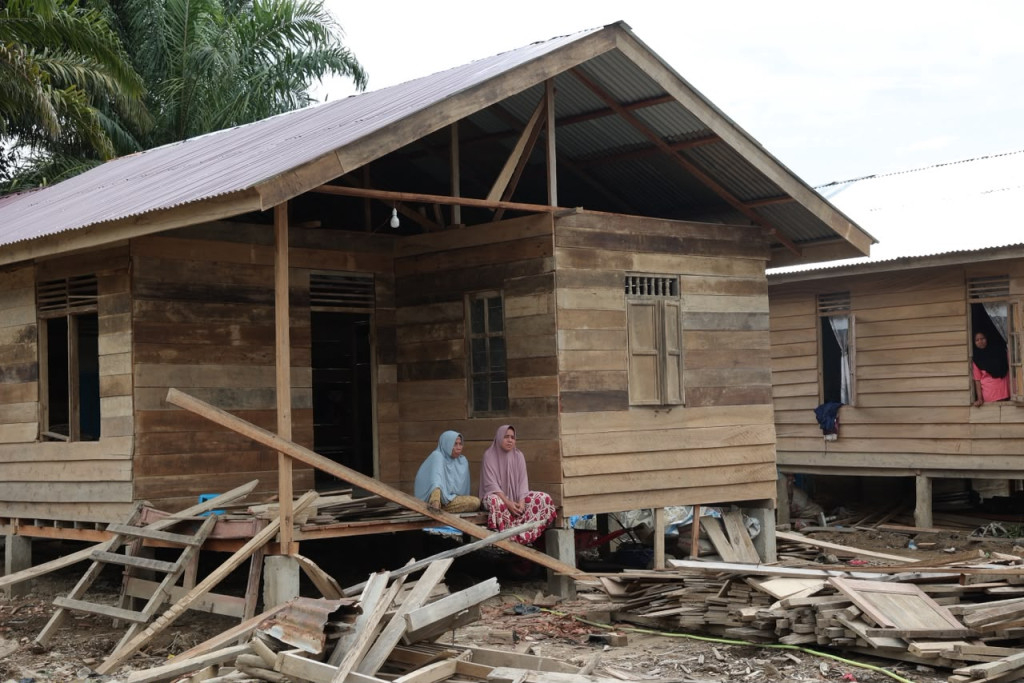
Although temporary homes now stand and hope has begun to return, significant challenges remain. As rehabilitation and reconstruction continue, residents such as Sariyah hope additional assistance will be provided to help them rebuild their livelihoods.
“Our plantations are gone. The oil palms are gone, the coconut trees are gone, everything is gone. We no longer have any source of income. Even if we wanted to start a business, there is nothing left to sell. We hope to receive assistance such as crop seedlings so we can cultivate the empty land again and restore our livelihoods,” she said.
Author: M. Aidil Syahputra
Editor: Gusti Grehenson
Post-editor: Jasmine Ferdian
Photo: Firsto