


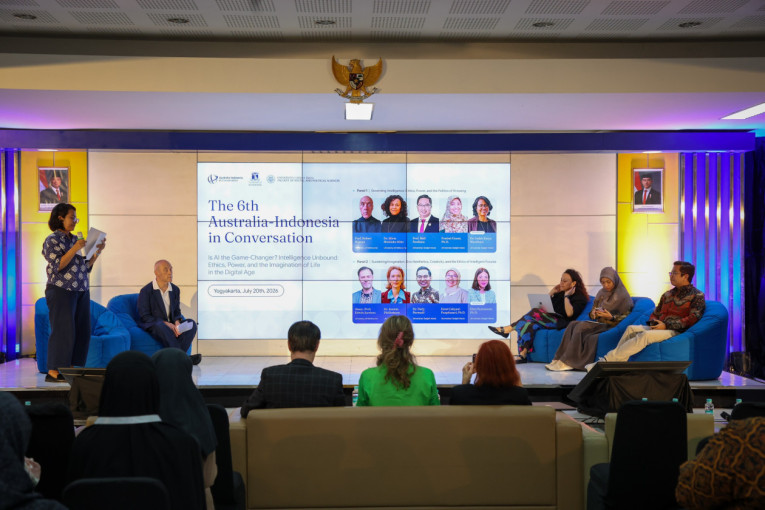
Artificial intelligence (AI) is transforming not only technology but also the way people think about ethics, power, and the future of humanity. Against this backdrop, the Faculty of Social and Political Sciences at Universitas Gadjah Mada (Fisipol UGM) and the Faculty of Arts at the University of Melbourne hosted the 6th Australia–Indonesia in Conversation (AIC) 2026 on Monday (July 20), bringing together scholars from both countries to examine AI through the perspectives of the humanities and social sciences.
Held under the theme “Is AI the Game-Changer? Intelligence Unbound: Ethics, Power, and the Imagination of Life in the Digital Age,” the annual forum explored topics ranging from AI ethics and the politics of knowledge to creativity and the sustainability of human life.
Dean of Fisipol UGM, Professor Wawan Mas’udi, said UGM and the University of Melbourne have collaborated for more than 15 years through joint and double degree programs, student and faculty exchanges, and collaborative research.
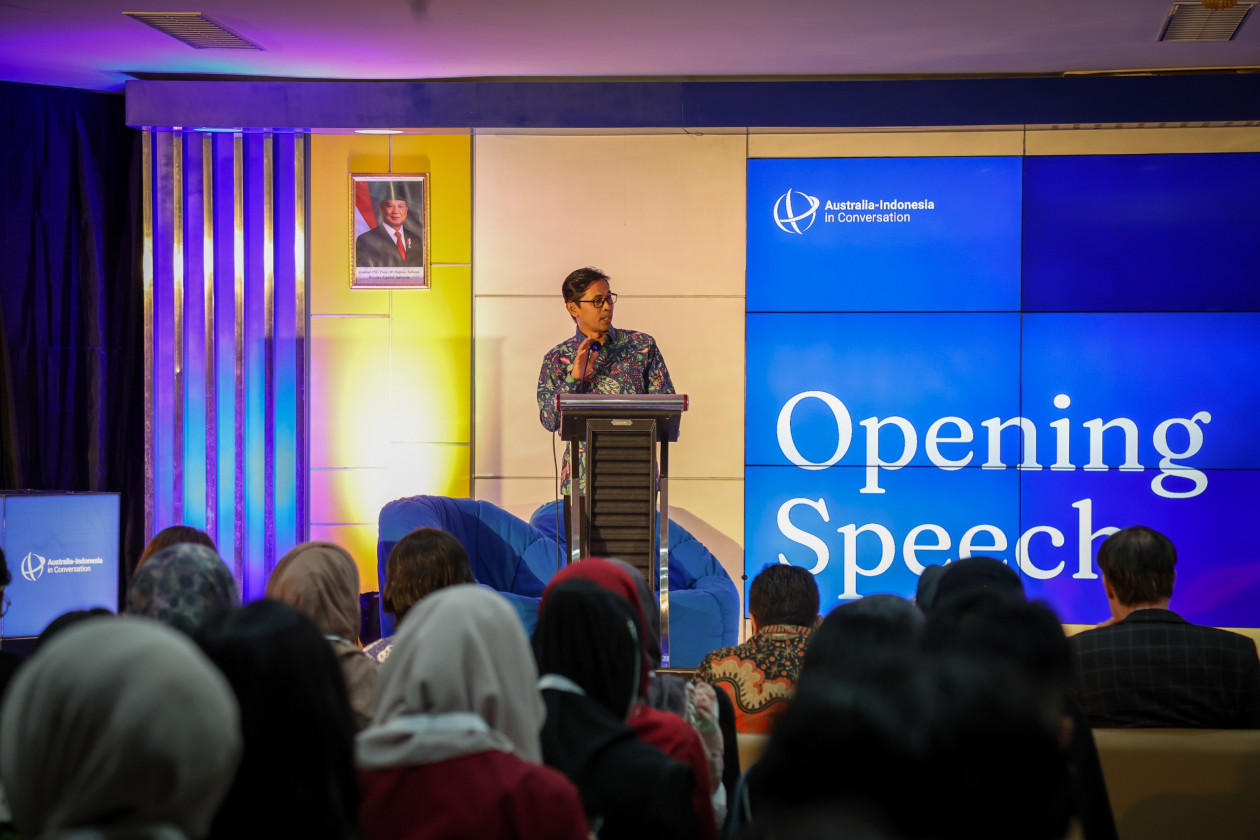
According to Professor Mas’udi, Australia–Indonesia in Conversation has become one of the partnership’s defining initiatives by providing a platform for scholars from both countries to exchange ideas, experiences, and perspectives on global challenges.
He explained that the forum was established during the COVID-19 pandemic as an alternative to conventional academic conferences. Rather than focusing solely on formal presentations, it encourages equal dialogue, interdisciplinary collaboration, and stronger international academic networks.
“Australia–Indonesia in Conversation is one of the strategic milestones in our partnership with colleagues at The University of Melbourne. The conversation enables an exchange of knowledge, an exchange of experience, and mutual inspiration in responding to various social, political, economic, cultural, and higher education governance issues,” he said.
Representing the University of Melbourne, Associate Professor Edwin Jurriëns said AI was selected as this year’s theme because of its profound impact on society. Beyond technological advances, he noted, the discussion examined how AI is reshaping human identity, social relationships, culture, and the ways people understand rapid societal change.
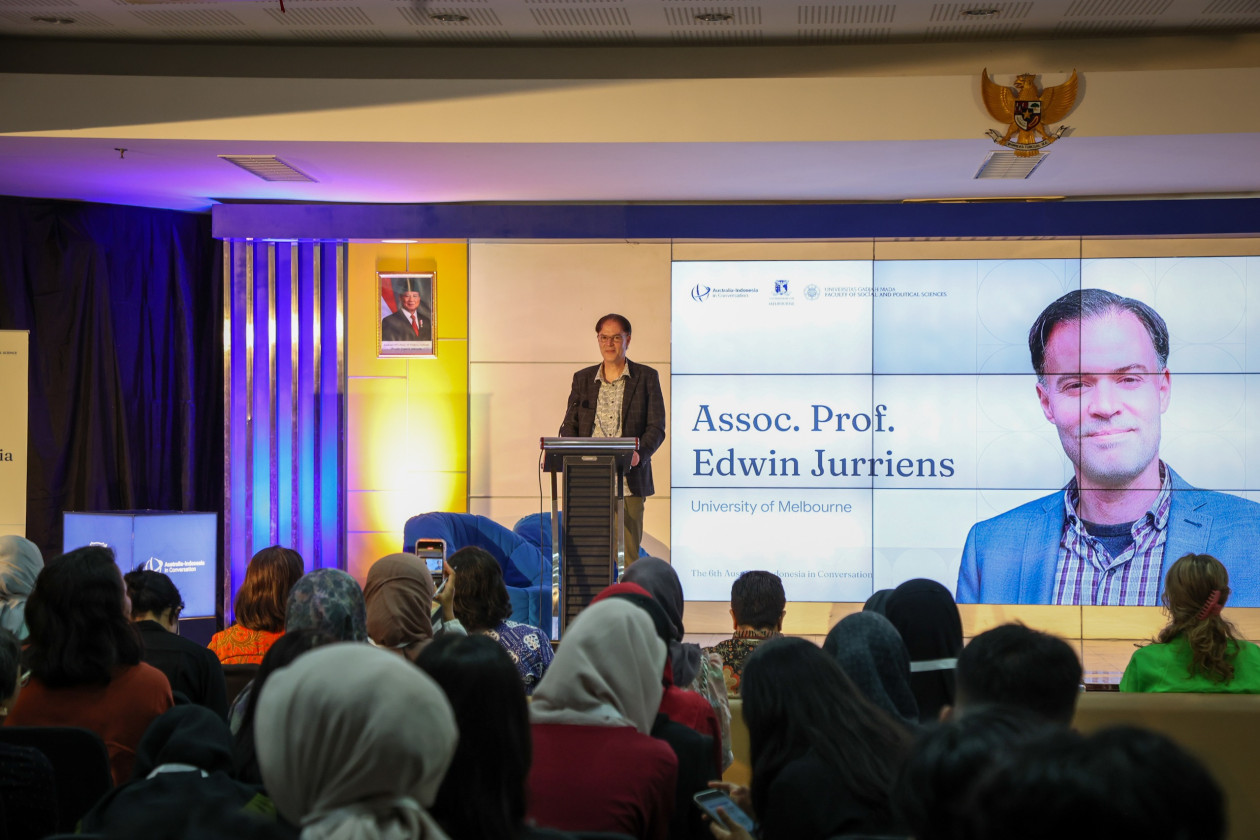
He also encouraged the public to look beyond AI’s technological capabilities and consider the political and economic interests shaping its development. In his view, the key question is whether AI innovation truly serves the public interest and delivers equitable benefits for society.
“What matters is not only the technology itself, but also the political decision-making and economic interests behind it,” he said.
The first panel, Governing Intelligence: Ethics, Power, and the Politics of Knowing, examined AI through the lenses of governance, ethics, power distribution, and accountability in algorithm-based decision-making. Speakers emphasized that AI must be supported by governance that is transparent, inclusive, and oriented toward the public interest.
During the session, Professor Robert Hassan introduced the concept of Homo Analogicus, describing human beings as evolving through direct interactions with one another and with their surrounding environment.
“The fact that we stopped evolving physically as modern humans is because technology has taken over so many functions that we no longer need to adapt to our environment,” he explained.
The second panel, Sustaining Imagination: Eco-Aesthetics, Creativity, and the Ethics of Intelligent Futures, explored AI through the perspectives of creativity, culture, and sustainability. Participants agreed that AI should be viewed not as a substitute for human creativity but as a technology that expands humanity’s capacity to innovate and respond to social challenges.
Associate Professor Jurriëns reminded participants that conversations about AI should extend beyond technological sophistication to consider its broader implications for people and the environment.
“The key question is not only how technology evolves, but also what the future holds for humanity, human relationships, and our place amid these rapid changes,” he said.
Looking ahead, UGM and the University of Melbourne reaffirmed their commitment to translating the forum into concrete academic outcomes. Rather than remaining solely an annual discussion forum, Australia–Indonesia in Conversation 2026 will generate joint publications, including edited volumes and other scholarly works, as part of the two universities’ collaborative research agenda.
Through this partnership, both institutions hope the forum will continue to serve not only as a platform for intellectual exchange but also as a catalyst for research that advances global discussions on the ethical, inclusive, and socially responsible development of artificial intelligence.
Author: Triya Andriyani
Post Editor: Jasmine Ferdian
Photo: Donnie