


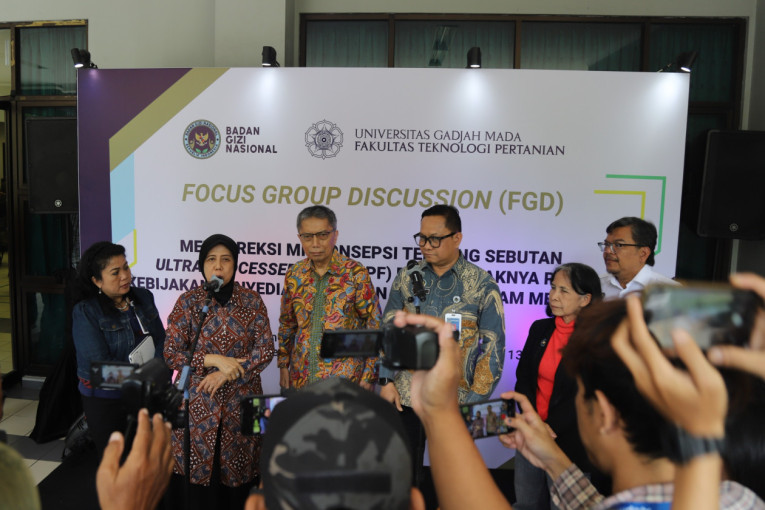
Misconceptions about the term Ultra-Processed Food (UPF) have made it difficult to clearly distinguish between healthy and unhealthy foods. This is because the definition of Ultra Processed Food (UPF) remains ambiguous and open to multiple interpretations. Therefore, science-based public education is needed to help people better understand processed foods.
This issue emerged during a Focus Group Discussion (FGD) organized by the Faculty of Agricultural Technology, Universitas Gadjah Mada (FTP UGM) in collaboration with the National Nutrition Agency (Badan Gizi Nasional/BGN), titled “Correcting Misconceptions About the Term Ultra Processed Food (UPF) and Its Impact on Processed Food Provision Policies in the Free Nutritious Meal (MBG) Program,” held on Friday (Feb. 13) at the Kamarijani Soenjoto Auditorium, FTP UGM.
The forum served as a scientific dialogue to ensure that food provision policies within the MBG program remain grounded in science, nutrition, and food safety.
Dean of FTP UGM, Professor Eni Harmayani, stated that public understanding of the term “Ultra-Processed Food” (UPF) may be confusing. She noted that Indonesia already has its own terminology for assessing processed foods, namely, foods that are safe, nutritious, halal, and healthy.
“The term UPF, which is adopted from abroad, needs to be critically examined to avoid misconceptions about processed foods,” she explained.
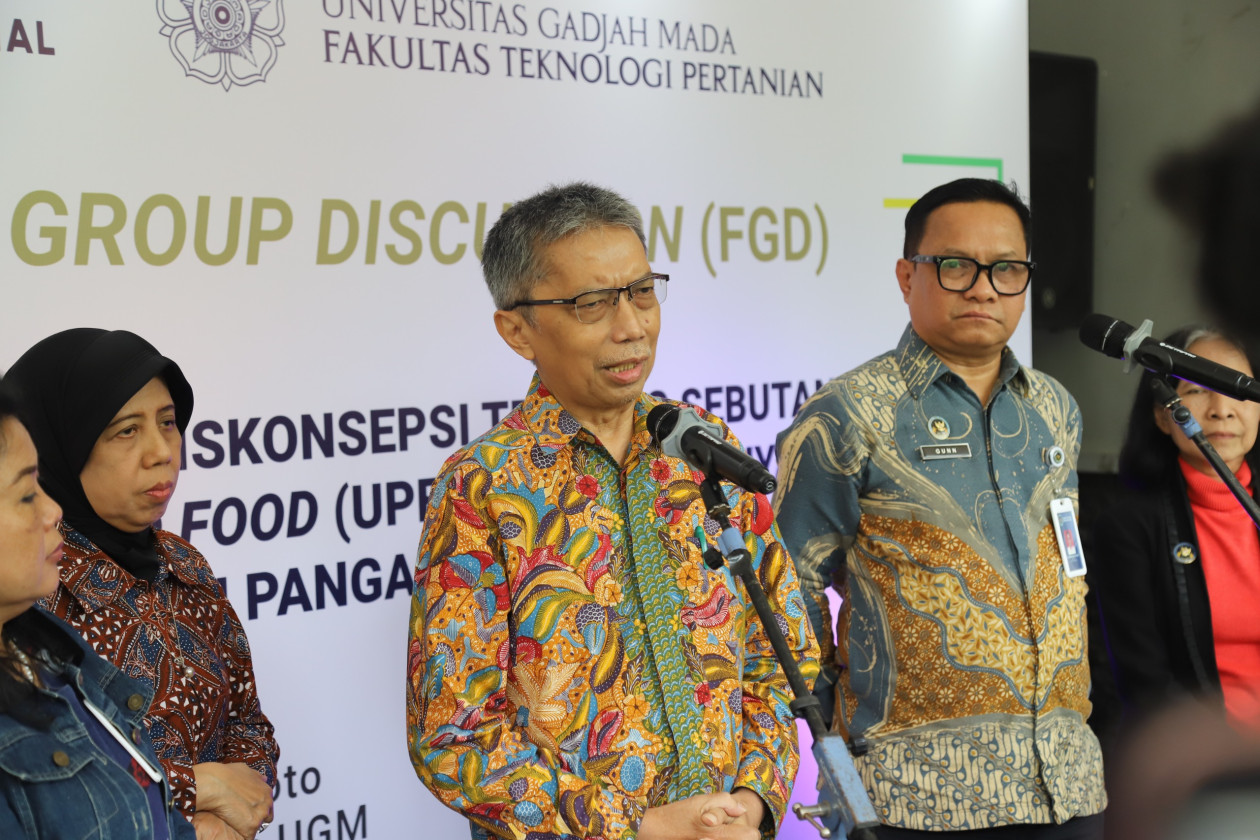
Professor Sri Raharjo of FTP UGM said that the general use of the term UPF risks creating negative stigma toward all processed foods. In fact, food processing is essential for ensuring safety, extending shelf life, and maintaining the availability of food on a large scale.
“Therefore, we recommend using the term ‘processed food,’ referring to products that remain nutritious, safe, and halal. This would prevent confusion for BGN when procuring processed foods, so they are not negatively perceived due to the UPF label if the term continues to be used,” Professor Raharjo emphasized.
A similar view was expressed by Professor Yuli Witono of Universitas Negeri Jember, who stressed that industrially processed foods do not necessarily harm health. He explained that food technology has advanced through extensive scientific research to improve safety, quality, and shelf life, and to help meet the needs of communities with limited time and access to food distribution.
“Food healthiness is not determined solely by the level of processing but also by consumption patterns, lifestyle, and socio-economic conditions,” he said.
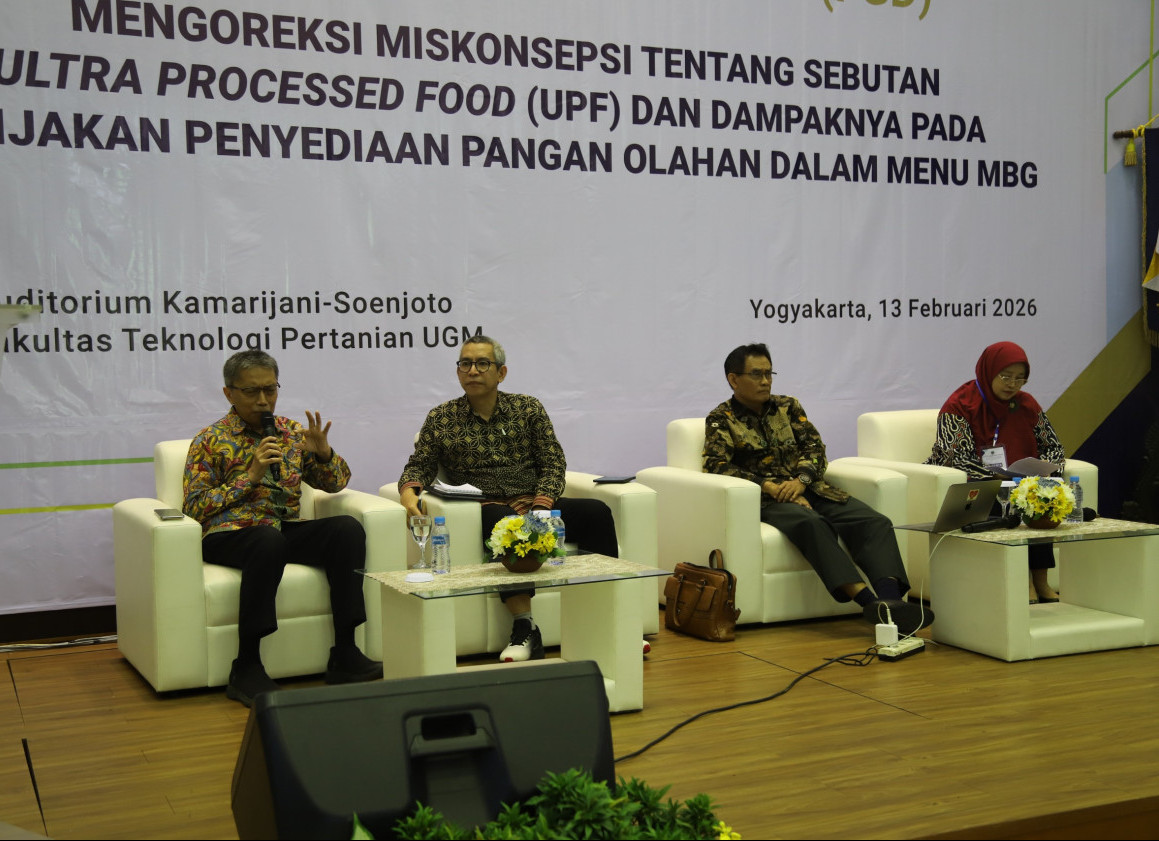
Meanwhile, nutrition expert Dr. Agus Wijanarka of Poltekkes Kemenkes Yogyakarta explained that food classification based on the NOVA system does not necessarily indicate poor nutritional content. Some ultra-processed products are even necessary for certain medical needs. He emphasized that evaluating the healthiness of food must consider nutritional quality, functional benefits, and community consumption patterns.
“Consumers should be encouraged to understand nutrition labels better, while producers are expected to use food additives responsibly,” he explained.
Acting Deputy for Promotion and Cooperation at BGN, Dr. Gunalan, stated that the implementation of the MBG program follows a pentahelix approach involving government, academics, media, communities, and the business sector.
Additionally, the policy refers to Presidential Regulation No. 115 of 2025, which emphasizes the use of domestically sourced food ingredients based on fresh products from farmers, livestock producers, and local MSMEs.
Through this FGD, Dr. Gunalan expressed his hope for cross-sector collaboration to support the success of the MBG program while strengthening a national food security system that is safe, healthy, and sustainable.
Author: Jelita Agustine
Editor: Gusti Grehenson
Post-editor: Rajendra Arya