


Indonesia’s geographical location along the Pacific Ring of Fire and the Alpide Belt makes nearly all parts of the country highly vulnerable to volcanic eruptions and earthquakes. In addition, climate change has increased the frequency of landslides, floods, and droughts.
These disaster risks, along with global health emergencies such as the COVID-19 pandemic, underscore the need for resilient disaster response systems supported by robust healthcare systems capable of delivering continuous services. Strengthening such capacity requires collaboration across professions, sectors, and countries to carry out mitigation, emergency response, and recovery efforts more effectively and sustainably.
To address these challenges, the Faculty of Medicine, Public Health, and Nursing at Universitas Gadjah Mada (FK-KMK UGM) organized the 2026 Summer Course on Interprofessional Healthcare to enhance disaster preparedness capacity. Carrying the theme “Health and Disaster Management: Before, During, and After Emergencies,” the program is designed as an international learning platform that brings together students and academics from diverse disciplines to strengthen collaborative capacity in addressing health challenges during disasters.
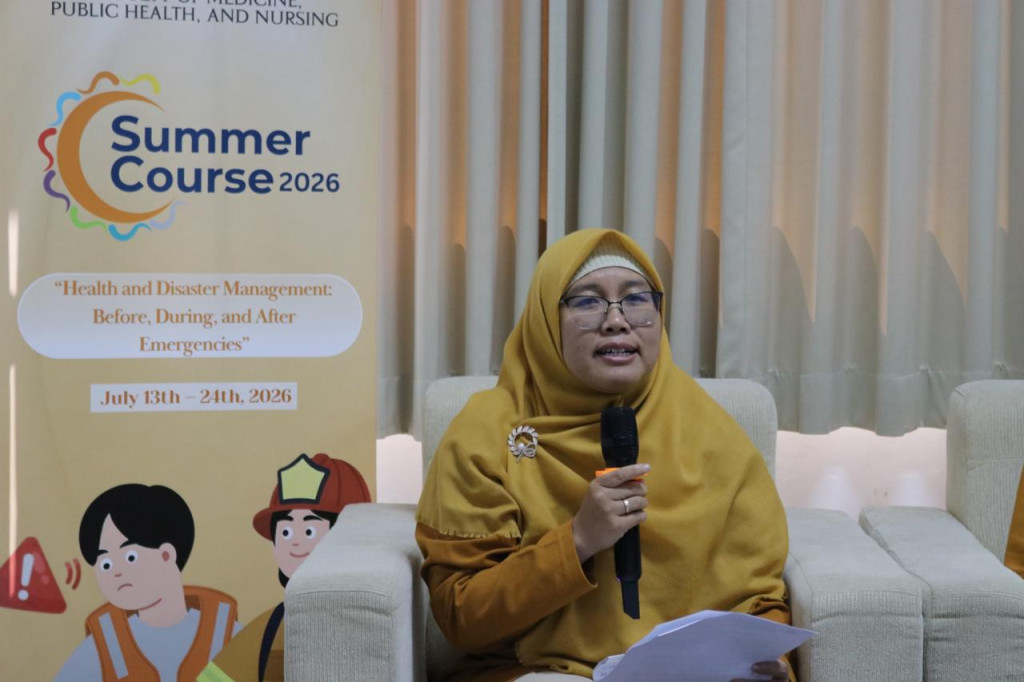 The program is attended by approximately 81 undergraduate, professional, and postgraduate students from UGM, other Indonesian public universities, and partner universities abroad. Participants come from health-related fields as well as other relevant disciplines, including engineering, biological sciences, and philosophy.
“This diversity of academic backgrounds illustrates that disaster management cannot be handled by a single profession alone. By adopting a global and multidisciplinary approach from the university level, we hope our students become fully aware that disaster management is a shared responsibility,” said Dr. Melyza Perdana, Chair of the 2026 Summer Course Organizing Committee, during a media briefing at the Executive Hall of FK-KMK UGM’s Graha Wiyata building on Monday (Jul. 13).
Over the course of two weeks, participants will engage in a combination of synchronous and asynchronous learning activities. The program includes expert lectures, panel discussions, disaster simulations, role-playing exercises, laboratory sessions, emergency response drills, field visits, and group presentations. Topics cover resilient health systems, disaster preparedness, emergency healthcare services, evacuation shelter management, mental health support, and post-disaster recovery.
“The goal is to raise students’ awareness of the various disaster risks around them so they understand the roles they can play when disasters occur,” Dr. Melyza said.
Recognizing that disaster risks affect not only Indonesia but also many countries worldwide, including Taiwan, which faces significant disaster threats, Associate Professor Fu-Chih Lai from Taipei Medical University shared Taiwan’s disaster response system, emphasizing the importance of early warning notifications, particularly in regions prone to earthquakes and volcanic eruptions.
“In Taiwan, even if you are a visitor, you will receive early warning notifications about potential disasters such as volcanic eruptions,” Associate Professor Lai explained.
 He added that communities are encouraged to build resilience before disasters occur. For example, Taiwan operates disaster management centers that coordinate the distribution of disaster victims to nearby hospitals while ensuring communication channels remain active among hospitals, disaster management agencies, and other relevant institutions.
The Vice Dean for Academic and Student Affairs at FK-KMK UGM, Dr. Ahmad Hamim Sadewa, emphasized the importance of preparedness among communities, governments, and healthcare professionals in responding to disaster risks.
“When disasters strike, people often become confused, overwhelmed, and face coordination challenges among different stakeholders. This remains one of our major concerns,” he said.
According to Dr. Hamim, the summer course not only strengthens international academic networks but also helps prepare future healthcare professionals and multidisciplinary practitioners with stronger disaster response capabilities. The program also reflects Universitas Gadjah Mada’s commitment to supporting sustainable health system development and enhancing community capacity to respond to disaster risks.
Author: Jelita Agustine
Editor: Gusti Grehenson
Post-Editor: Priyanandaningrat
Photo: Salwa