


Teaching students from an early age to turn waste, often seen as an environmental problem, into creative, economically valuable products is essential. Creative educational activities can help foster a new mindset among students, showing them that environmental protection can go hand in hand with creativity and entrepreneurship.
The 2026 Patriot Expedition Team (TEP) from UGM’s Sagea Waleh unit held an entrepreneurship education session for students at State Junior High School 24 in Central Halmahera, in the Trans Waleh area of North Maluku, on Friday (October 2).
The session introduced students to using local waste materials to make biopots from coconut husks. These planting containers can support agricultural activities while reducing the use of plastic pots.
Through this activity, students learned that products can offer practical benefits while also creating economic opportunities when developed with creativity, quality, and usefulness in mind.
During the session, the UGM Patriot Expedition Team also encouraged students to develop a strong understanding of entrepreneurship from an early age.
“Through this activity, students are not only learning to make biopots but also to see their surroundings as a source of learning and opportunity. Waste that was previously considered worthless can be processed into useful products,” said Desi Rindi Rahmawati, a member of the Sagea Waleh Patriot Expedition Team, in a statement sent on Wednesday (October 14).
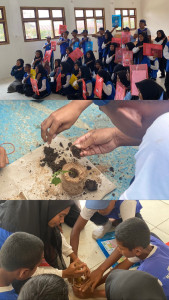
According to Desi, the initiative to turn coconut husk waste into biopots was also inspired by the agricultural potential of the Sagea Waleh Transmigration Area in North Maluku.
“The products can be used to grow seedlings, green school grounds, and support school gardening activities,” she said.
Through this activity, students learned that reducing waste, reusing available materials, and recycling can be the first steps toward creating products with economic value.
“Through this hands-on learning approach, we encourage students not only to become product users but also creators and innovators who can make sustainable use of local resources,” she said.
This entrepreneurship training is expected not only to change students’ mindsets and strengthen their environmental awareness but also to help address environmental problems through the 3R principles—Reduce, Reuse, and Recycle—which form the foundation of waste management.
These principles are applied through simple processes that students can carry out using materials available in their surroundings.
Author: Agito Sitepu
Editor: Gusti Grehenson
Post-Editor: Priyananda
Photo: TEP Team