


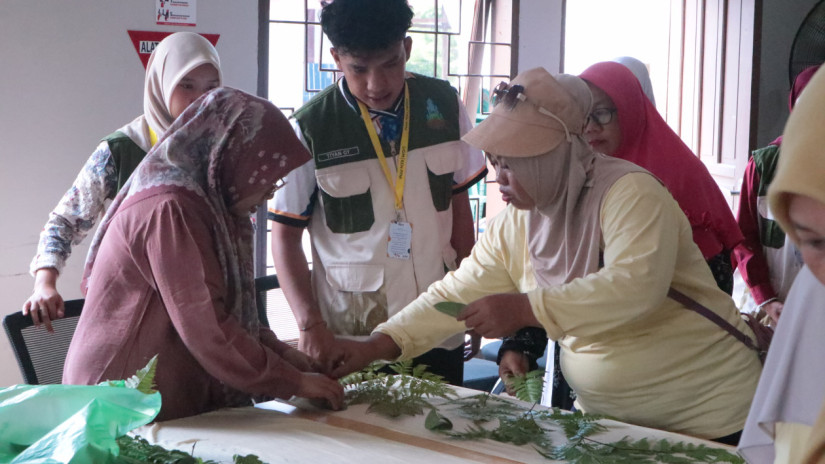
Pelita Nusantara’s student team from Universitas Gadjah Mada’s Community Service Program (KKN-PPM UGM) introduced the concept of slow fashion to members of the Family Welfare Movement (PKK) in Bukit Raya Village, Sepaku District, North Penajam Paser Regency, within the Nusantara Capital City (IKN) area. The campaign took the form of an ecoprint workshop that utilized natural materials from the surrounding environment as dyes and motif-forming elements. Held at the Bukit Raya Village Office on Monday (Jul. 6), the activity was attended by 16 PKK members, who enthusiastically participated in both the educational session and the hands-on ecoprint workshop. The initiative was part of a broader effort to promote sustainable lifestyles and encourage the use of locally available, economically valuable resources. It also aligns with growing global attention to environmentally responsible fashion amid rising levels of textile waste.
According to the United Nations Environment Programme (UNEP), approximately 92 million tons of textile waste are generated each year, with more than half of textile products made from polyester or other synthetic fibers that are difficult to decompose. One increasingly popular approach to reducing this environmental impact is slow fashion, a concept that prioritizes environmentally friendly materials and more sustainable production processes. During the workshop, participants learned ecoprinting techniques using natural-fiber fabrics and leaves to create patterns and natural dyes.
“I hope this activity broadens people’s understanding that the natural resources around us have the potential to be transformed into unique, environmentally friendly products with economic value,” said Annisa Attaya Zahra, a Sociology student at UGM and the initiator of the program.
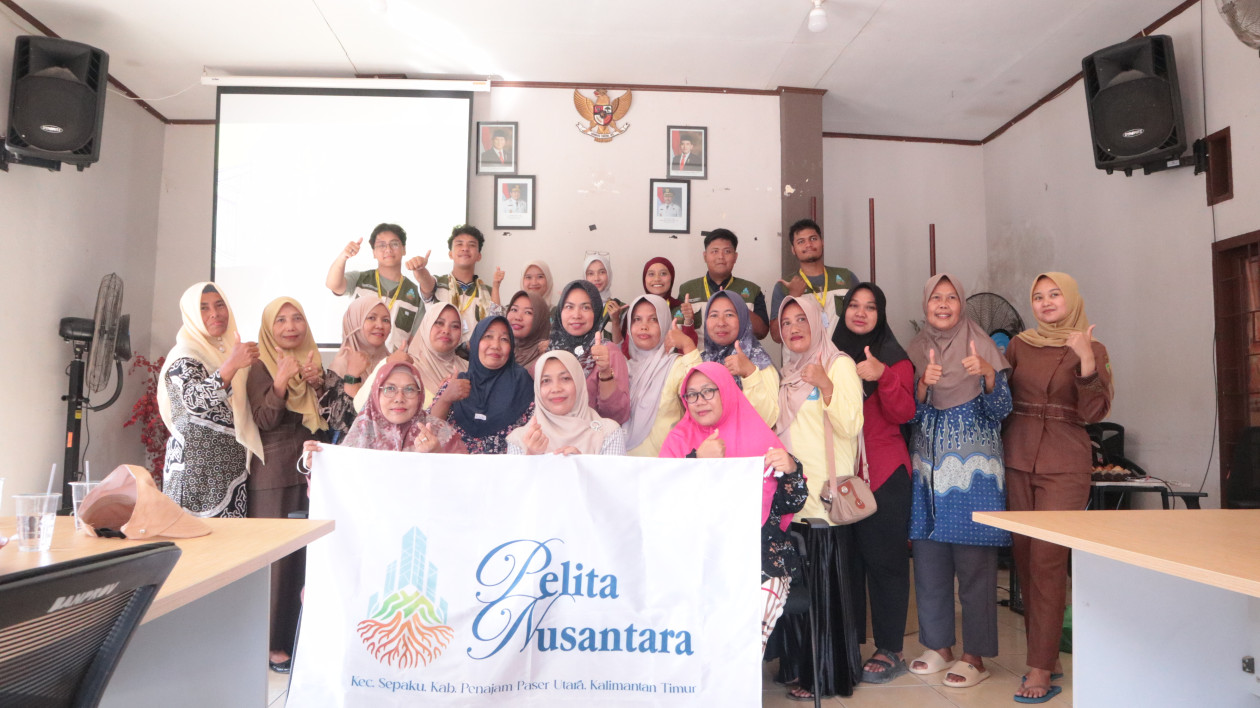
According to Annisa, the ecoprint skills introduced during the workshop are expected to develop into a signature product managed by the PKK members of Bukit Raya Village. Throughout the training, participants practiced every stage of the ecoprint process, from arranging leaves on fabric to steaming the materials to produce natural patterns. For most participants, the workshop was a completely new experience, as they had never encountered ecoprint techniques or recognized their potential as creative products made from local resources.
One of the PKK members of Bukit Raya Village, Judwariyati, said the training introduced valuable new knowledge to the local community. According to her, most participants had never seen the ecoprint process firsthand and were unfamiliar with the product itself. She believes ecoprint has strong potential to be developed as a micro, small, and medium enterprise (MSME) product that could generate additional income for PKK members in Bukit Raya Village. She also noted that the presence of UGM’s KKN students had broadened the community’s understanding of how local natural resources could be utilized.
“I hope the UGM KKN students continue providing educational activities, whether on ecoprint or other topics, for the people of Bukit Raya,” she said.
Through this program, the UGM KKN students hope to help the local community become more familiar with the concept of slow fashion to reduce the fashion industry’s environmental impact. By using readily available natural materials from around the village, they hope to encourage the development of creative products that leverage local potential. In addition to supporting environmental conservation, ecoprint also has the potential to become a new source of income through community-based craft enterprises. Continued community assistance is expected to help transform these newly acquired skills into sustainable economic activities. In this way, the UGM KKN program not only introduces environmentally friendly innovation but also promotes community empowerment through the creative economy.
Reporter: Rajendra Arya
Author: Triya Andriyani
Post-Editor: Priyanandaningrat