


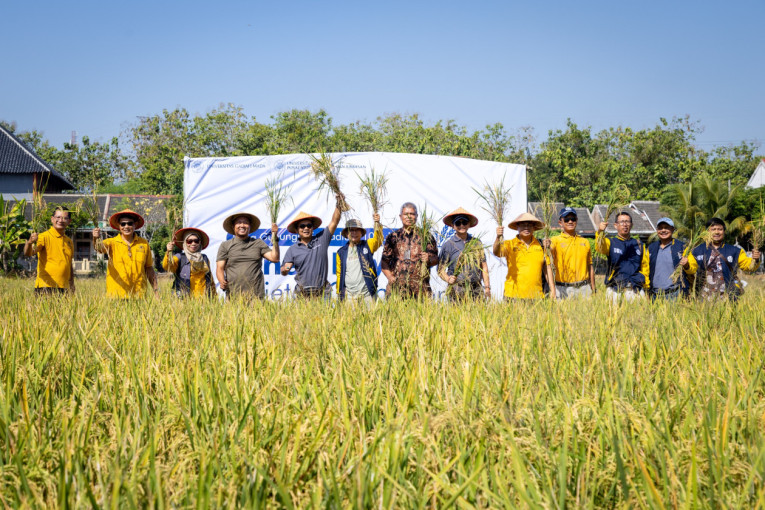
Universitas Gadjah Mada harvested its Gamagora rice variety in Gunungsari Village, Madiun District, Madiun Regency, on Friday (Jul. 10). The harvest marked the beginning of the expansion of UGM’s innovative rice variety in the Madiun region through the distribution of 300 kilograms of Gamagora seeds to three villages participating in the university’s Community Service Program (KKN-PPM): Gunungsari, Tanjungrejo, and Tulungrejo. Alongside the harvest, UGM inaugurated an agricultural Living Lab established by the UGM Center for Rural and Regional Studies (PSPK) in Gunungsari Village.
The initiative is expected to serve as a collaborative platform that connects universities, farmers, village governments, and partners to accelerate the downstream implementation of agricultural innovations and strengthen food security.
UGM Vice Rector for Student Affairs, Community Service, and Alumni, Dr. Arie Sujito, S.Sos., M.Si., said strengthening the agricultural sector is essential to achieving national food security. According to him, the challenges facing agriculture today cannot be addressed through policy alone but require collaboration among universities, government institutions, local communities, and other stakeholders. The Living Lab is one of UGM’s initiatives to create a collaborative space where agricultural innovations can be tested, developed, and directly utilized by the community.
“Universitas Gadjah Mada, together with its alumni community, seeks to develop a living laboratory that continues to grow across various fields, including agriculture, fisheries, alternative technology, and others,” he said.
Dr. Arie added that the regeneration of farmers remains a major challenge that must be addressed collectively. The shrinking availability of agricultural land and declining interest among younger generations in farming, he noted, must be met with innovations that improve productivity while creating new opportunities for farmers. The Living Lab is therefore expected to become a learning space where academic knowledge and farmers’ practical experience can complement one another.
“I hope Gamagora will become one of the gateways to empowering rural communities. The key lies with village residents who share the commitment to advancing agriculture together,” he said.
During the event, Head of the UGM Center for Agrotechnology Innovation (PIAT), Alan Soffan, Ph.D., explained that Gamagora is a rice variety officially released in 2023 after undergoing trials in various regions across Indonesia. Based on multilocation trials, the variety has achieved an average productivity of 7.9 tons per hectare, with a potential yield of up to 9.8 tons per hectare. Gamagora is now cultivated from Enggano Island in Bengkulu to Merauke, Papua, as part of UGM’s effort to expand the adoption of its agricultural innovations.
“You are now part of thousands of farmers cultivating Gamagora across thousands of hectares. Although the variety was only released in 2023, its cultivation has already expanded to many regions throughout Indonesia,” he said.
Alan explained that Gamagora offers several advantages over conventional rice varieties. In addition to its relatively short growing period, it has shorter stalks that make it more resistant to lodging, adapts well to both irrigated and rain-fed paddy fields, and demonstrates greater resistance to several crop diseases. Gamagora is also supported by an integrated cultivation technology package developed by UGM, including beneficial microbes, fertilizers, and water management technologies designed to improve agricultural productivity.
“When we introduce Gamagora, we also bring its entire ecosystem. We provide not only the seeds but also the cultivation technologies needed to help farmers achieve better harvests,” he said.
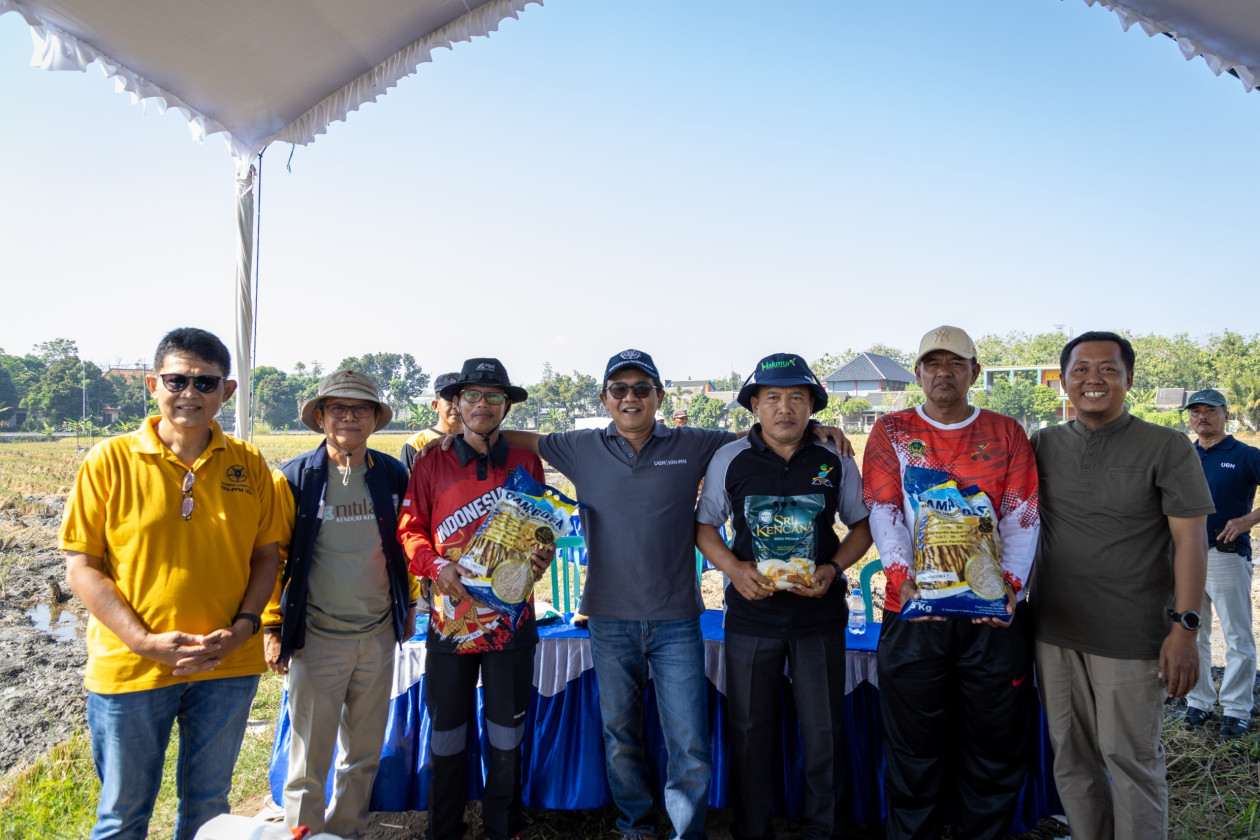
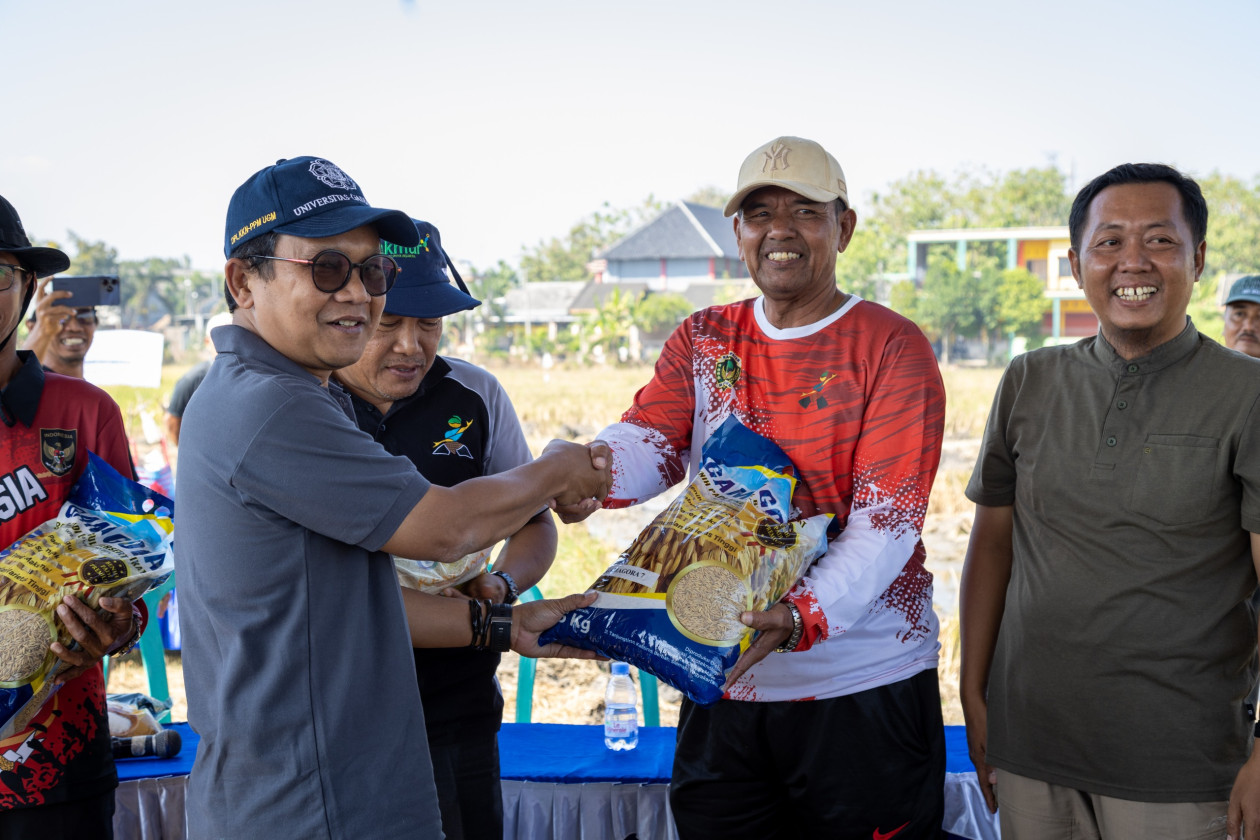
PSPK researcher Mohammad Ghofur, M.Sc., explained that the development of the Living Lab in Madiun is supported through the UGM Directorate of Community Service’s Equity Program. Through the program, UGM distributed 300 kilograms of Gamagora seeds to the villages of Gunungsari, Tanjungrejo, and Tulungrejo as the next locations for cultivation. Farmers will continue to receive assistance from the UGM Faculty of Agriculture and PIAT to evaluate cultivation outcomes and refine the technologies used in the field.
The expansion of Gamagora in Madiun has also received support from PT Sang Hyang Seri, which has expressed its readiness to partner in seed production. The company has allocated approximately 50 hectares of land to support Gamagora seed production, enabling local seed production within the region. The collaboration is expected to strengthen the downstream implementation of UGM’s innovations while creating opportunities to establish Madiun Regency as a seed production center.
Gunungsari Village representative Sumaryo welcomed the establishment of the PSPK Living Lab and the introduction of the Gamagora variety in the village. According to him, farmers need alternative rice varieties that are better adapted to increasingly complex agricultural challenges, ranging from pest infestations to declining productivity of existing varieties. He expressed hope that Gamagora would increase harvest yields while strengthening food security in Madiun Regency.
“We hope the Gamagora variety cultivated in Gunungsari will perform well and produce higher yields, bringing tangible benefits to farmers in this region,” he concluded.
Author: Triya Andriyani
Post-editor: Zabrina Kumara
Photo: Donnie