


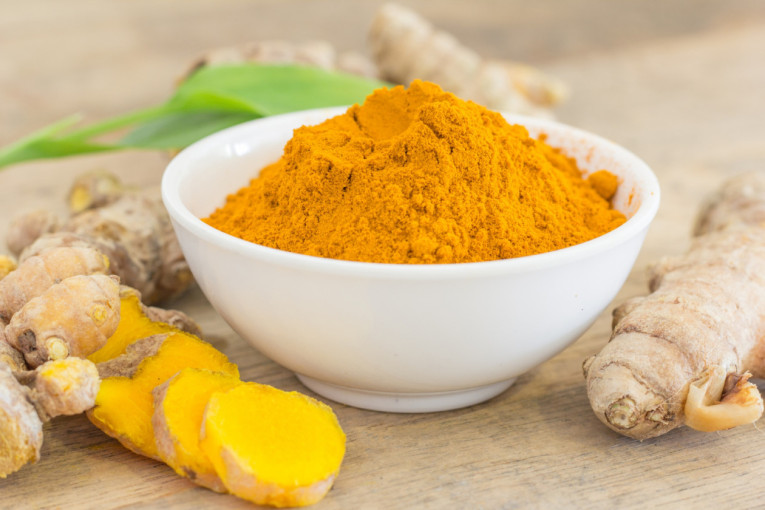
A team of Universitas Gadjah Mada (UGM) students has investigated curcumin, a bioactive compound found in turmeric (Curcuma longa), as a potential antidepressant candidate using computational biology. Their analysis suggests that curcumin may interact with the serotonin 5-HT2C receptor, a protein involved in mood regulation.
A team from UGM’s Psychology Student Creativity Program grant initiative conducted the research using an in silico approach that combines network pharmacology and molecular docking. The team consists of Calista Gracianauli (Psychology, 2024), Jevan Nathaniel Malau (Biology, 2024), Nirvana Sabathani (Pharmacy, 2024), and Feodora Davina Aloysia Christy (Agricultural Industrial Technology, 2024).
The study was motivated by the use of conventional antidepressants in clinical depression treatment, which can often cause side effects such as sexual dysfunction and changes in body weight.
In response, the team explored other compounds that could be developed as antidepressant candidates, including curcumin, a bioactive compound found in turmeric (Curcuma longa). They also investigated curcumin’s potential by examining how the gut microbiome relates to molecular mechanisms associated with depression.
The study examined how the gut microbiome relates to depression. The gut microbiome consists of microorganisms living in the digestive tract that can communicate with the central nervous system through various biological pathways. Drawing on scientific literature, the team noted that several metabolites produced by gut microbiota, including short-chain fatty acids (SCFAs), play roles in biological processes related to nervous system function.
“The combination of evidence supporting benefits for brain health, strong cultural popularity, and robust market data provides the main rationale for further investigating curcumin and its potential in depression care,” Calista Gracianauli said on Friday (October 16).

To identify potential molecular targets, the team mapped the relationships among curcumin, gut microbiota metabolites, and genes associated with depression. They then analyzed protein networks using STRING and Cytoscape software. This analysis identified the serotonin 5-HT2C receptor as one of the proteins that could potentially interact with curcumin.
The team subsequently used molecular docking to predict how curcumin might interact with the receptor. The analysis yielded a docking score of −7.26 kcal/mol for curcumin, more negative than amitriptyline (−6.08 kcal/mol), a conventional antidepressant. Serotonin, a naturally occurring molecule that interacts with the receptor, had a score of −5.02 kcal/mol.
A more negative docking score indicates a more favorable interaction according to the computational scoring function used. However, these results do not necessarily mean that curcumin is more effective than amitriptyline in treating depression. Molecular docking predicts possible molecular positioning and interactions with proteins; it does not measure treatment effectiveness in humans.
The molecular interaction analysis also identified a shared amino acid residue, Val354, involved in interactions with curcumin, amitriptyline, and serotonin. This finding suggests similarities in how the three molecules interact with the 5-HT2C receptor.
However, these similarities do not establish that curcumin has the same pharmacological mechanism of action as the two comparison compounds.
The team also examined serotonin receptor-associated biological pathways through pathway enrichment analysis using the Kyoto Encyclopedia of Genes and Genomes (KEGG). This analysis helped clarify how the identified molecular targets relate to cellular signaling pathways. Although the findings offer clues about potentially involved biological mechanisms, the computational results still require further validation through experimental testing.
Overall, the study provides an initial picture of curcumin’s potential as a candidate for further antidepressant development research. The team acknowledged that additional studies are needed to establish curcumin’s activity at the 5-HT2C receptor, its pharmacological mechanisms, and its safety and efficacy before it can be considered for clinical use.
“This method cannot yet determine whether curcumin acts as an activator (agonist) or an inhibitor (antagonist) of the receptor. Its pharmacological effects therefore still need to be established through laboratory testing,” the team concluded.
Author: Agito Sitepu
Editor: Gusti Grehenson
Post-editor: Zabrina Kumara
Photo: Student Creativity Program Team