


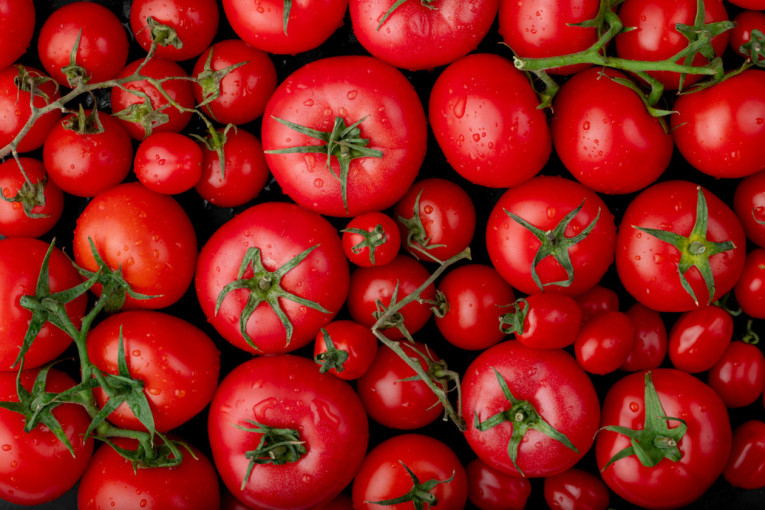
Tomatoes (Solanum lycopersicum) are widely used as food ingredients and vegetables to complement dishes such as chili sauce. Provide natural sweet-and-sour flavors, a red color, a fresh aroma, and thickness to soups and sauces. Despite their high productivity, tomatoes have a relatively short shelf life, potentially resulting in postharvest losses of up to 40% of total production.
This inspired three students from the Faculty of Economics and Business, Universitas Gadjah Mada (FEB UGM) of the Management Program batch 2024, Almayla Taorayudha, Abhithah Luita Janna, and Ananda Revallina Adrienne Nambella, to develop a premium product in the form of tomato powder using the Refractance Window Drying (RWD) method. It preserves tomatoes’ natural red color while offering greater cost efficiency than other drying methods.
“We designed this premium tomato powder as an innovative menu ingredient for artisan bakeries in Yogyakarta that need umami flavor and natural red coloring for savory bread products,” Almayla explained on Thursday (Nov. 19).
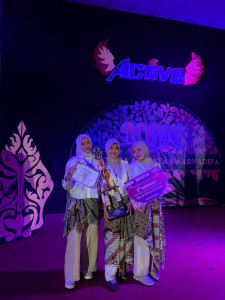
For this innovation, the team won first place in the Business Plan Competition at ACTIVE UNS 2026, by the Faculty of Economics and Business at Universitas Sebelas Maret (FEB UNS) on October 25–26, 2026. Under the theme “FIN-SIGHT: Architecting Smart and Green Financial Strategies for Tomorrow’s Industrial Revolution,” the Mbegot team presented its business concept, KaryaRasa, under the subtheme “Smarter Food System for Sustainable Future.”
The project focuses on utilizing Grade B agricultural commodities—produce that does not meet certain market quality standards—and processing them into value-added food products.
The idea of transforming fresh produce into premium tomato powder originated from food loss and waste in Indonesia. The National Development Planning Agency (Bappenas) indicates that Indonesia loses and wastes an estimated 23–48 million tons of food annually, resulting in potential economic losses of Rp213–551 trillion.
“Indonesia has high agricultural productivity, with various commodities offering opportunities for development into economically valuable products. Behind commodities that have limited market demand, we see opportunities to create new business prospects by developing collaborative business approaches with various stakeholders,” she continued.
KaryaRasa offers a business approach that connects local commodities, product-processing innovation, and market demand. The Mbegot team focuses not only on utilizing raw materials with limited market absorption but also on developing products for more specific consumer segments. This strategy is expected to open up new markets without requiring direct competition in the mass market.
“We believe that overlooked potential can be transformed into opportunities. Through its tagline, ‘Olah Karya, Hadirkan Rasa’ (Transforming Creativity into Flavor), KaryaRasa also seeks to minimize food loss,” she said.
Reporter: Shofi Hawa Anjani/Humas FEB
Editor: Gusti Grehenson
Post-editor: Jasmine Ferdian
Photo: Magnific, Dok. Tim