


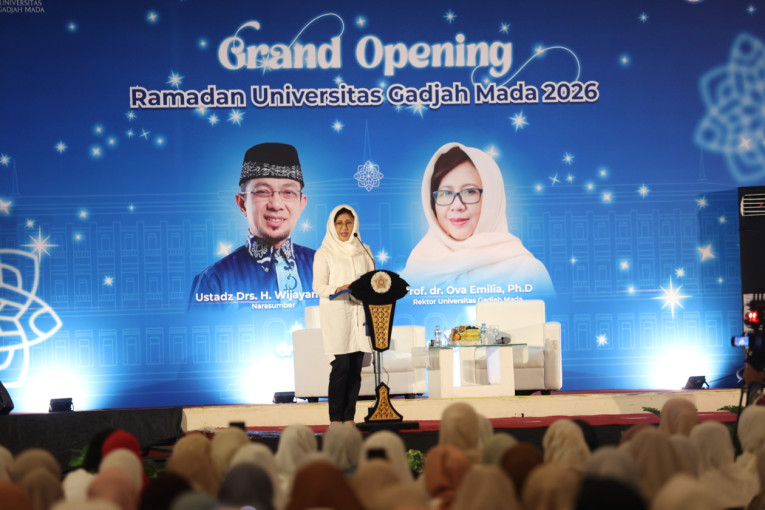
Fasting during the month of Ramadan is not merely about refraining from food and drink from before sunrise until sunset. More than that, fasting teaches Muslims to cultivate social compassion toward others.
“If you do not wish to be hurt, then do not hurt others. Likewise, if you do not want to go hungry, do not let others go hungry. That is the essence of fasting to nurture genuine social compassion,” said Ustaz Wijayanto, in his religious oration at the Grand Opening of Ramadan UGM 2026 held at Grha Sabha Pramana on Tuesday (Feb. 17).
Ustaz Wijayanto emphasized that Islam prioritizes balance between fulfilling human nature and obedience to Allah Swt. Fasting is not about tormenting oneself, but about self-discipline.
“Islam is a moderate religion. Fasting is not meant to eliminate desire, but to temporarily control it. Since then, continuous fasting (wishal fasting) has been prohibited. Therefore, when fasting, quickly break the fast and end the suhoor,” he explained.
According to him, Ramadan is a noble month whose arrival is always longed for, as reflected in the tradition of the Prophet’s companions.
“The companions would even pray for six months in preparation to welcome Ramadan. This is because Ramadan is karim,” he said.
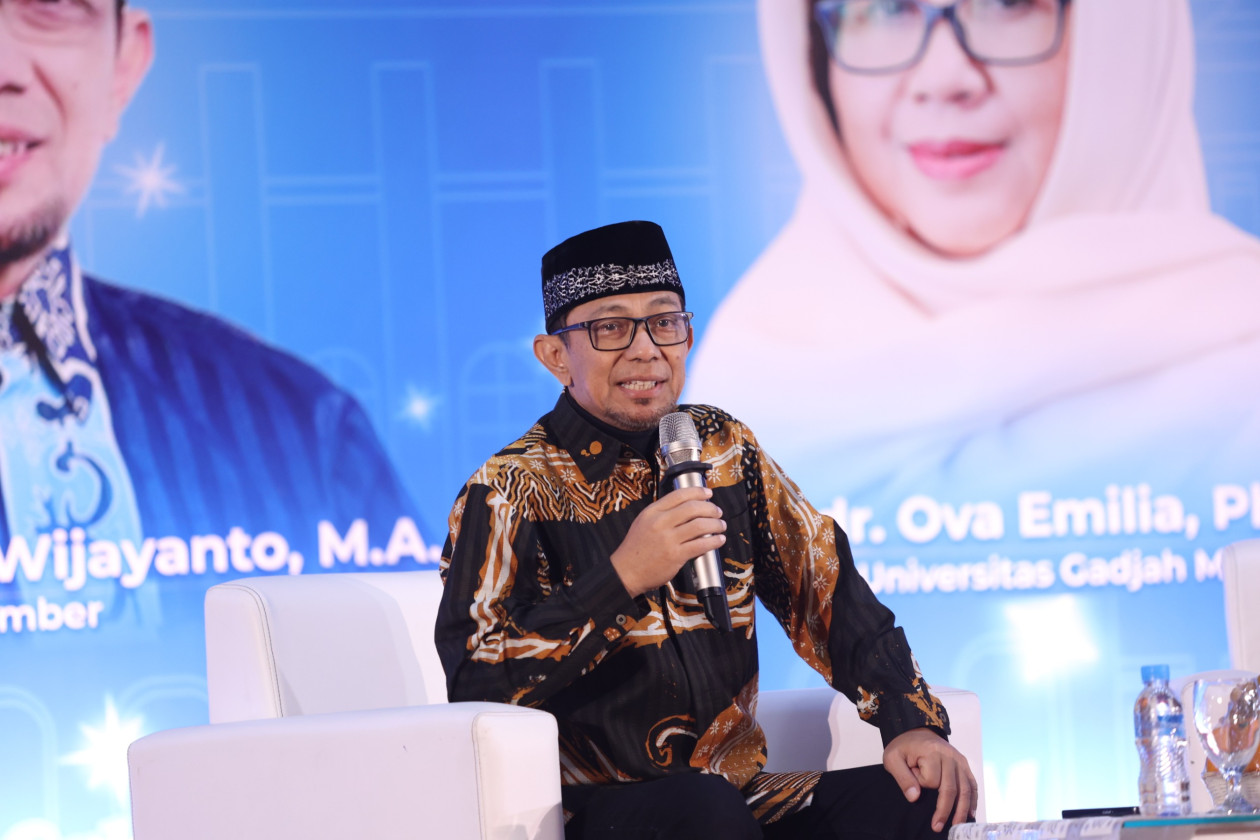
Ustaz Wijayanto elaborated on the root meaning of the word karim as it relates to this holy month. He explained that the term karim is not merely an ordinary label of nobility, but a reflection of profound admiration for something extraordinary.
Complementing its historical dimension, he noted that in the month of Sha’ban in the second year of the Hijri calendar, four commands were revealed and became the spiritual foundation for Muslims.
These included the change of the qibla direction, the establishment of the zakat nisab, the encouragement to send blessings (shalawat) upon the Prophet, and the command of birrul walidain, or devotion to one’s parents. He reminded us of the connection between fasting and proper conduct toward parents.
“A person’s fasting fails if they have parents yet do not make them a path to paradise. Make your parents a means to attain paradise. It is strange if someone fasts but does not perfect their fasting, for example, their zakat is unclear, they never send blessings upon the Prophet, and they show no respect to their parents,” the ustaz asserted.
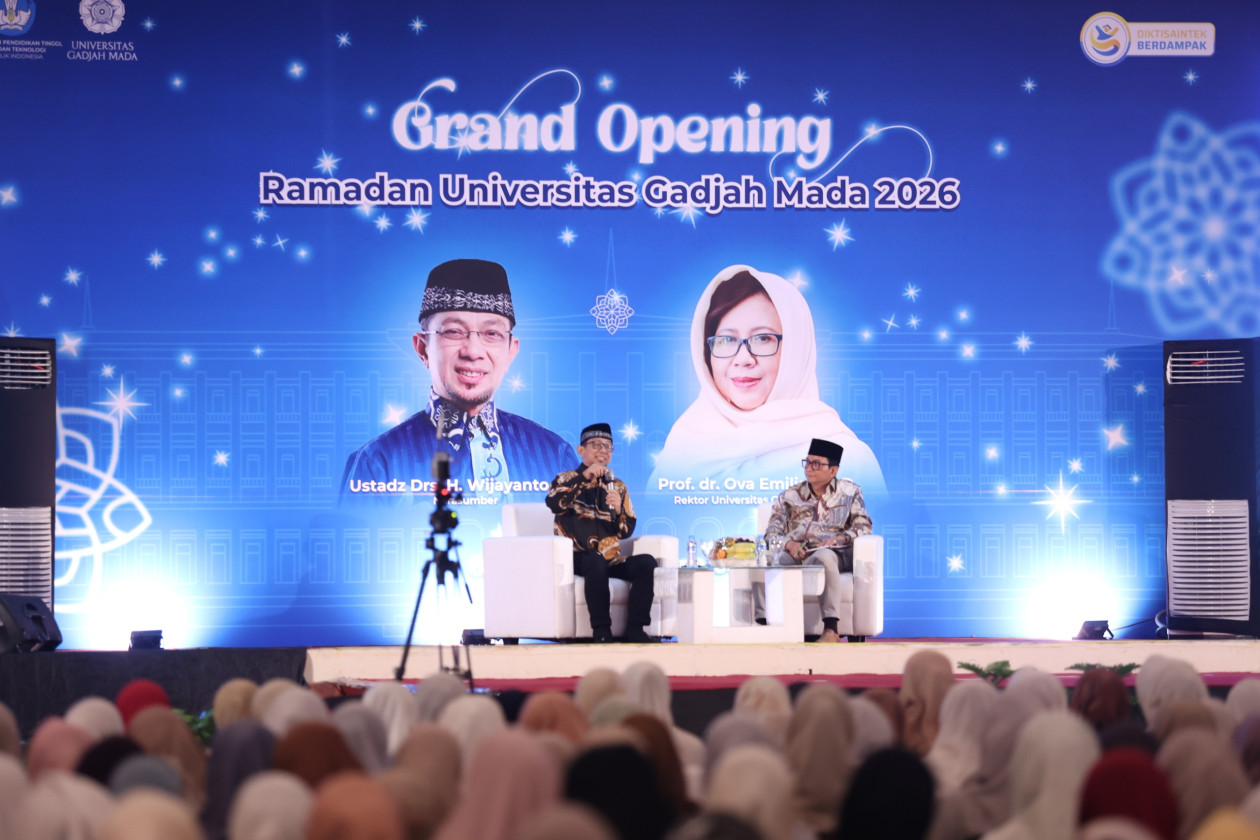
The Rector of Universitas Gadjah Mada, Professor Ova Emilia, in her remarks,s stated that the grand opening of Ramadan marks the beginning of the series of Ramadan on Campus activities.
According to Professor Emilia, this Ramadan moment serves as a starting point for spiritual purification, further strengthening the academic community’s character and making it more inclusive and impactful.
“Inclusive and impactful character is a phrase we often hear and express. However, how it is manifested in our daily conduct certainly becomes a matter for shared discussion and reflection,” she said.
She invited all attendees to welcome the month of Ramadan, full of forgiveness, through various acts of worship and good deeds that can benefit both oneself and others.
“Let us welcome this month of forgiveness; a month that always renews our faith and plants seeds of awareness in every act of worship and reflection we undertake over the coming month,” she concluded.
Author: Aldi Firmansyah
Editor: Gusti Grehenson
Post-editor: Jasmine Ferdian
Photographer: Fristo Adi