


Microalgae play a significant role in sustaining human life and the natural environment on Earth. They contribute substantially to carbon fixation through photosynthesis by converting atmospheric carbon dioxide into organic compounds. This process is crucial for mitigating climate change by reducing atmospheric carbon dioxide levels, a major driver of global warming.
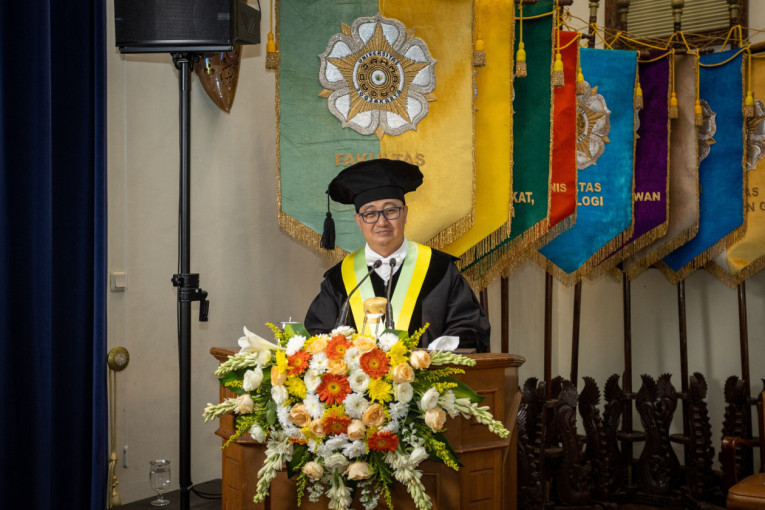
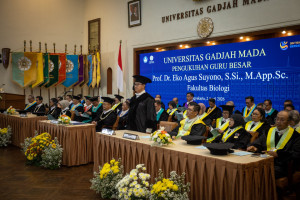
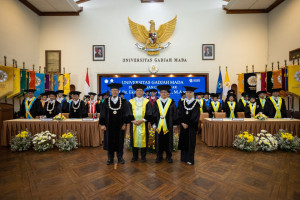
“Microalgae also contribute approximately 40–50 percent of the oxygen in the atmosphere, meaning that a portion of the oxygen in every human breath originates from microalgae photosynthesis,” explained Professor Eko Agus Suyono of the Faculty of Biology, Universitas Gadjah Mada (Biology UGM), during his inaugural speech as Professor in Industrial and Environmental Biotechnology on Thursday (Apr. 2) at the UGM Senate Hall.
In his inaugural speech, titled “Microalgae as Future Biological Engines: Integrating CO2 Capture Technology and Biorefinery Concepts for National Independence,” Professor Eko stated that microalgae serve as primary producers that sustain the global food chain. They also serve as essential components of carbon and nutrient cycles, particularly in aquatic ecosystems, acting as both sinks and sources that support life at all levels.
“Beyond biofuel, microalgae are known to be rich in polysaccharides, lipids, pigments, proteins, vitamins, minerals, and antioxidants, offering broad potential for applications ranging from food and feed to cosmetics, pharmaceuticals, and other bio-based products,” he said.
He noted that microalgae biomass has high market value and can be processed into a wide range of high-value products, including biodiesel, bioethanol, biohydrogen, feed, food, and fertilizers. One of the studies conducted by Suyono demonstrated that microalgae can also be utilized for waste treatment, value-added biomass production, and strengthening the biorefinery concept.
Furthermore, microalgae offer benefits as sources of biomaterials and energy. They are already recognized as raw materials for bio-based products, comparable to those from higher plants, and have been applied across various sectors. As an energy source, microalgae have strong potential as biofuel feedstock, serving as an environmentally friendly alternative fuel.
“The potential of microalgae is far greater compared to conventional biofuel sources such as palm oil, corn, sunflower, and legumes,” he explained.
In the field of food and feed, Professor Eko stated that microalgae have the potential to address global food security challenges and environmental issues, as they can be cultivated on marginal land without disrupting other food production and can grow rapidly. In feed applications, various studies have shown that microalgae possess very high carbon fixation efficiency and are rich in nutritional and bioactive components, making them highly promising as a functional feed that can simultaneously enhance livestock growth, health, and immune status.
In addition, in the biomedical field, microalgae offer a wide range of benefits, from natural drug ingredients and supplements to drug delivery systems and biosensors.
“Microalgae contain higher antioxidant levels than vitamin C and also have anti-inflammatory and anticancer properties,” he added.
As bioremediation agents, microalgae can also be used to absorb environmental pollutants. This is due to their high adaptability to various environmental conditions, the enzymes and chemical compounds they produce, and the chemical components present in their cell walls. Moreover, microalgae can be integrated with the Internet of Things (IoT) and machine learning technologies.
“In this context, IoT represents a breakthrough, enabling continuous and real-time monitoring of biomass and cultivation parameters while generating data streams ready to be processed into operational information,” he explained.
At the end of his speech, Professor Eko emphasized that through an integrated approach, microalgae can bridge environmental interests, industrial needs, and sustainable development agendas. However, this requires support from all stakeholders.
Therefore, microalgae research must continue to be strengthened from upstream to downstream, from the exploration of superior strains and their bioprospecting, optimization of cultivation and harvesting from laboratory and pilot scales to industrial mass production, to innovations in processing and utilization technologies.
“Microalgae hold great potential as a future solution for environmental resilience, technological independence, and national progress,” he concluded.
Author: Leony
Editor: Gusti Grehenson
Post-editor: Zabrina Kumara
Photo: Donnie