


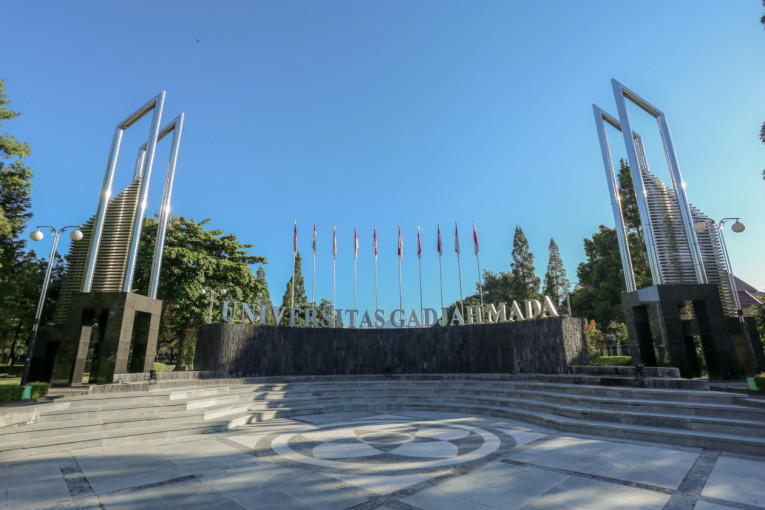
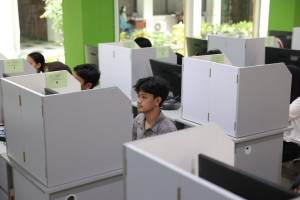
Universitas Gadjah Mada (UGM) once again ranks among the most sought-after universities in the 2026 national entrance test (SNBT). This year, UGM provides a total of 2,837 seats, accounting for around 30 percent of the overall capacity across undergraduate and applied undergraduate programs. The selection is conducted through the Computer-Based Written Test (UTBK), administered nationally under a centralized system. The selection mechanism continues to be refined to ensure objectivity and equitable access for all participants. UGM ensures that the selection process adheres to principles of transparency and accountability.
The Director of Education and Teaching at UGM, Professor Gandes Retno Rahayu, explained that this year’s selection system introduces changes to participant placement. Participants no longer choose their UTBK test center directly; instead, they select only the city where they will take the exam.
The central committee then distributes participants evenly among universities within that city. This scheme is designed to maintain fairness while enhancing the security of the selection process.
“We want all participants to have equal opportunities, without depending on specific location choices,” Professor Rahayu said on Thursday (Apr. 23).
This adjustment aligns with the growing interest among prospective students from various regions in pursuing their studies at UGM. The university is known for its strong academic reputation and is widely trusted as a destination for higher education. Its appeal extends beyond Java, reflecting UGM’s reach as a national university. An open and inclusive learning environment further strengthens UGM’s position as a space for students from diverse backgrounds to grow.
“Many come with hopes of improving their future, and we see that as something very meaningful,” she said.
In addition to reputation, location is also a key consideration for prospective students. Yogyakarta is known as a student city with relatively affordable living costs and a conducive academic atmosphere. Its egalitarian environment helps students adapt more easily and feel accepted. These conditions support a more optimal learning process, both academically and socially.
“Here, they are not only studying but also learning to live and grow together,” Professor Rahayu explained.
According to Professor Rahayu, student interest is also reflected in their choice of study programs, which tend to be strategic. Programs such as Medicine, Law, and Psychology remain highly favored, with intense competition.
Meanwhile, fields such as Engineering, Management, Information Technology, and Computer Science continue to see rising interest. These choices reflect considerations of future career opportunities.
“Many families see education as a pathway to broader opportunities for their children,” she noted.
To meet the needs of students from various regions, UGM has prepared a comprehensive support system. One example is the provision of accommodation at UGM Residence, with a capacity of more than 1,500 students. Professor Rahayu explained that the facility includes study rooms, a canteen, and a 24-hour security system.
In addition, various scholarship programs are available, including KIP Kuliah and affirmative schemes for students from underdeveloped, frontier, and outermost regions (3T).
“We want students to focus on their studies without being overly burdened by non-academic concerns,” she said.
These efforts are complemented by programs that support the adaptation process for new students. The PIONIR orientation program is designed to help students become familiar with the campus environment while building social networks. Student dormitories also serve as spaces for cross-cultural interaction, enriching the learning experience. Students are encouraged to maintain their identity while remaining open to differences.
At the same time, UGM continues to adapt to shifting student interests in various fields of study. One area of concern is the declining interest in pure mathematics. This is being addressed through the development of a more contextual and applied curriculum. Mathematics is increasingly integrated into fields such as data science, artificial intelligence (AI), and actuarial science.
This interdisciplinary approach forms part of UGM’s strategy to maintain the relevance of higher education. Students are encouraged to understand the connections between disciplines in addressing contemporary challenges.
Learning processes are no longer isolated but interconnected within a broader context. This further strengthens UGM’s role as an adaptive and responsive educational institution.
“We want what students learn on campus to truly benefit them when they engage with society,” Professor Rahayu concluded.
Author: Triya Andriyani
Post-editor: Jasmine Ferdian
Photo: Firsto